


OCTOBER 7 — The haze began on August 1. On September 4, Serian, Sarawak recorded an Air Pollutant Index of 519, prompting the declaration of an emergency in the division.
More than two months later, here we are again — waiting for the monsoon to bring relief.
On October 6, Natural Resources and Environmental Sustainability Minister Arthur Joseph Kurup said Malaysia would push for stronger Asean cooperation, including better data-sharing and enforcement cooperation.
But Malaysia has been here before. For decades. It happens. This is our seasonal amnesia.
There is no shortage of agreements, mechanisms or good intentions. What remains elusive is accountability.
The familiar calls return: strengthen regional cooperation, improve monitoring, share data, enhance preparedness, and step up enforcement.
The haze has heard these words too. It crosses borders much more easily than accountability does.
When the haze lifts, the headlines fade, the meetings end — until the next dry season.
Much of the haze originates from fires in Indonesia, particularly in Sumatra and Kalimantan, with smoke carried across borders by prevailing winds. The fires themselves are often linked to land-clearing and agricultural activities, involving a mix of smallholders, companies and other land users.
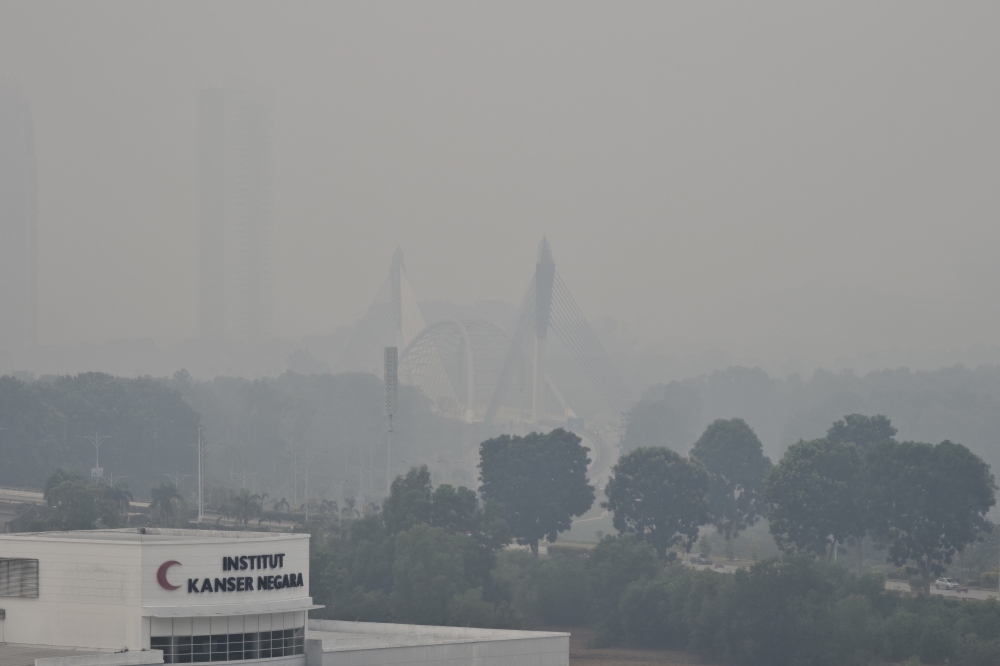
Malaysia has been living with transboundary haze for decades. The first reported cases affecting the west coast of Peninsular Malaysia date back to the 1960s. By 1983, haze had become a serious public disruption. Major episodes followed in 1991 and 1994, with fires in Sumatra and Kalimantan identified as significant sources.
Then came 1997 — the crisis that remains the benchmark for the duration and severity of haze in Malaysia, when the government estimated the damage at RM801.9 million in health, lost output, tourism and other costs.
Asean responded by creating a regional agreement in 2002. More than two decades later, the real question is this:
Why, after decades of experience, regional agreements, monitoring systems and repeated government commitments, does the problem keep returning?
The Asean Agreement on Transboundary Haze Pollution, signed in Kuala Lumpur in 2002 and in force since 2003, provides a regional framework for monitoring, prevention, information-sharing and coordinated responses. All 10 Asean member states have ratified it, and the region has since developed further mechanisms and a roadmap towards a transboundary haze-free Asean by 2030.
In 2023, the ministry shelved a proposed transboundary haze law, citing one fundamental problem: proving where a fire started, who owned the land and which company was responsible — evidence often beyond Malaysia’s jurisdiction.
Three years later, the legal question has returned.
Legislation cannot overcome the basic problem of obtaining evidence from another sovereign territory.
Singapore enacted its Transboundary Haze Pollution Act in 2014. Malaysia can examine that model, but a law on paper does not give any country the power to enter another country, investigate a plantation, compel corporate records or establish responsibility for a fire beyond its borders.
A prosecution may require evidence showing where a fire began, who controlled the land and which company was responsible. Much of that evidence lies outside Malaysian jurisdiction.
And this is where the question of Indonesia needs to be handled carefully.
Indonesia has taken action against fires and suspected offenders. But the scale and complexity of the problem involve peatlands, land-use practices, prolonged dry conditions and activities spread across vast areas.
Stopping every fire is not the same as stopping every source of transboundary haze. And holding a particular company accountable requires more than identifying a hotspot on a satellite image.
It requires evidence — and governments willing and able to share it.
The Asean agreement provides a framework for countries to work together, but it does not create a regional authority that can enter another country’s territory, investigate a plantation, compel corporate records or impose penalties.
The responsibility for action still rests substantially with national authorities.
At the 18th Asean Ministerial Meeting on the Environment and the 20th Conference of the Parties to the Asean Agreement on Transboundary Haze Pollution, held in Langkawi in September 2025, ministers reaffirmed the need for full and effective implementation of the Asean haze agreement and the 2023–2030 Haze-Free Roadmap.
Yet after more than two decades, Asean is still struggling to turn cooperation into a system that can consistently prevent fires, establish responsibility and deliver accountability when pollution crosses borders.
And the scale of the recurring problem remains stark. At an Asean sub-regional meeting in July 2026, member states noted that the number of hotspots in the southern Asean region during the first half of the year was about 86 per cent higher than during the same period in 2025. At the same time, Asean reaffirmed its roadmap and its ambition of achieving a transboundary haze-free region by 2030.
That is the gap we should be talking about.
There are signs that Malaysia itself recognises this gap.
The ministry is examining Singapore’s approach and has established a special committee to study measures to strengthen Malaysia’s response to transboundary haze. Malaysia has also been advancing proposals around Science Diplomacy and a regional Sustainable Haze Fund, with further discussions expected at upcoming Asean meetings.
All these measures have a place.
The real test is not another statement after the haze arrives, but what happens before the next episode. The clear months should be months of preparation — when fire-prone areas are monitored, data is shared, evidence preserved and action taken before the smoke crosses the border.
But the question has to change.
What will actually be different this time?
The coming monsoon will be welcome. Malaysians have every reason to want clean air again. But we should not confuse the end of the haze episode with the end of the haze problem.
The monsoon can clear the air. It cannot clear the problem. It also brings another familiar crisis: floods. And once again, the same story repeats.
* This is the personal opinion of the writer or publication and does not necessarily represent the views of Malay Mail.


