







JULY 2 — Every World Cup needs its impossible story. In 1966, it was North Korea and Pak Doo-ik defeating Italy. In 1990, it was Cameroon and Roger Milla reviving the spirit of football against all odds. In 2026, that role belongs most clearly to Cape Verde.
An archipelago nation with a population smaller than many European cities has negotiated a punishing group containing Spain, Uruguay and Saudi Arabia. It has done so not with arrogance, but with discipline, diaspora talent and emotional force. Its goalkeeper Vozinha, in tears after Cape Verde secured its passage, captured the meaning of the tournament: small countries can have very large hearts.
Cape Verde will next meet Argentina in Miami, the adopted city of Lionel Messi. Logic says the fairytale may end there. Yet football is never governed by logic alone. That is why the World Cup remains the most democratic of global spectacles.
At the halfway point of World Cup 2026, hosted by the United States, Canada and Mexico, the tournament has become more than sport. It is a lesson in geopolitics. It shows how the Global South can catch up when rules are clear, access is widened and competition is real.
For decades, football seemed to belong to the established aristocracy of Europe and South America. England, France, Germany, Spain, Brazil and Argentina enjoyed deeper leagues, better academies, stronger sports science and far greater financial resources. Their dominance was not accidental. It was institutional.
Yet World Cup 2026 shows that no hierarchy is permanent.
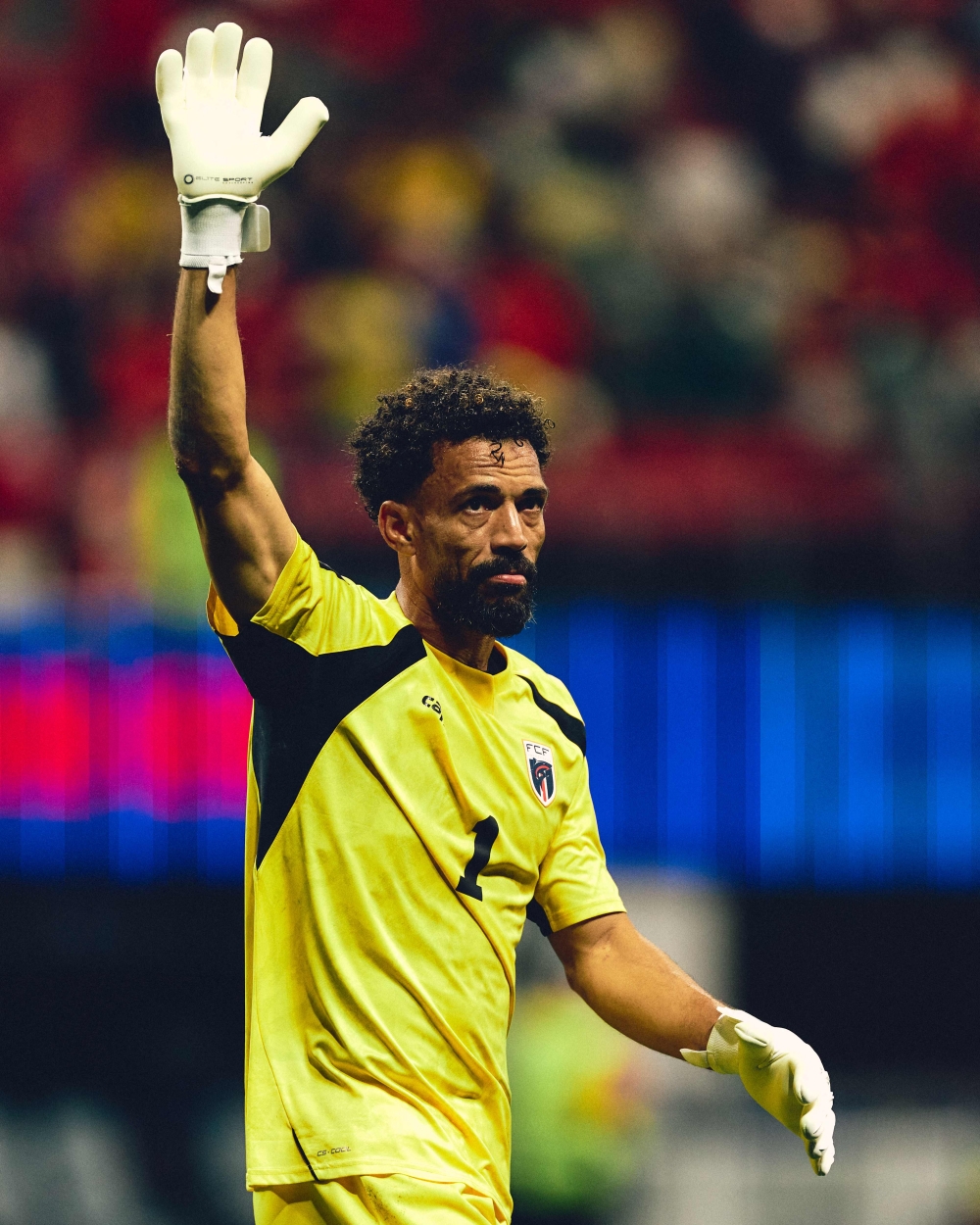
Cape Verde’s rise is especially revealing. Its squad is strengthened by the diaspora and by players hardened in European systems. Pico Lopes, recruited while playing for Shamrock Rovers, is one example. Others have passed through Portugal and other European football ecosystems. They return not only with skill, but with tactical knowledge, physical preparation and professional confidence.
This is how the Global South catches up: not through isolation, but through access, learning, adaptation and return.
Gary Lineker, the former England striker who played in the 1986 and 1990 World Cups, understands this transformation well. In his playing days, the gap between Europe’s powers and developing football nations was still vast. African, Asian and smaller island nations often arrived with passion but without comparable infrastructure. Today, that gap has narrowed dramatically.
Lineker won the Golden Boot in 1986 and helped England reach the semifinals in 1990. His generation faced a football world still dominated by old centres of power. The modern game is different. Players move earlier. Diasporas matter more. Coaching knowledge travels faster. Tactical systems are no longer the monopoly of the wealthy.
DR Congo’s campaign captures this lesson. Their journey ended in the Round of 32 with a narrow 2-1 defeat to England, decided by two exceptional goals from England captain Harry Kane. Kane’s finishing reflected the accumulated advantage of elite football systems. Yet DR Congo’s presence in the knockout stage was itself remarkable, especially for a country confronting internal instability and renewed public health anxieties.
Senegal’s elimination illustrated the same point even more dramatically. Their 3-2 defeat to Belgium was not the story of an African team being comprehensively outclassed by a European power. Quite the opposite. Senegal pushed one of Europe’s established football nations to the very brink. Even the concession of Belgium’s decisive goals, including a penalty in extra time, came only in the dying seconds. Belgium needed talent, luck, persistence and extraordinary composure in the final minutes to produce what amounted to a miracle. Senegal may have crashed out, but it left behind proof that the margins separating football’s old aristocracy and its emerging challengers have become vanishingly small.
Bosnia and Herzegovina carries its own symbolism. Emerging from the trauma of the Balkan wars, it has shown how football can become a vehicle of national recovery, discipline and confidence. Panama’s penalty victory over Germany likewise reminds the world that reputation alone does not win matches. Execution does.
At every turn, World Cup 2026 has challenged hardened cynicism. The underdogs are not asking for pity. They are asking for a pitch.
The same applies to the international order. The Global South does not require charity from the established powers. It requires fairer access to technology, trade, education, finance and institutions. When the rules are transparent and competition is genuine, those once dismissed as outsiders begin to surprise the world.
This is why Samuel Huntington’s concept of uni-multipolarity cannot remain permanent. After the Cold War, the United States stood as the sole superpower, while other countries operated beneath it. Yet history rarely tolerates monopolies indefinitely.
It is not China alone that will puncture American predominance. It is the rise of many others at once: middle powers, maritime powers, energy powers, technological powers and demographic powers.
Iran may be out of the World Cup, but it still sits near the Strait of Hormuz. Malaysia, Indonesia and Singapore may not be in the tournament, but together they oversee the Strait of Malacca and Singapore, among the most important arteries of world trade.
Power is becoming more distributed.
The world now resembles less a rigid hierarchy and more a tournament bracket. The old giants remain strong, but the outsiders are no longer silent. They are organised, trained, connected and unafraid.
Cape Verde’s story may still end against Argentina. Perhaps Messi’s adopted city of Miami will host the final chapter of their fairytale. But even if Cape Verde exits, the lesson will remain.
Small states are not small in ambition. They are small only when the system denies them space.
World Cup 2026 has given them space. They have filled it with courage.
That is what this tournament teaches us at its halfway point. The future belongs not only to the giants. It also belongs to those who waited patiently at the sidelines, prepared themselves, and stepped onto the field when the whistle finally blew.
* Phar Kim Beng is a professor of Asean Studies and director, Institute of Internationalisation and Asean Studies, International Islamic University of Malaysia.
** This is the personal opinion of the writer or publication and does not necessarily represent the views of Malay Mail.


