











JUNE 22 — Aviation watchers already saw it coming: Spirit Airlines has closed its doors. The immediate reaction is to blame the familiar bogeyman — the Gulf War, the spike in crude prices, the geopolitical dominoes that send jet fuel costs rocketing past the stratosphere. And yes, the war is the spark. But let’s be clear: the fire was already burning in the engine room.
For months, we have watched airline CEOs wring their hands as fuel prices dance to the tune of distant missiles. Now, with Spirit Airlines — a carrier built on the brittle bones of ultra-low-cost efficiency — becoming the first major US casualty, the industry is finally asking the question it has dodged for decades: How do you build a business model on a resource that can double in price overnight?
The answer, so far, is that you don’t. You cross your fingers and hedge. Wall Street loves to talk about “fuel hedging” — buying futures contracts to lock in prices years ahead. In theory, it is the aviation industry’s seatbelt. In practice, it’s a gamble. When Southwest Airlines hedged brilliantly in the 2000s, it looked like genius. When airlines hedged at US$120 (RM497) a barrel just before crude crashed to US$40, they bled billions. Hedging doesn’t eliminate volatility; it merely trades price risk for timing risk. And in a prolonged Gulf conflict, no contract lasts forever. Eventually, the hedge rolls off, and you are left staring at a spot price that makes your 737 look like a gas-guzzling limousine to nowhere.
Spirit’s demise is instructive, not just tragic. The entire ultra-low-cost carrier (ULCC) model — US$50 tickets, fees for air, fees for knees, fees for breathing — depends on two things: maximum seat density and minimum fuel burn per passenger. When fuel is cheap, the model prints money. When fuel spikes, the math implodes. Why? Because you cannot pass a US$40-a-barrel shock onto a passenger who bought a ticket for the price of a pizza. Spirit Airlines tried to raise fares last quarter. Passengers fled to legacy carriers. You see, legacy airlines have cushions the low-cost players lack: premium cabins, cargo revenue, loyalty programs, and international long-haul diversification. When fuel jumps, Delta can squeeze business class. Spirit Airlines can only squeeze its employees.
So, how does the industry cope? Three brutal truths. If the aviation industry wants to survive the next decade of Gulf wars, climate taxes, and peak oil scares, it needs to stop pretending volatility is a one-time event. Here is what survival actually looks like:
First, permanent capacity discipline. For years, airlines have over-ordered planes and under-filled them. The only real hedge against fuel spikes is to fly fewer empty seats. That means canceling marginal routes, parking older, thirstier jets (the Mad Dogs and early 737s), and accepting that growth cannot be infinite. In plain English: higher load factors, less competition, and higher ticket prices. Painful for consumers. Necessary for survival.
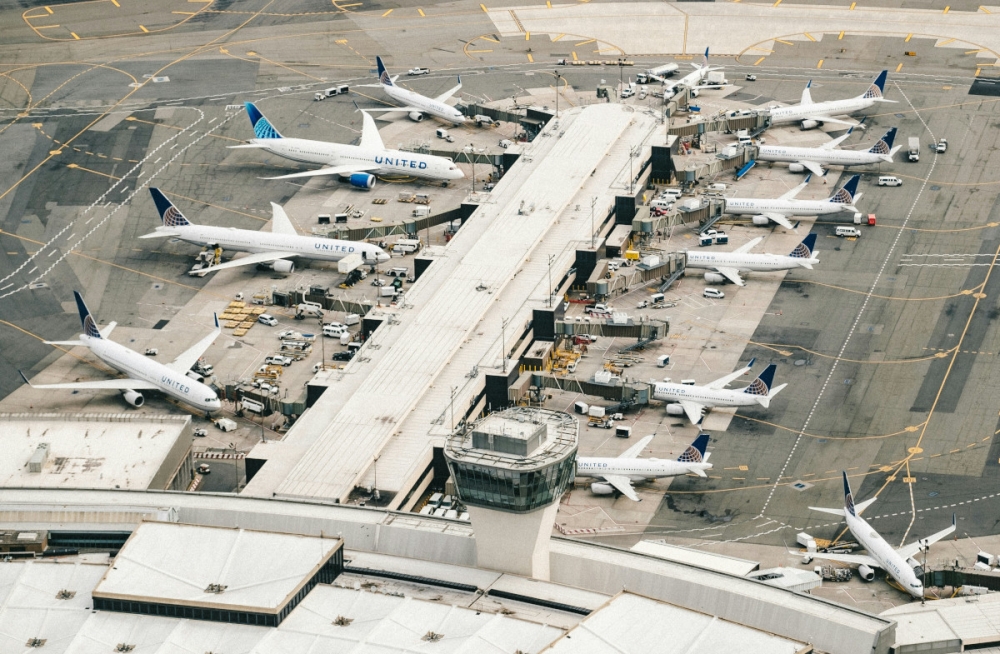
Second, rethinking the short-haul. It is absurd that we burn 800 gallons of jet fuel to fly a 150-seat plane from Chicago to Detroit — a route a hydrogen train or an electric regional aircraft could serve in a decade. The industry must accelerate the retirement of 50- to 300-mile flights and push passengers onto rail or electric air taxis. The airline that clings to every short-hop route will be the next Spirit Airlines.
Third, pass-through pricing as a permanent feature. The era of the US$49 fare is over. Airlines need to restructure their pricing engines to add an automatic “fuel surcharge” that floats with crude, the way delivery apps add a “supply chain fee.” Passengers will hate it. But it is better than bankruptcy. Transparency — “Your ticket is US$100, plus a US$40 fuel adjustment” — may be honest, and honesty may be the industry’s only remaining differentiator.
Here is what no one wants to say aloud: More airlines will follow Spirit Airlines. Not because the Gulf War is particularly brutal, but because the industry has spent thirty years building a house of cards on the assumption that oil would stay between US$50 and US$80. That assumption is now trash.
The survivors will not be the biggest or the cheapest. They will be the airlines that treat fuel volatility not as a risk to be hedged, but as a reality to be engineered around — with smaller, electric regional craft, with ruthless schedule cuts, and with ticket prices that finally reflect the true cost of lifting 200 humans into the sky.
The rest? They’ll go the way of Pan Am, TWA, and now Spirit Airlines: grounded not by war, but by the illusion that gravity doesn’t apply to economics. Fasten your seatbelts. It’s going to be a bumpy decade.
* Professor Datuk Ahmad Ibrahim is affiliated with the Tan Sri Omar Centre for STI Policy Studies at UCSI University and is an Adjunct Professor at the Ungku Aziz Centre for Development Studies, Universiti Malaya. He can be reached at [email protected]
** This is the personal opinion of the writer or publication and does not necessarily represent the views of Malay Mail.