


APRIL 16 — The recent banning of two books published by Gerakbudaya, Memoir Shamsiah Fakeh: Dari Awas ke Rejimen ke-10 and Komrad Asi (Rejimen 10): Dalam Denyut Nihilisme Sejarah, is deeply unsettling.
As an educator, it feels personal. It raises a question that is hard to ignore, what happens when access to knowledge and difficult parts of our past is taken away?
These are not just books. They are attempts to tell a version of Malaysia’s past that is not always comfortable.
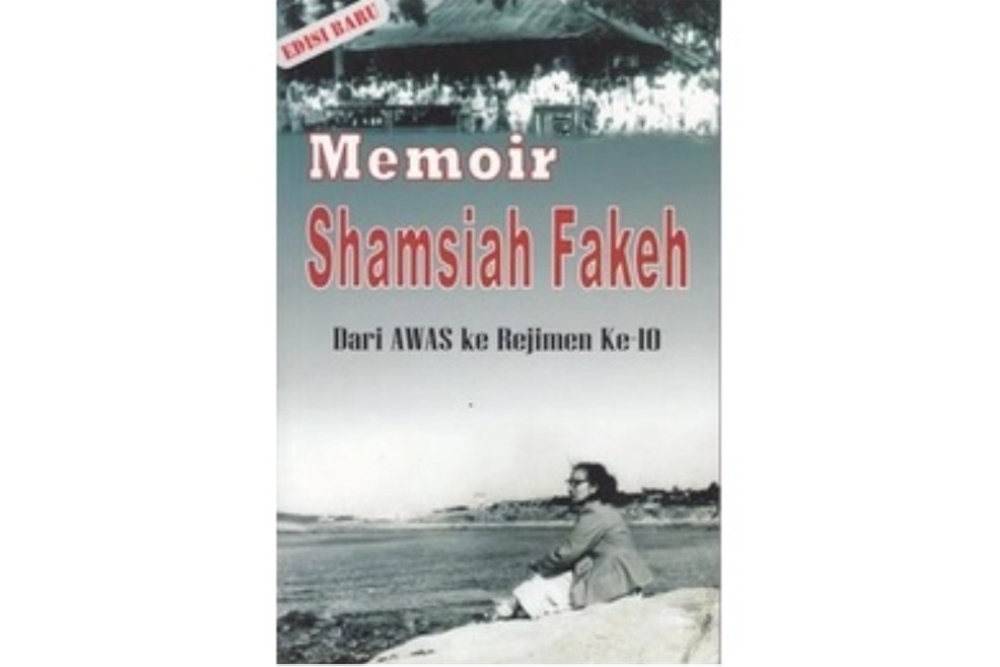
They engage with narratives linked to the Malayan Communist Party, including the life of Shamsiah Fakeh, a figure who does not sit easily within our official narratives.
She was many things at once, a nationalist, a woman navigating male-dominated political spaces, and someone associated with a movement that remains deeply sensitive in Malaysia’s historical memory.
That discomfort is precisely why such works matter.
History, if we are honest about it, is rarely clean. It is layered with contradictions, silences, and competing interpretations.
Yet it is through this messiness that we begin to understand the complexity of nation-building.

When we remove certain narratives because they are inconvenient or unsettling, we are not protecting history. We are simplifying it.
In Malaysia, book banning is not new. Over the years, various titles have been restricted under broad categories such as public order, morality, or national security.
But what strikes me, especially when looking at the “Hall of Banned” compiled by Gerakbudaya, is how wide-ranging these bans are.
Books about May 13, reformasi, corruption, governance, sexuality, and religion all appear on the same list. They do not share a single theme. What they share is that they ask difficult questions.
That is perhaps what makes them vulnerable.
When books like Rebirth: Reformasi, Resistance, and Hope in New Malaysia are restricted for political critique, and others like Gay is OK! A Christian Perspective are banned on moral grounds, it becomes clear that the issue is not about one specific concern.
It is about drawing boundaries around what can be discussed. And those boundaries are not always clear. They shift, sometimes quietly, sometimes abruptly.
For writers, publishers, and educators, this creates a certain unease. It is not always the explicit ban that shapes behaviour, but the possibility of one.
You begin to wonder which topics might be too sensitive, which perspectives might invite scrutiny. Over time, this anticipation can be just as powerful as regulation itself.
The banning of the Gerakbudaya titles sits within this broader pattern, but it also touches something deeper.
It is about history, and more specifically, about who gets to tell it. The story of the Malayan Communist Party has long been framed in a particular way, often centred on security and threat.
But history is never just one story. Figures like Shamsiah Fakeh complicate that narrative. They force us to see the past not as a single, settled account, but as something contested and evolving.
To read about her is to understand that Malaysia’s past was shaped by multiple actors, not all of whom fit neatly into categories of hero or villain.
When access to such stories is restricted, something shifts. Students, readers, and the public are left with a narrower field of vision.
History becomes less about inquiry and more about acceptance. And over time, this shapes how we think, not just about the past, but about the present and the future as well.
I often think about what this means in the classroom. How do we encourage critical thinking if certain materials are out of reach? How do we ask students to engage with complexity when the sources themselves are limited?
Education, at its core, is about asking questions, sometimes uncomfortable ones. When those questions become harder to ask, something fundamental is lost.
And perhaps that is the most concerning outcome. A society that does not engage with its difficult histories does not resolve them. It carries them forward, often in ways that are less visible but no less significant.
A confident Malaysia should not need to fear books. It should trust Malaysians to read critically, to question what they encounter, and to disagree where necessary.
Understanding a perspective does not mean agreeing with it. It simply means taking the past seriously enough to engage with it.
Malaysia’s history is not singular. It is made up of many voices, some of which sit uneasily with one another.
From colonial resistance to post-independence politics, from official narratives to marginalised experiences, these layers are part of how the nation came to be.
To remove parts of that story is not to build unity. It is to construct a version of history that is incomplete, and therefore fragile.
So when books are banned, the issue is about what kind of relationship Malaysia wants to have with its own past.
Whether it is a relationship shaped by openness and critical engagement, or one defined by caution and control.
Because when books are banned, history does not disappear. It is rewritten, narrowed, and eventually remembered only in the ways we are allowed to see.
* Khoo Ying Hooi, PhD is an associate professor at Universiti Malaya.
** This is the personal opinion of the writer or publication and does not necessarily represent the views of Malay Mail.


