


MARCH 20 — The first thing I noticed was not the water, but the sound.
It came from a distance, low and steady, like a deep rumble rolling across the land. At first, it was difficult to place. The sky was clear, and there were no signs of an approaching storm.
Yet the sound persisted, growing gradually as we moved closer, as though the earth itself was quietly resonating beneath our feet.
Only after some time did the source begin to reveal itself. Rising above the treetops in the distance were tall columns of mist, drifting upward into the sky in slow, shifting forms.
From afar, they resembled smoke, suspended in the air without any visible fire. It was only when we drew nearer that the full presence of the waterfall came into view.
This was Victoria Falls.
The Zambezi River, broad and unhurried in its journey across the land, suddenly plunges into a deep gorge that cuts sharply across its path.
The result is a vast curtain of water stretching across the horizon, falling with a force that is both powerful and continuous.
The sound that had accompanied us from afar now surrounded us completely, no longer distant but immediate and all-encompassing.
As I stood before the falls, the air grew noticeably cooler. Fine droplets of water drifted through the air, settling gently on my skin like a light, persistent rain.
The mist rose and shifted with the wind, and from time to time, sunlight would pass through it to form brief arcs of colour that appeared and disappeared just as quietly.
It was difficult to speak in that moment, not because of the sound, but because of the feeling that words were no longer necessary.
There are places where one observes, and there are places where one simply stands still. This was the latter.
For generations, the local communities had known this place by a different name: Mosi-oa-Tunya, which means “The Smoke That Thunders.”
The description is both simple and precise. The rising mist resembles smoke, while the unceasing roar of the water echoes like distant thunder across the surrounding landscape. Yet the name also reflects a way of seeing that goes beyond description.
In many African traditions, the natural world is not understood as something separate from human life.
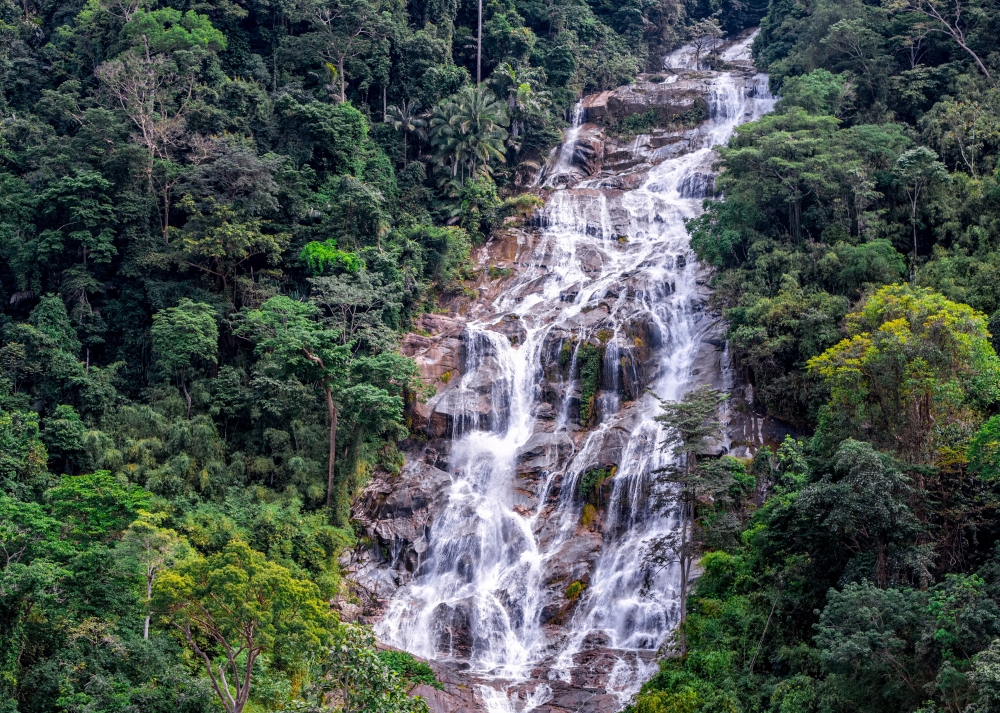
The land, the rivers and the animals are part of a larger living system in which human beings are participants rather than observers. There is a sense that one does not stand apart from nature, but within it.
A traditional Shona saying expresses this perspective with quiet clarity: “Nyika ndeyababa, isu tiri vashanyi.” The land belongs to the Creator; we are merely visitors upon it.
And standing before the falls, the meaning of these words becomes easier to appreciate.
The waterfall has been here for millions of years. Long before our cities were built and long before our systems of knowledge took shape, the waters of the Zambezi River were already flowing across this land.
The gorge, carved slowly over time, bears witness to processes that far exceed the span of human life.
In such a setting, it becomes difficult to hold on to the usual measures by which we define progress.
Achievements, plans and ambitions begin to feel less central, not because they are unimportant, but because they exist within a much larger context that we do not control.
What remains is a quieter awareness of our place within that context.
As I continued to stand there, listening to the unbroken rhythm of the falling water, it became clear that the experience was not about understanding the waterfall in any analytical sense.
Rather, it was about allowing oneself to be repositioned by it. The scale of the landscape, the continuity of the rivers and the persistence of the sound all seemed to point toward a reality that does not depend on our presence, yet continues to sustain us in ways we often overlook.
Moments like this do not arrive with instructions. They do not demand a particular conclusion or offer a clear message.
Instead, they leave us with a gentle shift in perspective, one that may only become fully apparent much later.
As we began to make our way back, the sound gradually softened once again, returning to that distant, steady rumble we had first heard upon arrival.
The mist receded behind the trees, and the path ahead resumed its familiar stillness.
Yet something within felt subtly different. The landscape had not changed, but the way I stood within it had.
And perhaps that is what such places quietly offer to those who encounter them. Not answers, but a reminder. Not explanations, but a reorientation.
In the end, what remains is not only the memory of a waterfall, but the experience of standing, however briefly, within something far greater than oneself.
And in that quietness, one begins to understand the meaning of the smoke that thunders.
* Ng Kwan Hoong is an Emeritus Professor of Biomedical Imaging at the Faculty of Medicine, Universiti Malaya. A 2020 Merdeka Award recipient, he is a medical physicist by training but also enjoys writing, drawing, listening to classical music, and bridging the gap between older and younger generations. He may be reached at [email protected]
** This is the personal opinion of the writer or publication and does not necessarily represent the views of Malay Mail.


