















MARCH 19 — This morning, on what may be the last day of Ramadan, I just remembered the same feeling that I had every year: that by the time the holy month reaches its middle stretch, the novelty has faded.
The first sahur excitement is gone. The early adjustments have settled. The body has found its rhythm.
Hunger arrives at predictable hours, fatigue visits in the late afternoon, and breaking fast no longer feels like a dramatic event. It is simply part of the day.
There is something almost unremarkable about Day 15. Or 16. And that, I have come to realise, is precisely where the real test lies.
We are naturally drawn to beginnings and endings. The first day of Ramadan carries a sense of renewal. We speak about intentions, discipline, and fresh starts.
The last 10 nights come with anticipation and heightened awareness. They feel spiritually charged. Both ends of the month receive attention. But the middle rarely does.
The middle is where motivation softens. The early enthusiasm has worn off, and the finishing line is still too distant to create urgency.
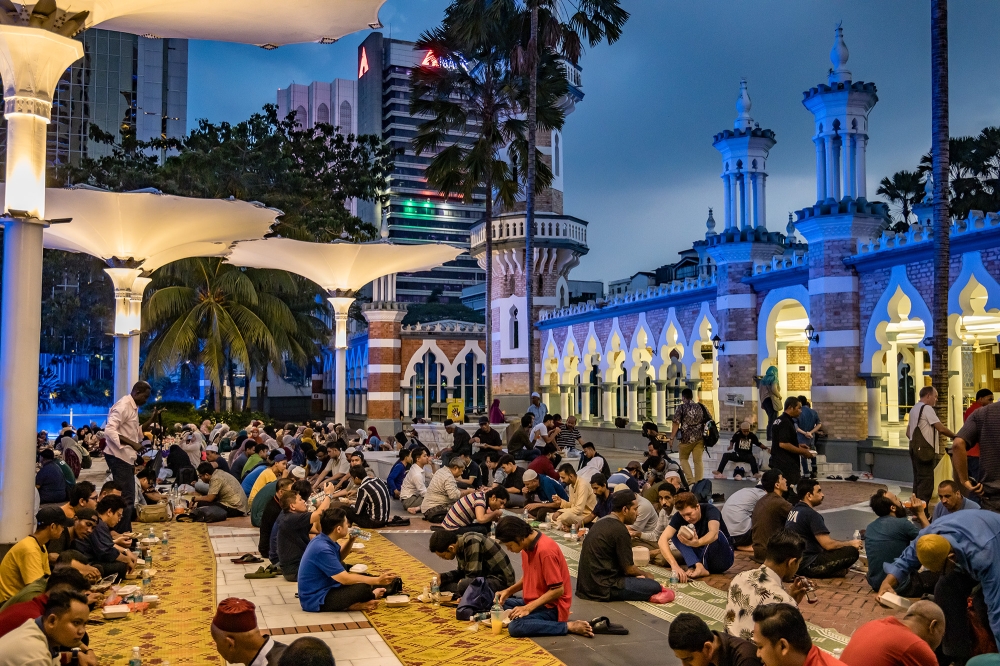
The routine has stabilised. No one is especially inspired. No one is especially watching. The work simply continues.
And this pattern is not unique to Ramadan. It appears in almost every meaningful pursuit of ours.
We celebrate the first week of a new job and the day of promotion, but not the long stretch in between.
We admire the wedding ceremony and the anniversary milestones, but the real marriage is built on ordinary Wednesdays.
We applaud the final submission of a PhD thesis, but not the years spent reading, re-reading, writing, and rewriting.
Malcolm Gladwell wrote in Outliers (2008) about the “10,000-hour rule.” Whether or not the number is precise is less important than the idea behind it.
Mastery is not built in dramatic bursts. It is built in accumulated, often repetitive, hours that rarely feel glamorous while they are happening. The transformation becomes visible only much, much later.
Ramadan mirrors this truth every year. The first few days test our physical adjustment.
The final days test our spiritual intensity. But the middle tests something quieter: our consistency.
By now, fasting is no longer a shock to the system. It has become routine. The question is no longer whether we can endure hunger, but whether we can remain steady in character, patience, and intention when nothing feels particularly dramatic.
In many areas of life, we mistake intensity for commitment. We assume that strong emotion signals depth. But depth is often built through repetition.
Through returning to the same practice without needing it to feel new. Through continuing even when there is no external validation.
If you think about the middle of a semester, it is rarely memorable. It is not the excitement of orientation week, nor the anxiety of final exams.
It is just weeks of lectures, tutorials, assignments, and quiet preparation. Yet that is where understanding deepens. That is where habits form. That is where attention either sharpens or drifts.
This is perhaps the most uncomfortable truth about growth. It rarely feels significant while it is unfolding. It feels repetitive. Sometimes even uneventful. The change we hope for accumulates quietly, beneath the surface of routine.
The middle is also where quitting becomes easiest. Without the excitement of a beginning or the urgency of an ending, the mind begins to negotiate.
We tell ourselves we have already done enough. We promise to refocus later. We allow small compromises to creep in.
But if we can remain steady in the middle, something deeper forms. Not dramatic transformation, but reliability. Not emotional highs, but quiet endurance. The ability to continue without needing constant stimulation.
Ramadan, in its quiet wisdom, stretches its lessons across the month rather than concentrating them at the edges. The ordinary days are not filler. They are the training ground.
So if these middle days feel uneventful, that may not be a problem to fix. It may be the point. It means discipline has settled into routine. It means we are no longer negotiating with hunger, but learning to live alongside it.
And perhaps that is the deeper rehearsal Ramadan offers each year: not how to start with enthusiasm, and not only how to finish with intensity, but how to remain steady when nothing feels particularly special.
Because in most of life, the middle is always the test.
* Nahrizul Adib Kadri is a professor of biomedical engineering at the Faculty of Engineering, the Director of UM Press, and the Principal of Tuanku Bahiyah Residential College, Universiti Malaya. He may be reached at [email protected]
** This is the personal opinion of the writer or publication and does not necessarily represent the views of Malay Mail.


