


MAY 8 — Since the end of Second World War, Tokyo maintained a strictly defensive doctrine and avoided being seen as a military power. But the world has since changed significantly, and security framework of Japan has been updated continuously, while defensive and rules-based posture remained unchanged.
Revision of 2022 National Security Strategy, pledged by Prime Minister Takaichi Sanae, further formalise this shift by strengthening defence capacity and expanding security cooperation with partners, especially in the Indo-Pacific.
Among Asean countries, The Philippines is the most advanced and active partner in Japan, where cooperation has moved from diplomatic signalling to operational military integration and tangible capability transfer.
The Reciprocal Access Agreement (RAA) is the most powerful framework as it has enabled both countries to deploy forces on the territory of each other. But more importantly, observers also see rapid shift towards higher level of defence cooperation in military assets and joint operations.
The potential transfer of Japanese defence equipment, including Abukuma-class destroyers and TC-90 maritime patrol aircraft marks a significant departure from Japan’s traditionally restrictive arms export posture, to enhance the maritime and surveillance capabilities of The Philippines in the South China Sea.
Thanks to this RAA, the recent Balikatan 2026 exercise see unprecedented level of participation from the Japan Self-Defense Forces (JSDF), with around 1400 personnel took part in the drills. JSDF able to bring in high-tech equipment and engaging in higher-end, combat-oriented training alongside Philippine and allied forces, including live-fire maritime strike scenarios using Type 88 anti-ship missiles.
The implication is clear – a shift from traditional humanitarian-focused role to one that includes credible warfighting capabilities.
The Philippines–Japan defence relationship is not just defined by shared strategic concerns, but real interoperability, equipment transfer, and joint operational planning.
After the Philippines, Singapore represents a highly structured and technologically aligned model of defence cooperation with Japan, in which the Strategic Partnership enables precision interoperability, advanced training, and defence technology exchange.
On the operational side, the Singapore Armed Forces and the JSDF are regular in naval interactions ranging from bilateral passage exercises to complex multinational drills. For example, Exercise Pacific Reach involves submarine and rescue ship from JSDF.
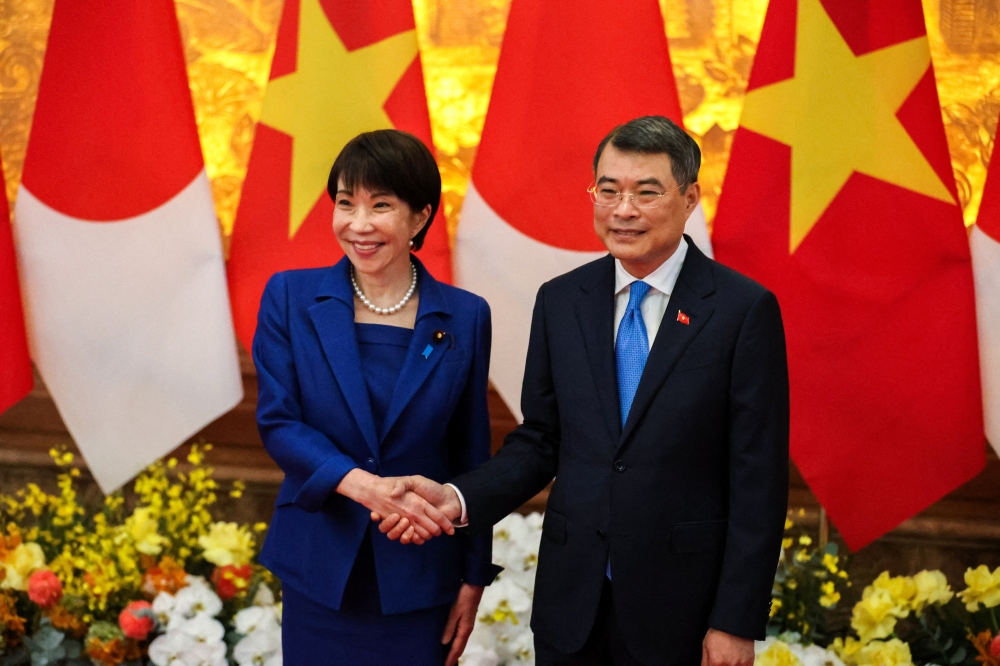
Vietnam, which as a close tie with China, does not have a formal defence relationship with Japan. However, the recent visit of Sanae Takaichi to Vietnam provides a quiet but expanding military collaboration. Both countries have anchored in the Comprehensive Strategic Partnership (2023) and “2+2” foreign and defence consultations, with defence cooperation broadening into areas such as maritime security, training, military medicine, and search-and-rescue (SAR), reflecting a significant emphasis on capacity-building.
At the strategic level, Japan shall be happy with Vietnamese’s acceptance of Free and Open Indo-Pacific (FOIP) vision. No wonder Tokyo explicitly positioning Vietnam as a key regional partner in strengthening resilience and supply chain security in easing geopolitical risk.
Turning to Indonesia, the Defence Cooperation Arrangement (DCA) signed between defence ministers from both countries on 4th May, representing a different model of engagement – less operational but strategically significant in terms of defence industrial cooperation and regional positioning.
This agreement is timely as it comes shortly after Japan further relaxed its restrictions on defence equipment exports. The potential procurement of Mogami-class frigate and co-building of 4 other vessels in PT PAL shipyard in Indonesia will further boosting the defence technology capabilities of Indonesia.
Mogami class frigate is a bright star that we shall have a close look. A 5500 tonnes frigate with crew size of 90, which is exceptionally low compared to peers of similar tonnage.
Hence, Indonesia not merely as a recipient but a partner in defence industrial integration, aligning with the ambition of indonesia to develop a more self-reliant military capability.
In fact, the collaboration between Japan and Indonesia is far beyond than defence and security. Both countries sit on the Pacific Ring of Fire and facing similar disaster risks such as earthquake, tsunami and etc, but Japan is more technologically-driven and systematised preparedness model, which makes its experience especially useful for Indonesia.
Following the donation of the retired Garibaldi light aircraft carrier from Itali, Jakarta has sees it as potentially useful for aid distribution in disasters.
Japan has vast and practical experience in using its Izumo-class helicopter destroyers in this kind of role. The Japanese MOD says JS Kaga is a multi-purpose operation destroyer that the assigned missions including disaster relief, and JS Izumo also presented its disaster-response function and joint relief operations.
In other words, while the Indonesian carrier transfer is not relevant to Japan, it would be natural for Indonesia to study and train on Izumo-class helicopter destroyers. Large-deck disaster-relief procedures are complex and requires seamless coordination during emergencies. Hence rather than developing its own procedures, which could take years, adopting the working methods and procedures from Japan will be a short-cut, but reliable path for Indonesia. By doing so, both navies can operate similar vessels in coordinated humanitarian missions.
Asean countries, in overall, have been benefited from Japan since the introduction of Official Development Assistance (ODA), which was further upgraded in Official Security Assistance (OSA) in 2023. The Philippines, Malaysia, Vietnam, Indonesia, even Sri Lanka and Bangladesh have all receiving second hand vessels to enhance maritime security.
While Asean countries are building closer and more concrete relationships with Japan, Malaysia shall do the same too.
Malaysia shall tap the opportunity on OSA for capability, particularly in maritime security where operational gaps remain a significant challenge. Hence Malaysia can target naval assets, such as retired Abukuma-class destroyer, older P‑3C maritime patrol aircraft, or coastal surveillance radars, which would significantly enhance Maritime Domain Awareness (MDA) in the South China Sea and Strait of Malacca at minimal acquisition cost.
As Japan deepening its ties with the Philippines, Indonesia, Malaysia and Singapore, other Asean countries such as Laos and Cambodia, shall not be left out. An Asean divided along geopolitical lines will not be conducive to regional or Japan’s interest. Tokyo commitment to rule-based international order and Free and Open Indo-Pacific Strategy must be matched by inclusivity beyond capacity-building, development assistance, and non-traditional security cooperation to all Asean members, regardless of their strategic alignment.
* Phar Kim Beng is a professor of Asean Studies and director of the Institute of Internationalization and Asean Studies, International Islamic University of Malaysia. Jitkai Chin is a professor in the Department of Chemical Engineering at Universiti Teknologi Petronas and an expert committee member at Centre of Strategic Regional Studies.
** This is the personal opinion of the writer or publication and does not necessarily represent the views of Malay Mail.


