


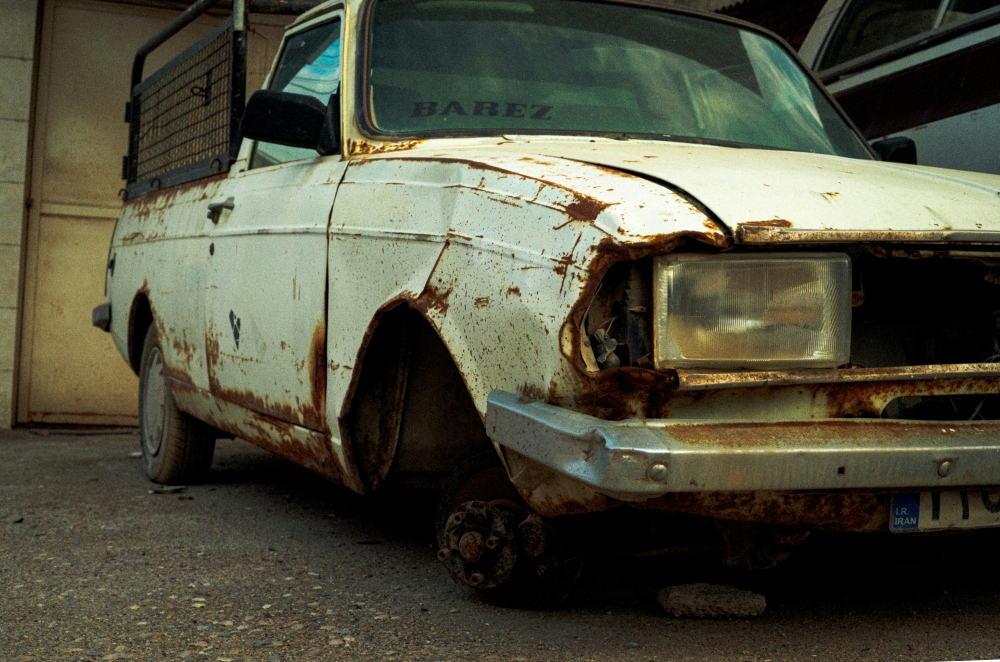
APRIL 26 — Right outside my apartment there’s a small van that’s been sitting in the same parking lot since right after Lionel Messi won the World Cup (kid you not).
Every day I pass it. Every day it collects more leaves, more dirt, more rust, most pamphlets (fancy that). It’s literally become part of the landscape.
And why? Because its previous owner decided the vehicle wasn’t worth repairing or selling or maybe something happened to him or her.
That’s not the only abandoned vehicle of course. The ominous thing is that there’s (obviously) no official record of how many vehicles are left to rot so we can only make guesstimates based on the number of complaints lodged and those numbers are disheartening.
Across the country between 2018 and 2023, north of 60,000 abandoned vehicles across Malaysia were reported.
Kuala Lumpur itself saw more than 9,600 complaints resulting in about half the number towed.
Early this year, around 1,159 damaged/abandoned vehicles were recorded in Federal Territory public housing schemes alone.
Long and short, the numbers are high and serious and that’s why the recent Kuala Lumpur City Hall (DBKL) drive to ramp up the removal of abandoned and obstructive vehicles can only be applauded and encouraged.
I’ve heard it said before in the context of primary education that what you permit, you encourage, something surely relevant if you want to put a halt to the number of cars being chucked along the side of the road.
Indeed, this “epidemic” of discarded vehicles brings to mind something from my university days: the broken windows theory.
This theory states that visible signs of neglect or defiance or just bad behaviour within an environment can and will promote further anti-social and even criminal behavior.
The idea is that if a window in a building is broken and left unrepaired, people walking by will conclude that no one cares, leading to more windows being broken, and eventually, more serious crimes.
We can see this theory in operation in any office where people slack off without being reprimanded, contributing to an overall culture of inefficiency, delays, etc.
You can also argue that Malaysia’s severe problem with traffic accidents caused by lorries has a similar basis i.e. so many lorry operators see other lorries and operators going around with minimum or zero checks, maintenance, driver-vetting, etc such that nobody’s really motivated to fix any problems, until dangerous lorries become run of mill.
Another unpleasant case is that of folks urinating in stairwells. I’m willing to bet a roll of toilet paper that the more the smell of dried pee persists in any quiet area of the building, the less uninhibited the next dude will be relieving himself in said area.
This is also surely why if you walk around Suria KLCC you’ll sometimes see the security guards telling people sitting on the floor to get up. What at first looks a bit harsh may, in fact, be a smart move in ensuring that such shopping malls maintain that aura of class, an aura surely threatened by many folks sitting cross-legged on the floor.
Thus, in addition to DBKL’s tactics of logistics enhancements, increased disposal capacity and stronger inter-agency co-operation, perhaps there’s one more powerful element which needs to be implemented: increased surveillance to pinpoint such irresponsible vehicle owners so they can be punished?


