














KUALA LUMPUR, Dec 5 — Malaysia’s economy is expected to grow at a slower gross domestic product (GDP) pace of 4.4 per cent in 2020 due to external headwinds from rising US-China trade tensions and weakening global growth.
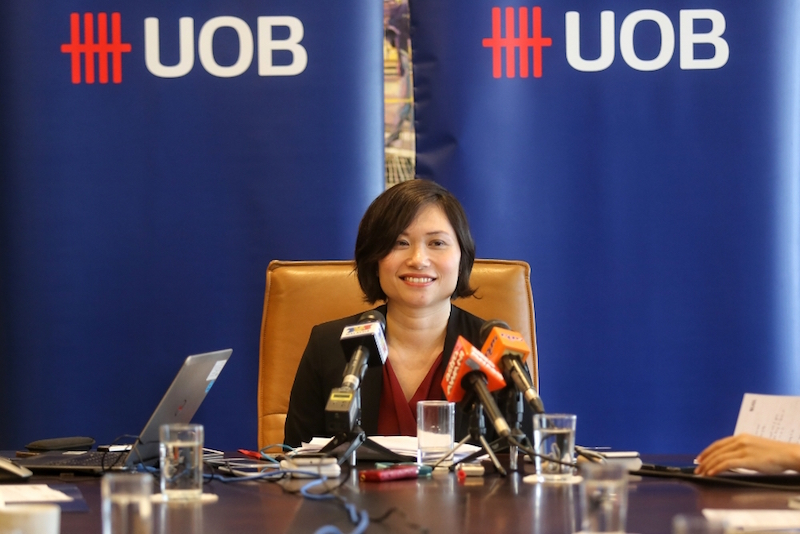
United Overseas Bank (UOB) Malaysia Bhd's senior economist Julia Goh said trade tension between the two countries would be challenging for Malaysia in the first half of 2020.
“We think the tensions between US-China could persist going into 2020 and beyond tariff into other areas in investment and technology.
“We also consider the potential tariff to actually move beyond, to other countries and also geopolitical risk affecting other parts of the world, such as Middle East and North Korea,” she told reporters at a media briefing here, today.
She said UOB Malaysia’s forecast of lower GDP at 4.4 per cent for next year compared to 4.6 per cent for 2019 could also be attributed to lower foreign and public investments that weigh down on domestic growth.
Nevertheless, UOB Malaysia expects private sector spending particularly in private consumption to remain robust and support the country’s growth.
To date, private sector spending accounts for 77 per cent of Malaysia’s GDP and contributes 4.5 per cent to the country’s headline growth.
“Other growth drivers include the country’s stable macroeconomic fundamentals and a higher number of approved investments into Malaysia being realised in 2020.
“Greater government spending could also lend further impetus to growth in 2020, while Budget 2020 is an expansionary budget with RM3 billion worth of pre-emptive measures put in place to support the economy,” Goh said.
UOB Malaysia expects Bank Negara Malaysia to lower the Overnight Policy Rate (OPR) by 25 basis points to 2.75 per cent in the first quarter of 2020.
“This is in line with a wider trend by global central banks to move pre-emptively to mitigate downside risk to growth and to help offset the negative impact of US-China trade tensions.
“UOB Malaysia will continue to spur the domestic economy amid the lingering trade uncertainties. We continue to support businesses particularly the SMEs; we also provide a lot of avenue for companies to hedge their foreign exchange risks,” Goh added. — Bernama