














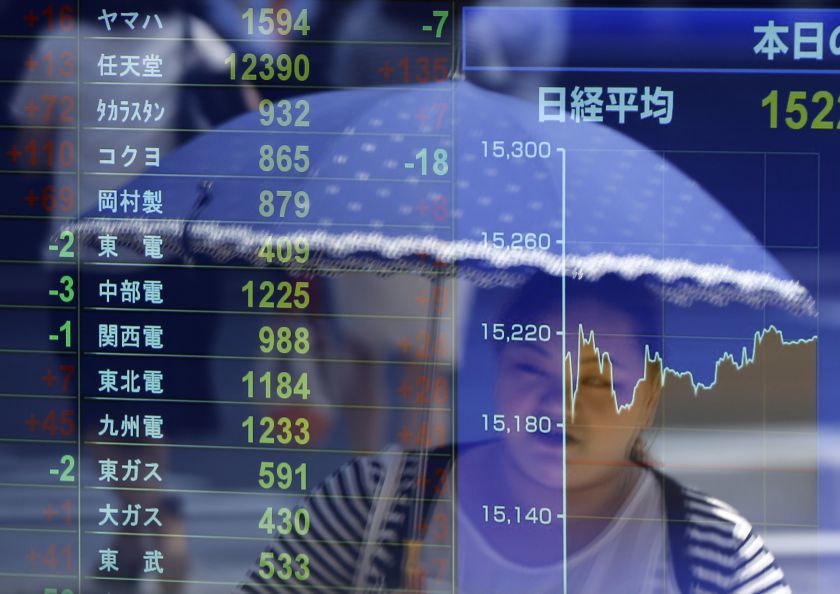


TOKYO — Asian shares tumbled today as investors sought out safe-haven assets on growing fears that conflicts in Ukraine and the Middle East could sap global growth, extending losses after US President Obama said he had authorised air strikes in Iraq.
Obama said in an address that he authorised targeted strikes to protect the besieged Yazidi minority and US personnel in Iraq, after the Iraqi government requested help.
“We can act carefully and responsibly to prevent a potential act of genocide,” Obama told reporters at the White House. “I’ve therefore authorised targeted air strikes if necessary.”
UN Secretary-General Ban Ki-moon and the United Nations Security Council yesterday called for the international community to help Iraq’s government and people as the country struggles against a sweeping advance by Islamist militants.
MSCI’s broadest index of Asia-Pacific shares outside Japan dropped about 0.9 per cent, on track for a weekly loss over 1 per cent, while Japan’s Nikkei stock average was down about 2.1 per cent.
S&P 500 e-mini futures slipped 0.5 per cent.
Wall Street ended down yesterday, erasing early gains marked on data showing the number of Americans filing new claims for unemployment benefits unexpectedly fell last week.
Yields under pressure
Risk averse-investors continued to seek the safety of fixed-income assets.
The yield on 10-year Treasuries stood at 2.386 per cent, down from the US close of 2.424 per cent and setting a fresh 14-month low as bond prices rose.
The yield on German Bunds slid to a record low of 1.069 per cent overnight, on heightened fears that Ukraine’s conflict with pro-Russian rebels will crimp euro zone growth.
The European Central Bank said after its monthly policy-setting meeting yesterday that it stands ready to take further easing steps to stave off deflation, and warned that the Ukraine crisis poses a serious risk.
Russia said on Wednesday it will ban all US food imports and all European fruit and vegetables, in retaliation for Western sanctions imposed for Moscow’s support of the Ukraine separatists.
A silver lining of the tensions was a weakening effect on Europe’s currency, in line with the ECB’s hopes. The euro stood close to nine-month lows against the greenback at US$1.3349, steady on the day and not far from this week’s low of US$1.3333 touched on Wednesday.
The dollar slumped against the yen to 101.75, as investors awaited the outcome of the Bank of Japan’s latest two-day policy meeting, at which the central bank is expected to maintain its massive asset purchases and its optimistic view on the economic outlook.
But after recent downbeat data, some policymakers might propose offering a bleaker view on exports and output than given in the July assessment.
Japan’s current account swung to a deficit in June for the first time in five months, government data showed today, due to a decline in earnings on overseas investments.
The bearish trading environment saw gold climbing back above US$1,300 an ounce to stand at US$1,313 after breaking through technical resistance overnight that could spur further gains. — Reuters