














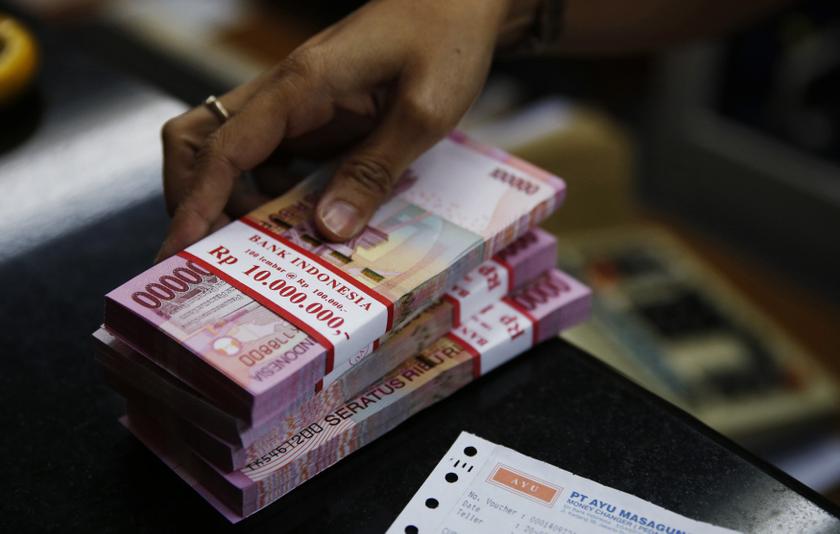


JAKARTA, July 17 — Budi Mulya, a former deputy governor at Bank Indonesia, was sentenced to 10 years in jail for graft in the government’s US$573 million (RM1.83 billion) bailout of Bank Century during the global financial crisis in 2008.
Mulya was also given a 500 million rupiah (RM136 million) fine, Afiantara, the head judge at the court trial in Jakarta, said yesterday. Mulya, who was in charge of the central bank’s monetary operations, was detained by the Corruption Eradication Commission in November after an investigation over a 1-billion-rupiah loan he obtained from the former owner of Bank Century, now called PT Bank Mutiara.
“The act of the defendant was counter-productive with efforts to eradicate corruption in Indonesia,” the court said in a statement. “The act of the defendant has undermined the image of Bank Indonesia as a central bank.”
After the verdict, Mulya, 59, told the court he would appeal.
Indonesia’s Vice President Boediono, 71, who was Bank Indonesia’s governor when the government bailed out Bank Century, testified as a witness in the case. The verdict shows how policy making and the economy in Indonesia, which ranked 114th among 177 countries in a 2013 Transparency International survey on corruption perceptions, have been undermined by graft.
The country’s stock market has rallied 20 per cent this year in part on hopes that presidential candidate Joko Widodo will have won the July 9 election and tackle graft and red tape by moving more bureaucratic processes online. Widodo, known as Jokowi, is leading Prabowo Subianto with more than three- quarters of votes counted, according to websites tallying the actual results, with official results due by July 22.
Systemic risk
The central bank’s decision to say a Bank Century failure would pose a systemic risk, changing a short-term financing rule to allow it to get a 6.7 trillion-rupiah bailout and handing it over to the state deposit agency without a financing limit was corruption, the court ruled.
The state deposit guarantee agency took over Bank Mutiara after the bailout, and now is seeking to sell it. Potential investors from Malaysia, Singapore, Japan and Indonesia are bidding, Samsu Adi Nugroho, the corporate secretary at the agency, said on June 13.
President Susilo Bambang Yudhoyono was re-elected for a second and final term in 2009 on a platform of getting tough on corruption, yet his Democrat party has been undermined by graft scandals and came fourth in April parliamentary elections.
Anti-graft agency
The candidates to replace him, Jokowi and Prabowo, sparred over the corruption impeding the country’s economic progress, in a final televised debate ahead of the vote. Jokowi’s running mate Jusuf Kalla said the two had no “mafia” by their side, while ex-general Prabowo said democracy was at risk of drowning in improper practices.
The country’s anti-graft agency, known as the KPK, has convicted central bankers, ministers and chief executives, and says it is just scratching the surface of corruption.
Yudhoyono’s former sports minister Andi Mallarangeng is currently on trial for alleged corruption in the construction of a stadium.
Miranda Goeltom, a former senior deputy governor at the central bank, was jailed in 2012 for bribery involving her election to the post. The former head of the constitutional court, Akil Mochtar, was sentenced to life in prison on June 30 after a conviction for graft and money-laundering. — Bloomberg