










BEIJING, Aug 11 — China must address the needs and concerns of the hundreds of millions of rural migrants that the government wants to turn into urban residents, government advisers and planners say.
“Urbanisation isn’t only about changing people’s residency, it’s about their overall development and an improvement in the quality of their lives,” Li Lianzhong, head of the economy bureau at the Policy Research Centre of the Communist Party Central Committee, said at a forum in Beijing yesterday.
Ending the ‘hukou’ (residence permit) system and replacing it with identity cards will signal the ‘victory of reforms’.” — technocrat Li Lianzhong
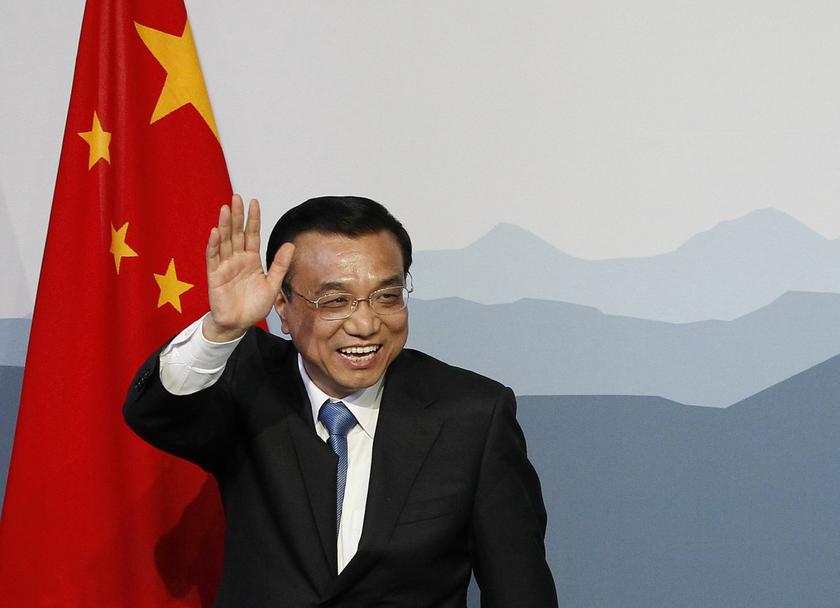
Premier Li Keqiang has championed urbanisation as a “huge engine” for growth as leaders seek to shift the world’s second-largest economy toward a model that relies on consumption rather than on investment and exports. Policy makers are debating how best to do this, including whether and how to scrap the residence permit system that denies migrant workers and their families the same welfare, health and education rights as permanent city dwellers.
Ending the “hukou”, or residence permit, system and replacing it with identity cards will signal the “victory of reforms”, Li Lianzhong said.
More people lived in China’s towns and cities than in rural areas for the first time in the country’s history in 2011, government data show, with 691 million living in urban areas compared with 657 million in the countryside. The urbanisation rate will rise to about 66 per cent by 2030, meaning about 13 million more people, equivalent to the population of Tokyo, will move to cities every year, the World Bank estimated in its “China 2030” report published last year.
Create wealth
“Urbanisation will usher in a huge amount of consumption and investment demand, increase job opportunities, create wealth for farmers, and bring benefits to the people,” Li Keqiang said in his first news conference after becoming premier in March.
Policy makers, planners and government advisers are now drafting proposals that will be presented to the top leadership at a meeting later this year, known as the third plenum, to decide on economic and social reforms after a once-a-decade leadership transition that was completed in March.
Speaking at yesterday’s forum, Li Tie, director-general of the China Centre for Urban Development under the National Development and Reform Commission, the country’s economic planning agency, alluded to conflict over the direction of policy between different interest groups.
“Nobody wants such a big group of migrants to be their neighbours and share their so-called civilised space. This is a conflict of interest,” Li Tie said. “We are facing rejection from the hearts of so many mayors and city elites who have enough ability to influence decision-making.”
Living conditions
China must also address the inadequacy of public services for the hundreds of millions of rural residents who want to move to towns and cities, Li Tie said.
China’s administrative system means companies, human resources and capital tend to flow to bigger cities, Zhao Hui, director of the Village and Town Construction Department at the Ministry of Housing and Urban-Rural Development, said at the forum. While the country’s urbanisation ratio includes small towns, they often have worse living conditions, infrastructure and public services, he said.
The country needs to do a better job of establishing smaller conurbations as these tend to cost less to develop, are more energy efficient and environment-friendly, and hence more supportive of sustainable development, Zhao said.
Better resources
In an article published November 2012 in the People’s Daily, Li Keqiang, then a vice premier, wrote that the process of urbanisation was “not about simply increasing the number of urban residents” or expanding cities, and rather about a “complete change” in industrial structure, employment, living environment and social security.
Speaking at the forum, Mao Daqing, executive vice president of China Vanke Co., the biggest developer by market value traded on the country’s stock exchanges, questioned whether China needed more towns and cities when most migration had been to China’s 70 biggest conurbations.
“These big cities interest people because they have more job opportunities, education opportunities and medical resources,” Mao said. “Those other 610 cities can’t attract people even though they already exist,” he said, adding: “It indicates some of those 610 cities have problems or can’t survive.”
Taking Beijing as an example, Mao said that assuming 700,000 people moved into the city each year, that would cost the local government at least an extra 77 billion yuan (RM40.6 billion) a year in urbanisation-related spending, equivalent to doubling its annual land sales or a 25 per cent increase in tax revenue.
“This is totally beyond the affordability of a local government, Beijing can’t afford it,” Mao said. “We must guide big cities, develop medium-sized cities and unleash small towns.”
City oversupply
Separately, a deputy director of the China Centre for Urban Development, Qiao Runling, warned that reckless expansion of cities in China has left many of them empty, the official Xinhua News Agency reported yesterday.
“China now has an oversupply of cities, given the number of new urban districts that we have,” the report quoted Qiao as saying at a forum held in southern Jiangxi province last week. The issue was especially serious in small and medium-sized cities in central and western regions, Qiao said. — Bloomberg