














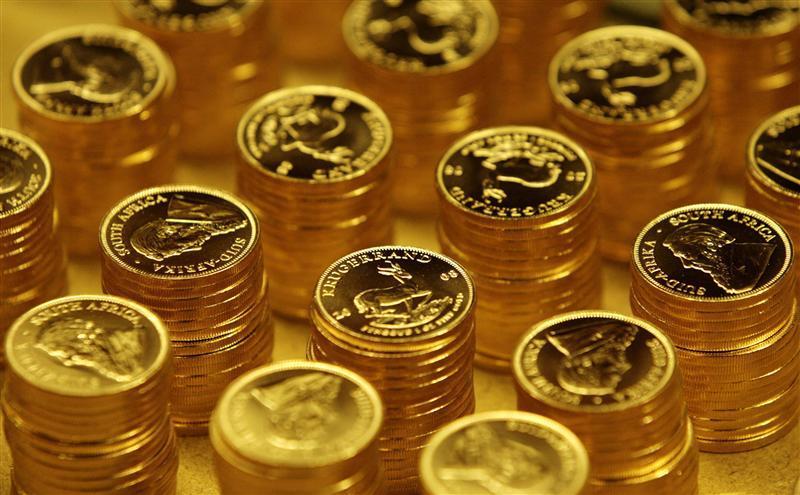


SINGAPORE, June 28 — Gold traded near the lowest level in 34 months and headed for the worst quarterly slump in at least nine decades amid speculation the US Federal Reserve will reduce stimulus as economic data beat estimates. Silver was set for its biggest quarterly loss since 1980.
Spot bullion traded at US$1,203.75 an ounce at 11:53 am in Singapore after sliding 1.7 per cent to US$1,180.50, the lowest since August 2010. Prices have dropped 25 per cent since the start of April, the biggest quarterly slide since at least 1920, according to data compiled by Bloomberg. Silver rose 1.9 per cent after dropping 1.4 per cent and was set for its worst quarter since the Hunt brothers tried to corner the market.
Platinum tumbled to the lowest since October 2009.
Gold is poised for the biggest annual decline in more than three decades after gaining for 12 years as the Fed cut borrowing costs to a record to bolster the economy. Investors are selling bullion from exchange-traded products at a record pace as unprecedented money printing by central banks around the world failed to spur inflation. Analysts from Morgan Stanley to Credit Suisse Group AG and Goldman Sachs Group Inc. trimmed gold forecasts this month on prospects for reduced asset purchases.
“We’ve had quite a lot of positive data out of the US and people are still focused on the tapering of stimulus, so gold’s been hit quite hard,” Alexandra Knight, an economist at National Australia Bank, said by phone from Melbourne. “There’s definitely been a loss of confidence in gold and that’s seen in the ETF liquidations. That said, there are still people who are interested in gold but because prices have fallen so much and so rapidly, they’ll wait for some stabilisation before buying.”
Investor sales
Fed Chairman Ben S. Bernanke said this month that the US central bank, which buys US$85 billion (RM270.2 billion) of Treasury and mortgage debt a month, may trim purchases this year and end the program in 2014 should the economy continue to improve. Data this week showed US consumer spending, durable goods orders, consumer confidence and home sales rose in May, even as economic growth in the first quarter was less than previously estimated.
Gold has fallen 28 per cent in 2013 as investors sold 583.2 metric tons of gold from ETPs, erasing more than US$63 billion in the value of the funds. Bullion tumbled into a bear market in April, setting off a buying frenzy of coins and jewellery around the world. A lack of accelerating inflation and concern about the strength of the global economy is also hurting silver, platinum and palladium, which are used more in industry.
Singer, Ross
Paul Singer’s Elliott Management Corp. and Schroder Investment Management Ltd.’s Christopher Wyke are among investors sticking with their bullish views. Wyke predicted this week that prices will reach a new high as investors seek insurance against economic and political risk, while Elliott said in April that bullion remains the best store of value.
Retired Eurobond trader and former managing director at Deutsche Bank AG Stanley Ross said in a June 6 interview that he’s very bearish about the world economy in part because of the printing of money by world central banks, and predicts gold will be at twice the price it is now within a year.
Assets in the SPDR Gold Trust, the largest bullion-backed ETP, were unchanged for a second day yesterday after declining to the least since February 2009 on June 25. Holdings have shrunk 21 per cent this quarter, the biggest such slide since the fund was introduced in 2004.
Soros, Paulson
Billionaire investor George Soros joined funds run by Northern Trust Corp. and BlackRock Inc. in cutting holdings in the SPDR in the first quarter, US government filings showed in May. John Paulson, the biggest investor, kept his stake of 21.8 million shares. The number of hedge funds investing in gold globally shrank to 290 in May, the lowest since 2010, from 310 in December, according to EurekaHedge Pte Ltd., a Singapore-based research company.
Silver for immediate delivery rose to US$18.836 an ounce, reversing a drop to US$18.2305, the lowest since August 2010. The metal is 34 per cent lower this quarter and has retreated 38 per cent in 2013, making it the worst performer on the Standard & Poor GSCI Spot Index of raw materials this year.
Silver plummeted 58 per cent in the first three months of 1980. The collapse came after William Herbert Hunt and brothers, Nelson Bunker and Lamar, bought more than 195 million ounces in the 1970s. In 1988, a federal court found that the three had attempted to illegally corner the market.
Lost faith
One ounce of gold bought as little as 63.581 ounces of silver today, the least in a week. The so-called ratio climbed to 66.4701 this week, the highest since August 2010, as investors sold the metal alongside gold, losing faith in a store of value with ties to economic growth.
Spot platinum fell as much as 2.1 per cent to US$1,294.60 an ounce, the lowest since October 2009, before trading at US$1,314.20. It cost as much as 1.1035 times the price of gold today, the most since August 2011. The metal used mainly in autocatalysts has fallen 16 per cent this quarter, the worst showing since the three months to September 2008 when Lehman Brothers Holdings Inc. collapsed.
Palladium was little changed at US$646 an ounce and has declined 16 per cent this quarter. — Bloomberg