


KUALA LUMPUR, April 21 — The government’s proposed law reform to split the roles of the attorney general (AG) and public prosecutor (PP) may not materialise in the near future, if a “middle ground” for two-thirds of lawmakers are not found soon, Muar MP Syed Saddiq Abdul Rahman has said.
Syed Saddiq, who is a member of a 12-MP parliamentary special select committee (PSSC) that is studying how to improve the government’s Bill for the AG-PP split, was commenting on how likely this proposed new law could be passed by Parliament this year.
Since this proposed new law involves amending the Federal Constitution, there needs to be support from two-thirds of the MPs in the Dewan Rakyat.
“Based on the last meeting, now when the battle lines are clearly drawn, if the battle lines are not resolved quickly, it’s not going to happen,” Syed Saddiq said in a forum here yesterday, referring to the latest PSSC meeting last Thursday.
He cautioned that this proposed reform is “not going to happen for a very long time” if it fails to materialise this time: “Because it will send a chilling signal to any other future prime minister or minister of law that this is such a divisive issue which is not worth it to even pursue, because you need two-thirds support which is already very high.”
He also noted that politicians face the risk of losing voters’ support even if they were to get support from two-thirds of MPs for this law reform, as political rivals would play up the issue negatively.
“So that’s where after the last meeting, I keep on and I want to take this time to appeal — obviously I’ll speak to the bureaucrats, AGC, but also the members of the committee — try to find the middle ground,” he said.
While noting that there is obviously a “most ideal situation which we want” and also the desire to not make a law which is worse than the existing situation, Syed Saddiq pushed for having a “middle ground”: “But I think if we get something which will even improve it by 50 to 60 per cent, start with that first.”
Syed Saddiq it would already be a “huge win” if the proposed panel to select the PP could be improved by also featuring representatives from non-governmental organisations, the Bar Council, Sabah, Sarawak and more judiciary representatives; in comparison to a situation where either the prime minister has full control or where the power to appoint is passed on to another authority — which he said would be far worse.
“So that’s my hope. I really hope we get to do this before elections, if not, it will not happen for the next five years at least,” he said of the 16th general elections (GE).
Syed Saddiq was responding to a question from Malaysian Bar president Anand Raj of how likely would it be for the Bill to be passed in a meaningful way this year since this is an election year, or if Malaysia should expect it to happen next year.
Earlier at one point in the forum, Syed Saddiq had said: “While we always want to strive for the best and most ideal situation, but I also realise you don’t want to kill pragmatism for the price of idealism where there’s no change whatsoever. I seen that before, I don’t want to see that again. I hope we will see the Bill passed, and get constitutional safeguards locked in, even if we don’t get 100 per cent, we will get 80 per cent which is an ‘A’.”
Malaysia shouldn’t settle for current Bill, don’t rush it or cross red lines
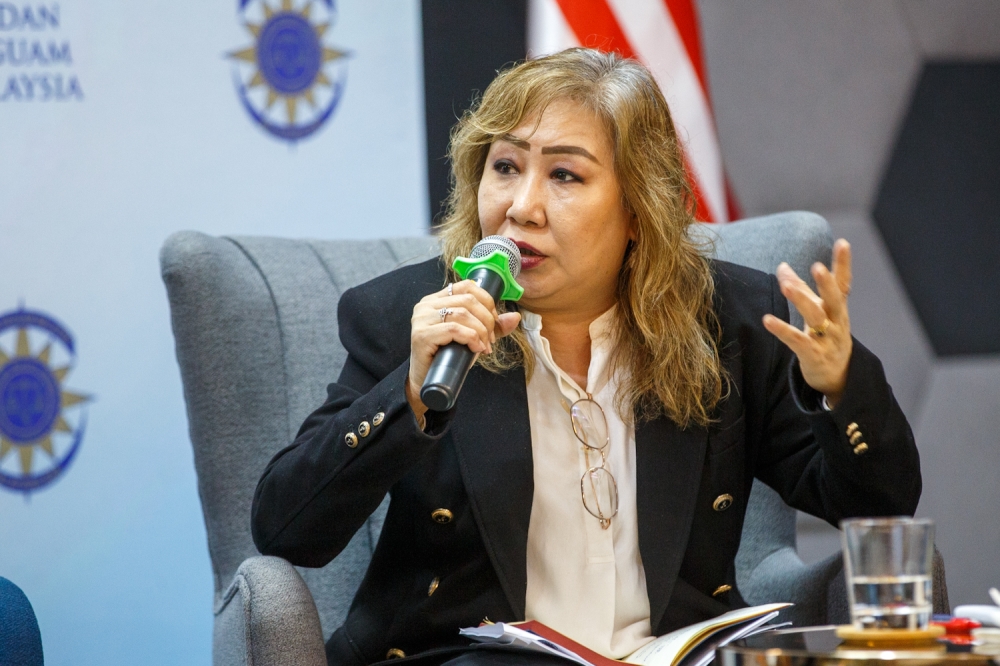
Former Malaysian Bar president Karen Cheah, who was also a panellist in the same forum, cautioned against accepting the government’s Bill to separate the AG and PP roles without fixing problematic parts of the Bill.
“The idea of just putting in the Bill for amendment, and get the separation done — on a very basic level sounds so good,” she said when responding to the same question by Anand.
But Cheah cautioned that accepting the Bill in its current form would mean having unacceptable amendments to the Federal Constitution which do not achieve the goals of transparency, accountability and removing the executive’s influence.
This is because Malaysia would have to end up going through the courts for the next 10 to 15 years to just resolve or clarify legal disputes on the law after it is amended to split the AG and PP roles, she said.
“And we start the ball rolling all over again, and we have actually been doing that for the last 30 years, but can you imagine when we do the amendments — ‘just put it in’, we have to start from ground zero again. That is my fear,” she said.
“Don’t think just because they are doing it, let’s just do it,” she said.
She noted for example that just adding two or three independent persons to the panel that selects the PP (the Judicial and Legal Services Commission) would not be enough to improve the Bill, as they could be outvoted and that it would be meaningless to expand the panel if it would not result in real outcomes.
“My fear is if we rush through the tabling and passing of this Bill is that we don’t deal with the nitty gritty, we will end up in a situation that is worse than before,” she said.
“Which means if you want to do a meaningful negotiation on refinement to amendment of this Bill, if it cannot be done in two, three months, if it requires a little longer time for PSSC to sit with us and to really draw out what the red line is, I think that time is worth taking and there is no need for us to rush through it,” she said.
Don’t settle for the current Bill without improving it now
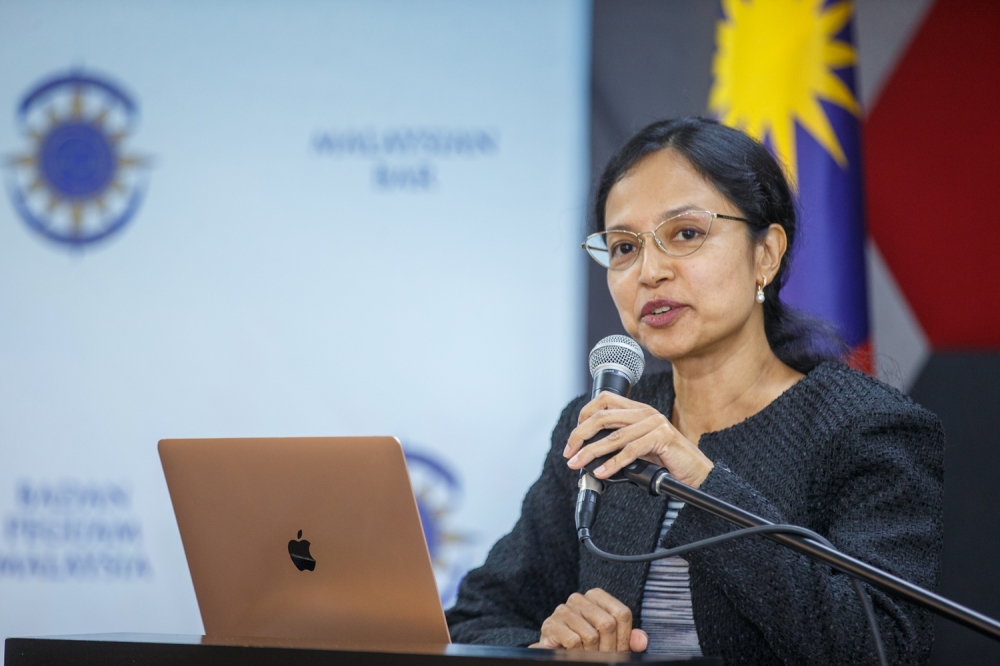
Responding to the same question, independent policy strategy consultant and former lawyer Maha Balakrishnan said there are “red lines” which Malaysia as a society should not accept for its future generations, but said there is still room for negotiation and discussions to arrive at a Bill that does not cross those red lines.
“I would like all of us to also bear in mind that we cannot accept a piece of legislation simply because the fear of what currently exists overwhelms us.
“Yes, the situation we have right now is untenable, but the prime minister at least can be forced to come to Parliament and answer questions. The current law minister at least can be forced to come to Parliament and answer questions.
“With what the government is proposing, the new PP cannot be forced to answer to any authority. So are we creating a worse-off situation? Potentially, yes. So we need to understand what the red lines are and the government must give on those red lines,” said Maha, who is also a research fellow at the United Nations Sustainable Development Solutions Network-Asia Headquarters at Sunway University, Malaysia.
Cheah agreed with Maha that a red line must exist, while Syed Saddiq later also said he agreed that no red lines should be broken.
Later when met by reporters, Maha stressed that the AG-PP split reform is not about having to choose between only the government’s current Bill or the existing situation in Malaysia of the AG also playing the PP’s role.
“But it is not a binary choice. It is not either take what the government is proposing or live with what currently exists. That’s not our choice.
“Our choice is to have an improved Bill. And that is our choice because there is time to improve the Bill. There is a process to improve the Bill which is the parliamentary process and that’s exactly what we’re going through now.
“There are so many good suggestions from within academia, from within political parties, from within the civil society groups as to how to improve this Bill in a practical, pragmatic and constitutionally-viable way. So the government should really consider these suggestions and improve the Bill,” she said.
Asked about the idea of just putting in the Bill in its current form to Parliament now with the hope of making improvements to the law in the future, Maha disagreed with accepting such an approach as there would be no guarantee of future improvements.
“It’s a false hope. It’s giving false hope to the people that somehow making constitutional amendments is easy, that somehow finding the political will to do it is going to be a certainty moving forward.
“There is no certainty that we will ever have a moment like this one where the political parties in power are agreed that this amendment needs to happen. There is no moment like this one where we have a strong civil society. There is no moment like this one where the media also remains fairly free.
“So, we cannot simply settle for this Bill with the hope that it will be improved in the future, because that is an uncertainty,” she told reporters.
Maha said Malaysia had in the past had to settle for what the government proposed for different Bills or where society did not have a voice then to challenge the government on those Bills: “And those Bills have not been amended, have not been improved despite decades. So we cannot have a repeat of that moving forward, not with the position of the public prosecutor.”
“There are too many risks under the government’s proposal. So, we cannot settle for that,” she said of the AG-PP split Bill in its current form.
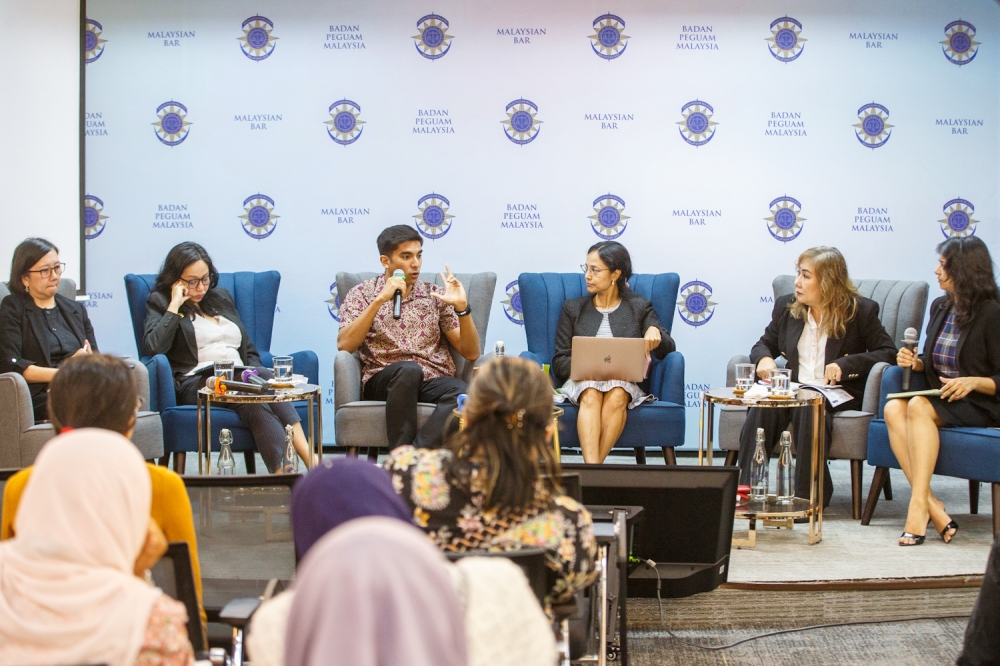
The Malaysian Bar organised the forum titled “Separating the Powers of the Attorney General and Public Prosecutor: Does the Bill deliver independence, accountability and the rule of law?”.
The two other speakers at the forum were Human Rights Commission of Malaysia (Suhakam) commissioner and former deputy public prosecutor Melissa Akhir, and Projek SAMA convener and lawyer Ngeow Chow Ying.
During the forum, the speakers gave recommendations on how to put in more constitutional and legal safeguards, as well as proposed improvements to the Bill to protect the independence of the public prosecutor if Malaysia creates this as a separate position.
Recommended reading:
- Breaking up is hard to do — Malaysia still seeking ‘middle ground’ in AG-Prosecutor split
- Azalina: AG and PP roles set for split after bipartisan support; parliamentary vote expected in June
- ‘No sugarcoating’: Azalina says govt’s proposed AG-PP split to address public concern about accountability
- AG-PP split explained: Key things to know about Malaysia’s massive legal reform


