


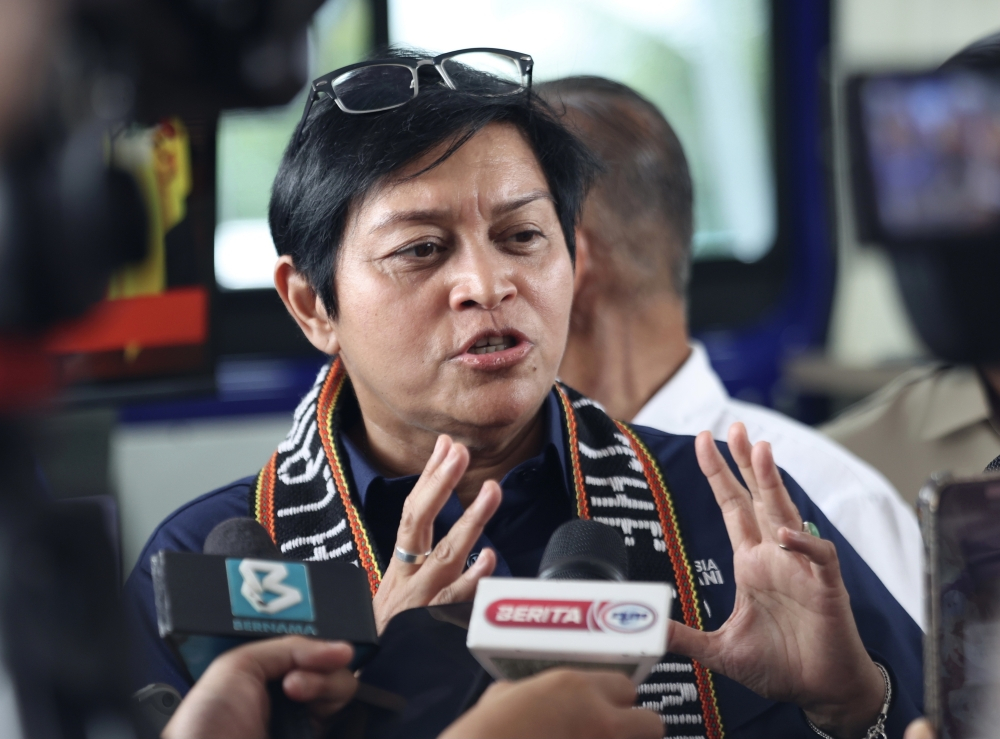


KUALA LUMPUR, April 16 — The parliamentary select committee reviewing the proposed separation of the Attorney-General (AG) and Public Prosecutor roles is working to find a “middle ground,” with the goal of tabling a constitutional amendment by June.
According to Minister in the Prime Minister’s Department (Law and Institutional Reform) Datuk Seri Azalina Othman Said, the committee is currently distilling feedback from civil society organisations (CSOs), non-governmental organisations (NGOs), and lawmakers.
“All NGOs have presented their views, opinions, criticisms, and feedback. Their input has been very consistent with their long-held positions on this matter,” Azalina told reporters following the committee’s third meeting at Parliament today.
“Generally speaking, everyone involved wants what is best for the country.”
The next meeting, scheduled for April 27, is expected to be a turning point. The committee will evaluate legal perspectives from the Attorney General’s Chambers (AGC) alongside formal written positions from various political parties.
Azalina said that while there is a broad consensus on the need to separate the two roles, the primary point of contention remains the appointment process for the Public Prosecutor.
“There can be no finality at this point, as we are still discussing a draft,” she said, adding that the committee is seeking a compromise that can secure the two-thirds majority required for a constitutional amendment in the Dewan Rakyat.
‘Political’ paradox
A significant portion of the discussion centres on ensuring the Public Prosecutor’s independence.
Many CSOs have advocated for Parliament to play a decisive role in the appointment process to ensure transparency.
However, Azalina pointed out that involving the legislature brings its own set of complexities.
“Whether we like it or not, Parliament is made up of political parties. If Parliament is involved, there will inevitably be political influence,” she said.
“The question is whether we want politicians involved or not. These are complex, technical issues.”
To address this, the committee is studying models from other jurisdictions where appointment processes involve a balance between the executive and legislative branches.
Azalina added that any reform must remain compatible with Malaysia’s unique constitutional framework, including the roles of the Yang di-Pertuan Agong and the Conference of Rulers.
Despite the gravity of the constitutional reforms being discussed, Azalina described the atmosphere of the meetings as constructive rather than confrontational.
When asked if the sessions with vocal NGOs were intense, she quipped, “There was nasi lemak, it wasn’t intense.”
The meeting saw participation from key stakeholders, including the Malaysian Bar, Bersih, Projek Sama, Rasuah Busters, and Suhakam.


