


KUALA LUMPUR, April 21 — The proposed law to separate the role of public prosecutor (PP) from the attorney general (AG) could result in the former being one of the most powerful persons in Malaysia, according to Muar MP Syed Saddiq Abdul Rahman.
For this reason alone is why he said the power to appoint the PP should not be decided by one person, but decentralised during the selection and appointment process.
“I just want to draw a picture of what I predict politics will be like if it goes wrong. Effectively if this law is passed, the prosecutor will be, to me, in the top five most powerful people in Malaysia.
“But the point I’m trying to make is, the role will be remarkably powerful, so no one should have complete control over that appointment process,” he said in a forum by the Malaysian Bar here yesterday.
He cautioned that the AG-PP split could risk becoming a “fake reform” where those in power would have “political cover” to go after their political opponents, if safeguards are not put into place.
“In the end, as long as there’s decentralisation of power and sufficient checks at every single level, I think that will lead to a comparatively better outcome than what we already have,” he said.
Syed Saddiq – one of the 12 members of the parliamentary special select committee (PSSC) studying ways to improve the government’s proposed Bill for the AG-PP split – outlined the problems with the existing situation in Malaysia.
He said the current system centralises power in the hands of a few, noting that the prime minister has a role or perceived indirect influence over the appointment of the head of investigative bodies, such as the Inspector-General of Police and the Malaysian Anti-Corruption Commission chief, and perceived influence over judges’ appointments via the Judicial Appointments Commission’s recommendations.
Constitutionally, the Yang di-Pertuan Agong appoints the AG on the prime minister’s advice.
But Syed Saddiq said that the AG currently comes under the Prime Minister’s Office.
Citing his own personal experience and observations, Syed Saddiq said such a system has allegedly resulted in cases where political allies see their charges dropped and political opponents face trumped up charges.
“And that system is problematic because it grants too much power to the hands of the few, in which power then becomes a bargaining tool or bargaining chip to strengthen the executive at the expense of the people, at the expense of transparency and the democratic process. I think that is truly problematic,” he said.
“I start to realise you cannot just blame the prime minister. It’s the system which is the main problem,” he said, noting that whoever becomes the prime minister could end up using the system to strengthen their position politically no matter how “clean” they are when they rise to the top.
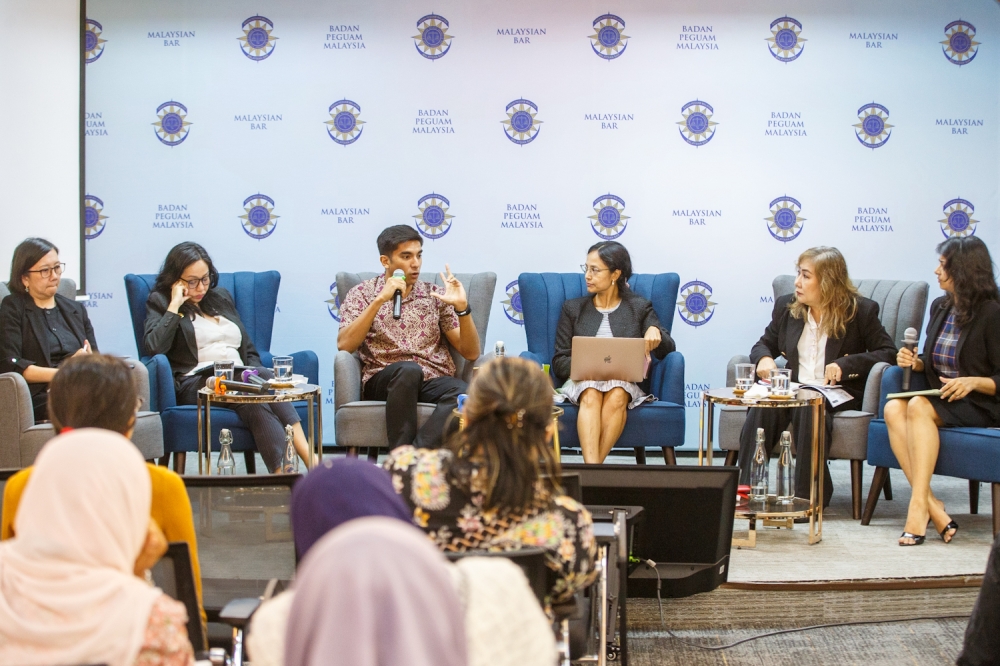
Syed Saddiq said that is why decentralising of power would be the best approach, as it could also prevent any perception of political influence over prosecution and even help address hypothetical scenarios where those involved in actual corruption cases claim they face “unfair political persecution”.
“Then so to me, it still leads to one common conclusion which is decentralised power, disperse it so that there are checks and balances, so that at that point in time, no prime minister can call the person up, do this, drop this. And even if there is the perception of it, we can remove it completely because now the process is so transparent,” he said of the potential outcome of an ideal improved version of the AG-PP split Bill.
If the most ideal version of the AG-PP split Bill does not end up materialising, Syed Saddiq said it should not be watered down to a point where prosecutorial power is just transferred from one position to another without checks and balances.
Syed Saddiq said he observed strong pushback from some of those who attended the PSSC’s latest meeting last week – including the Attorney General’s Chambers and some political quarters – on recommendations for how the Bill should look like, and shared his concern that it may make it harder to get two-third support from MPs for the Bill.
But he said he is still hopeful that the Bill could be passed, if lawmakers focus on reaching a “middle ground” or common grounds, including decentralising power such as by having more members and more diversity in the panel that recommends candidates for the PP role.
Syed Saddiq said this would ensure that the potential candidates recommended by the panel are those who are truly credible and capable.
Under the Bill, the Malaysian government proposes to no longer have its chief legal adviser, AG, decide on whether to charge or drop charges, and to instead have the PP make such decisions to strengthen prosecutorial independence.
Civil society and non-governmental organisations have however cautioned that the finer details of the Bill for this proposal needs to be improved further to truly achieve prosecutorial independence.
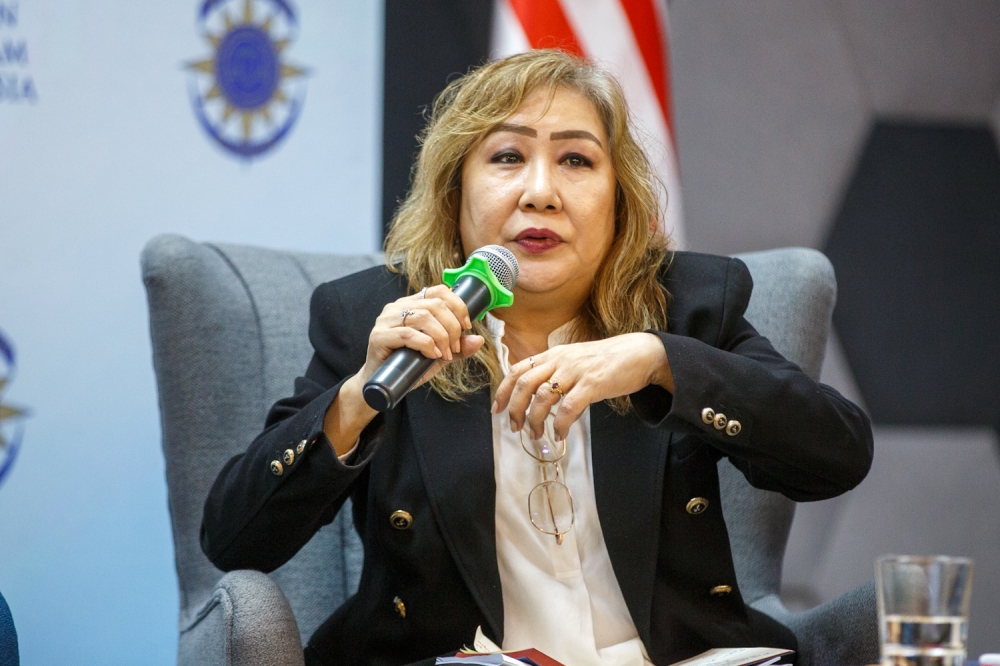
Former Malaysian Bar president Karen Cheah, who was a speaker at the same forum, yesterday said one of the Malaysian Bar’s biggest concerns about the Bill is the mechanism to appoint the PP and said there should be more independent persons added to the appointment panel.
“We think this appointment process and mechanism is the most important thing we are taking care of. If the root is rotten, the fruit will also be rotten. That’s why we want to fix it at the root,” she said.
At the forum titled “Separating the Powers of the Attorney General and Public Prosecutor: Does the Bill deliver independence, accountability and the rule of law?”, the three other speakers were independent policy strategy consultant and former lawyer Maha Balakrishnan; Human Rights Commission of Malaysia commissioner and former deputy public prosecutor Melissa Akhir; and Projek SAMA convener and lawyer Ngeow Chow Ying.
Recommended reading:
- Syed Saddiq worries AG-PP separation Bill may not make it if no ‘middle ground’ soon, hopes done pre-GE16
- Breaking up is hard to do — Malaysia still seeking ‘middle ground’ in AG-Prosecutor split
- Azalina: AG and PP roles set for split after bipartisan support; parliamentary vote expected in June
- ‘No sugarcoating’: Azalina says govt’s proposed AG-PP split to address public concern about accountability
- AG-PP split explained: Key things to know about Malaysia’s massive legal reform


