


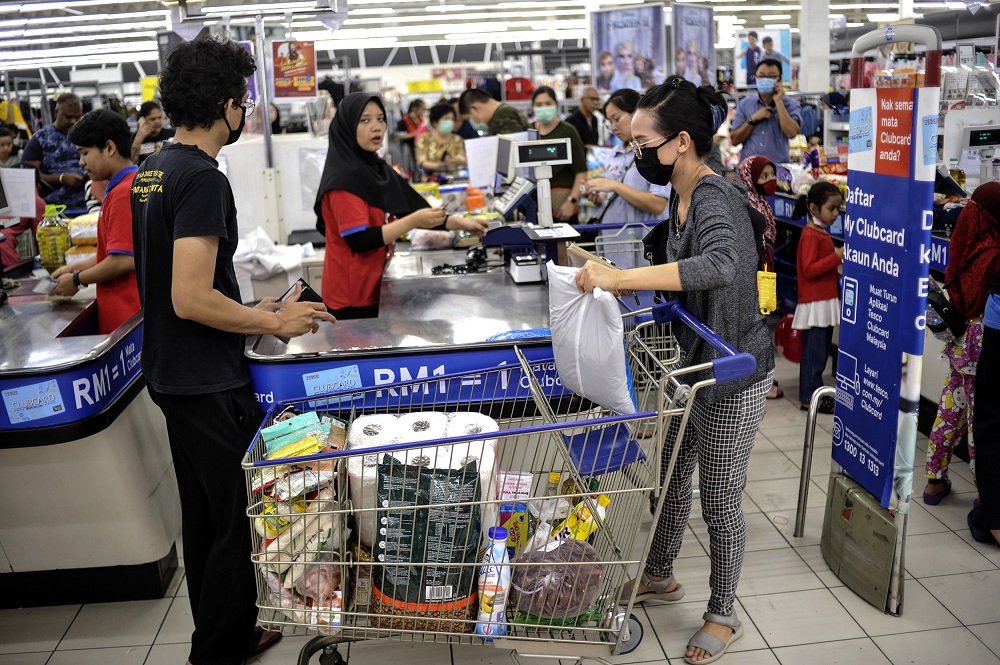


PUTRAJAYA, March 17 — Food supply in Malaysia is currently stable and under control, says Agriculture and Food Industry Minister Datuk Seri Dr Ronald Kiandee.
He said the ministry would continue to work with the Ministry of Domestic Trade and Consumer Affairs as well as other ministries to ensure food supply remained stable during the movement control order period.
He was referring to the order from March 18 to 31, announced by Prime Minister Tan Sri Muhyiddin Yassin yesterday in an effort to curb the spread of Covid-19.
“The ministry will continue to monitor and inform the public from time to time in the event of any domestic or external developments following the implementation of the movement control order which could affect the existing food supply chain,” he said in a statement today.
Kiandee said rice stocks at the mill, wholesale and retail stage were at a consistent level, averaging 400,000 to 500,000 tonnes per month compared to the national monthly requirement of 200,000 tonnes.
“The ministry regularly monitors the supply of rice through the mill, wholesale and retail licensees,” he said.
The minister further said that the production and supply of meat and eggs, which were mostly locally produced was sufficient to meet domestic demand.
“On average, chicken production is 57 million to 59 million a month compared to the domestic consumption of 43 million to 45 million chickens a month,” he said.
“Egg production per month is about 800 million compared to consumption at around 620 million to 630 million per month,” he noted.
He said although the supply of food such as fish, vegetables and fruits for domestic consumption was sufficient, exports to countries such as Singapore and China showed a decline following the Covid-19 outbreak.
“The ministry will continue to monitor this situation to ensure that our farmers, fishermen and livestock breeders are not adversely affected,” he added.
He also stressed that people should avoid making excessive purchases of food items which could lead to situations of imbalance in terms of their access to food supply. — Bernama


