













PETALING JAYA, Aug 7 ― The plan to tighten rules for imported vehicles is likely safety-oriented and should not affect carmakers already operating in Malaysia, according to experts.
Managing editor of the Motor Trader magazine Chips Yap said brands already retailing in Malaysia already met existing guidelines, which he said were strict in terms of safety.
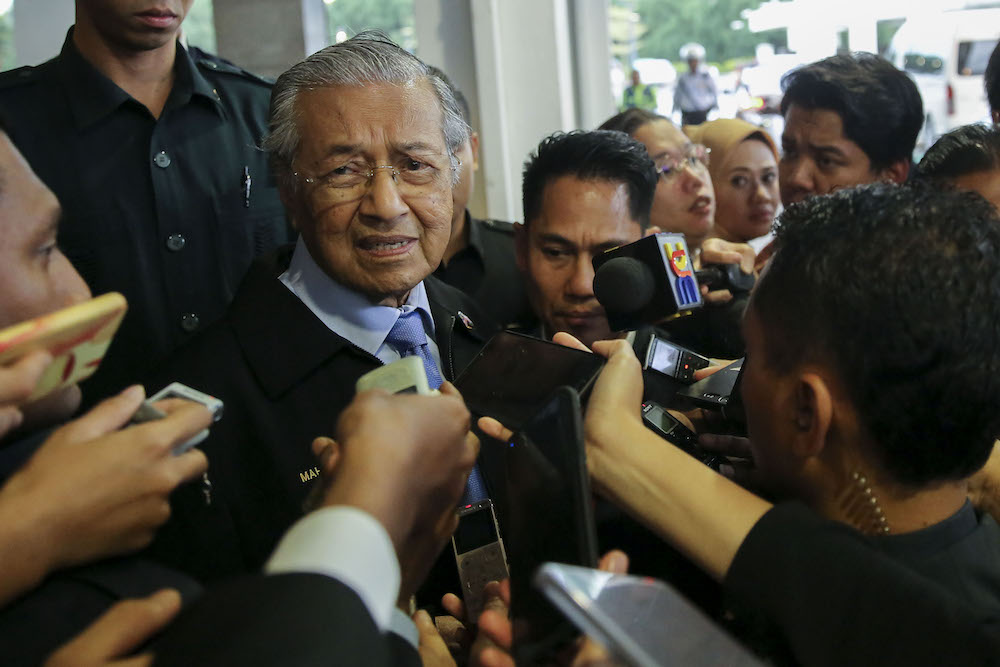
Prime Minister Tun Dr Mahathir Mohamad said last week the National Automotive Policy will be reviewed with an eye on curbing imports.
“You cannot sell a car in Malaysia unless you meet the regulations,” Yap told Malay Mail in a phone interview.
“I think the PM was concerned on the quality and safety aspects of the imported cars. There are some cars coming in which has not met the safety and emissions regulations.”
Yap added that new brands, especially those from China, may come under added scrutiny due to their unproven track records.
He also dismissed the possibility of wholesale restriction on imported cars, noting that Malaysia is a signatory nation of the World Trade Organization that would not take kindly to such a move.
The motoring journalist said raising safety standards here would also benefit consumers.
“If the government wishes to protect the local industry more, then they may probably introduce a new tax for CBU models so that there is a bigger price gap with the locally assembled (CKD) units.
“But, I personally do not think this would be a popular move for the government because the tax level in Malaysia is already very high, and the public has always been unhappy about the tax level which never goes down by the year,” Yap said.
CBU stands for “completely built-up” models or those fully assembled and shipped whole to the destination country. CKD or “completely knocked down” is where the vehicle is shipped in parts bins to the destination country for further assembly there.
CKD models also often include significant local content in order to qualify for preferential tariff rates.
A dealer at Motor Confidence (M) Sdn Bhd, Richard Tai, supported tougher standards for cars in Malaysia, saying it would be better for the country.
Tai explained that while carmakers already have their own control measures in place, Malaysia could still impose new rules specific to the country’s needs.
“I think it’s a good idea to have a more stringent import cars standard, not only looking at the products' quality, but also at the carbon dioxide emission produced by the vehicle,” he said.
Separately, the Federation of Motor and Credit Company Association of Malaysia (FMCCAM) president Datuk Tony Khor reserved judgment until it is known if the proposed rule changes will apply to CBU, CKD, or both.
However, he said it would be unfair to add further restriction of locally-assembled models as the manufacturers have already demonstrated their commitment to Malaysia.
“They have expended capex on building large factories, and any form of curtailment would affect their businesses immensely,” he told Malay Mail.
Dr Mahathir said yesterday that the government will review the country’s automotive policy to ensure higher quality and safer imported cars.
He said the previous Barisan Nasional administration allowed uncontrolled imports in the past decade, without regard for quality and to the detriment of the local carmakers.