













KUALA LUMPUR, April 27 ― As a 28-year-old voter from the working class Malay neighbourhood of Datuk Keramat, Amirul, a junior executive, felt naturally inclined to lament about low salary, exorbitant house prices and the soaring cost of living.
His parents are old and he has two younger siblings, both in college. He is the principle breadwinner, and earns RM3,200 monthly, a salary he said is barely enough to support four dependents in a city where the cost of living has more than doubled in recent years.
Without mincing his words, Amirul said he is angry about his situation and blames the government for it. Growing up in a neighbourhood traditionally known as one of the ruling party’s many strongholds within the capital city infuriated him more.
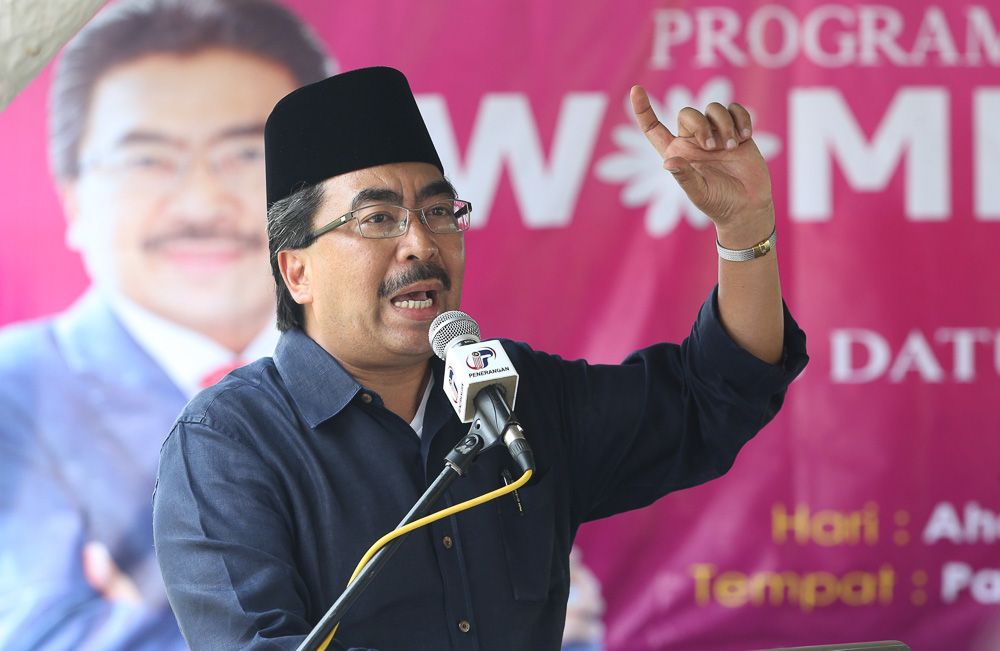
But when it was pointed out that his constituency is represented by a member of parliament from Umno, and that Datuk Seri Johari Abdul Ghani was also the Finance Minister II, Amirul’s tone changed and quickly turned defensive.
“I know I just told you I think the government should do better for its people, but Johari is not the same as them… he actually cares and has done much to serve his constituents,” he told Malay Mail.
“I, and I think it goes the same for most of people here... we don’t see him as a BN man. We see him as a good MP who tries best to serve his constituents.”
Based on over a dozen Titiwangsa voters that Malay Mail spoke to, it is fair to say that the views expressed by Amirul mirrored the prevalent local sentiment. Most felt the ruling Barisan Nasional coalition has failed them in many aspects, but they disassociate Johari from the government he represents.
“He’s worked hard and he has helped many families here… some of us hold him in high regard and as Malays, a person who helps another is more than just a leader, he is also a friend,” Amirul explained.
Johari is a first-term Titiwangsa MP who won the only two BN seats ― Setiawangsa being another ― within the capital city in the 13th general election.
The Opposition easily retained the remaining nine seats with over half seeing their majority increased, a showing that reflected the ruling coalition’s waning popularity in the cities and among urban Malays, majority of whom up until 2008 remained firmly loyal government backers.
Personal money
The polling results in Titiwangsa and Setiawangsa seats provide a numerical measure of the displeasure. Johari survived a hard-fought opposition campaign by the skin of his teeth, garnering just over 800 majority votes over PAS candidate Ahmad Zamri Asaad, who himself held considerable influence.
His party colleague, Datuk Ahmad Fauzi Zahari, won Setiawangsa with only 1,500 majority votes.
The victory, in spite of the narrow vote count, was no small feat. It took Johari three years of tireless visits, personal money and genuine engagement with residents before they took him seriously.
And even after he was elected in 2013 and made a minister in 2016, the first-term MP continued to serve and make frequent visits to his constituency. This, according to Datuk Affendi Zahari, the MP’s current election director and vice-chief of the party’s Titiwangsa chapter, added to Johari’s reputation as a caring “problem solver.”
“He started work here since 2010 without anything,” Affendi told Malay Mail when met at the division’s election operation centre in Maluri, here, recently.
“He started his own service centre and used money from his own pocket… he worked really hard.”
Many of the voters Malay Mail spoke to attested to Affendi’s assertion, including those who professed to be Opposition supporters. They said from when he first set up his service centre in Desa Pandan, July 2010, getting “help” was always almost easy.
“I am a PAS supporter but some of my family members are BN hardcore and they told me Johari had been very helpful,” said a 58-year-old Halim Saad, a small trader from Kampung Pandan.
“Before he was MP and minister you can find him at the centre almost every Friday… he gave poor families money to buy food and books, he addressed problems in the PPR (public housing project) flats… which is why he is very popular.”
Opposition leaders have admitted that unseating Johari in Titiwangsa will be a tall order.
In an interview with news portal The Malaysian Insight, Titiwangsa PAS Youth chief Mohamad Suhaimi Abdul Aziz called the MP a “big name candidate” while PKR Youth secretary Syed Shah Syed Osman said Pakatan Harapan’s chances there relied heavily on a candidate’s calibre.
Brand Johari
Almost two-thirds of the 55,282 voters in Titiwangsa are Malays, followed by the Chinese and Indians at 20 and 10 per cent respectively.
The seat is divided into 19 polling districts that span Desa Pandan, Kampung Pandan Dalam, Kampung Pandan Tengah and Jalan Mengkudu to east, to Setapak Selatan, Kompleks Damai, and all three Kampung Baru districts to the west. In the centre lies Datuk Keramat, Jalan Ampang and the Selangor Royal Golf Club and Jalan Cochrane.
About 70 per cent of these locations are predominantly lower to middle income Malay neighbourhoods made up of predominantly low cost housing. Constituents there are traditionally either Umno or PAS supporters, which is why the latter have stood there in the past two general election.
But since PAS has splintered from the main Opposition bloc, there is uncertainty over its ability to retain the same level of support as 2013.
And with Parti Pribumi Bersatu Malaya (PPBM) adding to the already crowded space, the Malay voters could be sliced up further into three smaller factions, giving the Chinese and Indian votes more weight to tilt the outcome on May 9.
Both PAS and PPBM have announced their intention to contest there, with the latter naming a relatively unknown academic, Rina Harun, as its candidate.
Campaign issues in Titiwangsa are almost typical of any urban seat in the country. Many voters there are enraged by the Goods and Services Tax (GST), which they believe is causing the squeeze in living costs.
Complaints of low wages, inflated rent, broken amenities, unaffordable housing and expensive tolls are normal.
On the ground, Opposition parties are already harping on these issues, and the response voters give to Malay Mail suggests they are effective.
All things considered ― widespread anger over alleged failed policies and the split in Malay votes ― it seems logical to assume Johari would not come out of the May 9 polls successfully.
But his team believes the first-term incumbent MP has managed to make voters overlook his link with the ruling coalition and rate him based on his own performance as MP.
“Johari will sell himself as someone who has worked really hard, someone who has proven himself… if voters dislike the party, Johari is his own brand,” Affendi told Malay Mail.