









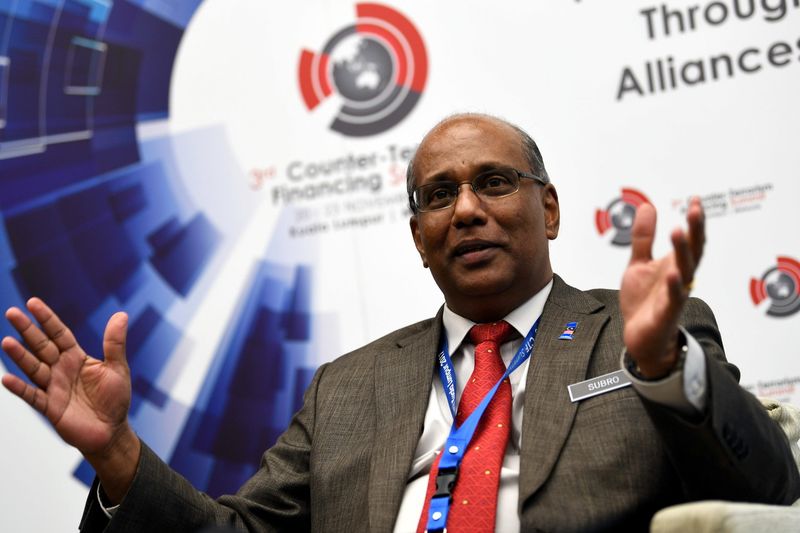


SHAH ALAM, April 20 ― The tax exemption given to the East Coast Rail Link (ECRL) project is consistent with the treatment received by other major infrastructure undertakings in Malaysia, said the Customs director-general.
According to English daily The Star, Datuk Seri T. Subromaniam disclosed the existence of a special category for projects that are tax-exempt called the Approved Service Projects
He cited the Stormwater Management And Road Tunnel (SMART Tunnel), Bukit Jalil Sports Stadium, Kuala Lumpur International Airport and Mass Rapid Transit projects as some of the examples of the projects that were given relief from Sales and Services Tax (SST) and import duties.
“It has never been an issue previously. Why now? Please don’t make accusations or spread fake news about this,” he was reported as saying.
“I don’t know if they (the ones making an issue out of it) understand tax matters or purposely want to raise these issues to confuse the people. If you don’t understand, come and ask us,” he said.
Subromaniam said the sectors that qualify to tax reliefs were transportation, utilities and telecommunications.
He said there were various criteria that must be met to before a project is qualified, adding that this must still be approved by the Finance Ministry before exemption is granted.
"In general when SST reliefs were given, the government lost out on tax that would have been collected.
“With GST, the government does not lose on relief given to businesses because it does not involve the end user,” he said.
Subromaniam said as the owner of the ECRL project is Malaysia Rail Link Sdn Bhd, the government was the end user this time.
“In the end, a Malaysian company gets the benefit, not a Chinese company,” he said.
He also clarified that the 6 per cent relief was not on the projected RM55 billion cost of the ECRL, but on various acquisitions that he said could be a far smaller amount.
Malaysia Rail LInk would not be allowed to claim any GST refunds, he added, before saying the project would have cost the public more without the exemption.