












PETALING JAYA, Oct 3 — Incidents of water disruptions in Selangor, one possibly due to an act of sabotage and the other because of negligence, have brought to light weaknesses in security at water sources and treatment facilities.
The incidents reported over the past month have left water advocates concerned and demanding answers.
“The repercussions of supplying compromised water to the public could be ugly. Don’t merely say action will be taken only when someone dies,” Water and Energy Research Malaysia Association (AWER) president S. Piarapakaran, told Malay Mail.
On Sept 1 and 2, water supply to more than 65,000 consumers in the Klang and Petaling districts was disrupted following a burst water main in Section 15, Shah Alam.
“There were about 28,000 premises affected. This forced the authorities to conduct internal investigations to find out the cause,’’ a source said.
A police report was lodged on Sept 9, and on Thursday, PUAS chief executive officer Suhaimi Kamaralzaman disclosed a saboteur was responsible for the disruption.
Investigations have been handed to the National Water Services Commission (SPAN) for action. A Syarikat Bekalan Air Selangor Sdn Bhd (Syabas) source said police investigating the case made it clear no statements should be issued.
“There were strict orders to Syabas staff not disclose any information about the suspected saboteur,” the source said.
An internal investigation was carried out and it revealed there was foul play behind the disruption.
“An employee has been suspended and the issue is being investigated further,” the source said.
The Sept 1 disruption affected more than 39,000 consumers in 24 areas in Klang, and 29,000 accounts in 27 areas in Petaling district, particularly the Sime UEP area.
SPAN chief executive officer Mohd Ridhuan Ismail confirmed a report had been submitted over the incident.
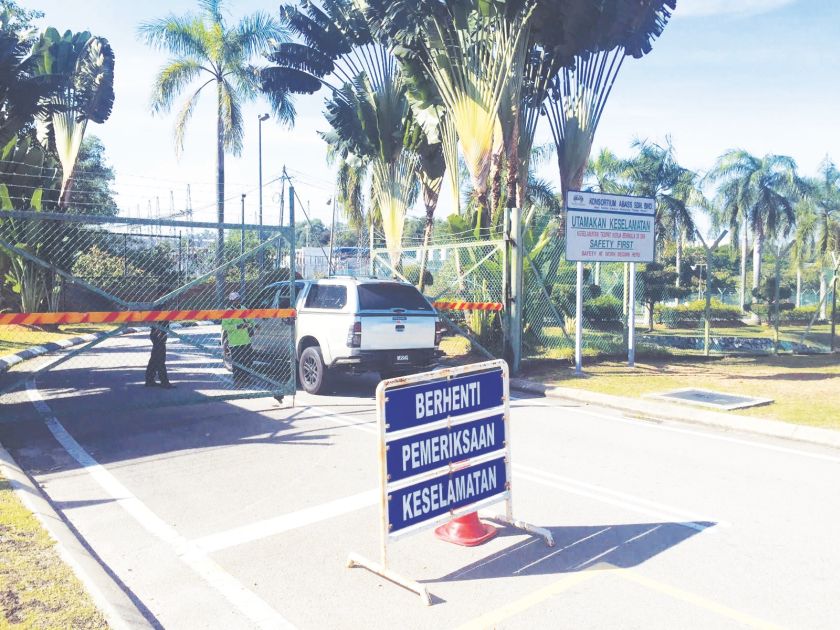
Piarapakaran said such incidents proved that access to raw water was not limited, and failure to overcome this breach could compromise public health and may lead to fatalities.
“Most of the water sources like dams or treatment plants are located in public areas. Although some sort of security system is present, it has to be tightened to ensure the water is safe for public consumption.” He said perpetrators found guilty of contaminating water sources should be liable to harsh punishment.
“There is a legal provision under Section 121 of the Water Services Industry Act 2006 which states that any attempt to pollute water sources with the intention of disrupting supply would face heavy penalties,” he said.
In the most recent episode, over a million residents in the Petaling, Hulu Langat and Sepang districts were left high and dry for up to six days following the shutdown of the Sungai Semenyih water treatment plant.
The treatment plant’s alarm was activated on Sept 22 when contaminated raw water was drawn into the facility for about 48 hours. Once authorities were satisfied that treated water was being released, only then did water supply resume.
In the course of their investigation to ascertain what caused the incident at the treatment facility, authorities learnt that Sungai Semenyih had been contaminated because of improper waste disposal.
A probe is under way to pinpoint the source of the contaminated discharge.
On the alleged act of sabotage, Piarapakaran said the authorities should be transparent in disclosing the details of the investigation and the course of action.
“These are the guardians of the water utilities, yet they are taking their responsibilities lightly without thinking of the consequences to others. They should reveal the investigation’s findings as the public need to be assured that they can trust the water supply,” he said.
Muslim Consumers’ Association president Datuk Nadzim Johan questioned the habit of industries dumping waste into water sources.
He said there was a possibility that enforcement officers were not alert as the law was not enforced strictly.
National Consumer Complaints Centre board member Mohd Shaani Abdullah said the state government was handling the issue poorly as there appeared to be a lack of urgency in carrying out the investigation.
Mohd Shaani said the of disposing waste into water sources by factories was “an open secret”, which showed the authorities may have been turning a blind eye to the exercise until the repercussion affected a larger number.
Meanwhile, water supply resumed yesterday at Kuala Langat and Sepang districts following the recent week-long disruption.
Kumpulan Air Selangor group corporate communications head Amin Lin Abdullah said in a statement only a few areas in the Petaling and Hulu Langat districts were without supply as of 2pm.