















KUALA LUMPUR, Dec 4 ― Datuk Seri Najib Razak's ability to “roll with the punches” is keeping him safe in his position as prime minister despite the controversies surrounding his rule and a backdrop of a weakening currency and rising prices, The Economist wrote today.
Calling him politically “unassailable”, the weekly news magazine said when the Umno general assembly convenes next week, all the prime minister will face is some minor “booing and heckling” from the floor.
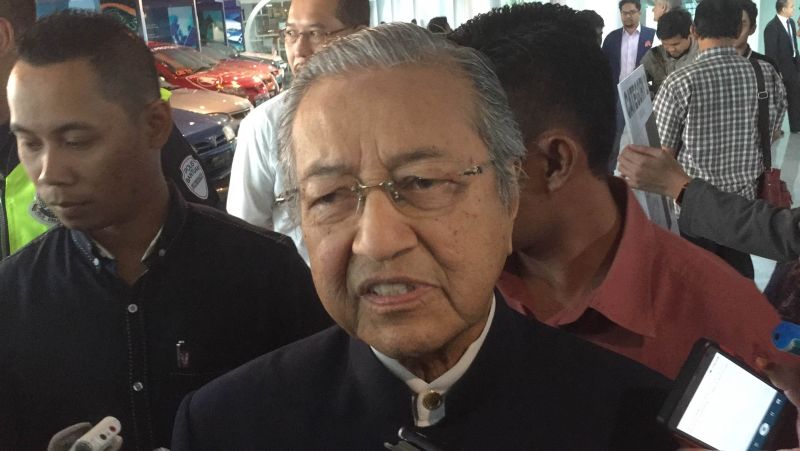
“Apart from a few malcontents, most notably the nonagenarian Dr Mahathir, his party seems to be behind him,” The Economist said in its latest edition of “Banyan”, a column on Asian politics.
Tun Dr Mahathir Mohamad has been leading criticisms against Najib, chiefly against the latter’s handling of several controversies like the 1Malaysia Development Berhad (1MDB) scandal.
Dr Mahathir has also been calling for Najib's early resignation, having warned repeatedly that should the leader stay in power, Barisan Nasional (BN) could lose the next federal polls.
But The Economist said although BN performed poorly in the last two general elections ― Najib headed the last federal polls in 2013 while his predecessor Tun Abdullah Ahmad Badawi led BN in Election 2008 ― Najib has somehow managed to hold Dr Mahathir's warnings at bay.
In fact, the weekly said, Dr Mahathir’s claim that Umno could fall the next election, due in 2018, “sound increasingly like the impotent rants of a cranky has-been”.
It pointed out that despite the troubles facing the Umno leadership, there is currently no obvious rival that could best Najib, who appears to be in the best position to lead the party through the next election.
“Of those conceivably in the frame, none seems likely to fare any better at the polls than Mr Najib,” the weekly said.
Next, it said, the opposition is currently in disarray with its leader Datuk Seri Anwar Ibrahim locked up in prison for sodomy and its parties having suffered a major fallout recently.
The Economist also noted that Putrajaya has been making use of preventive laws to keep the opposition muted, hauling up critics and opposition politicians for charges under the Sedition Act.
Abroad, the weekly pointed out that Najib also gets on well with the US and China governments, although it said when US President Barack Obama visited here recently, the latter could not ignore domestic criticism of the Malaysian prime minister.
“But Mr Obama was restrained. He and Mr Najib get on. They played golf in Hawaii last Christmas. Mr Najib is urbane, charming and plays up Malaysia’s strengths.
“It is a bastion of moderate Islam, an important ally against Islamist extremism. Thanks to Mr Najib, it signed the region’s American-led free-trade agreement, the Trans-Pacific Partnership, which is unpopular in Malaysia,” The Economist said.
In a nutshell, Malaysia has had a successful year as chairman of the Association of Southeast Asian Nations, and host of its various summits, the weekly said.
“So at home and abroad, many have reason to cheer Mr Najib’s ability to roll with the punches. And with the economy growing at about 5 per cent a year, he can probably also survive a weakening currency and grumbles about rising prices,” it added.
It said critics, however, believe that Najib's continued rule poses risks on the integrity of Malaysian institutions, civil freedom and racial and religious tensions.
But Najib has positioned himself well, The Economist observed.
“Mr Najib presents himself as both the defender of the Muslim-Malay majority, and as the best protection the Chinese and Indian minorities have against resentful and assertive Malay political dominance.
“He is adept at balancing acts.”