












KUALA LUMPUR, Aug 7 ― Amid cries of concern over the alleged harassment of investigators believed linked to the leak of key information in the 1Malaysia Development Berhad (1MDB) probe, several lawyers here have revived the debate over the apparent inadequacy of Malaysia's laws on whistleblower protection.
Several lawyers told Malay Mail Online that the Whistleblower Protection Act, a law enacted in 2010 specifically to protect whistleblowers, contains clauses that discourages individuals from coming forward with information, particularly as it could land them in trouble instead.
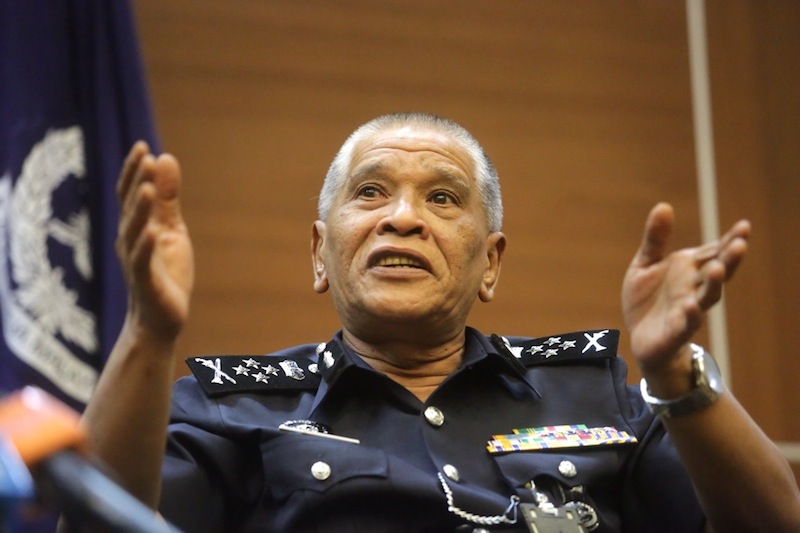
They were speaking in response to deputy Inspector-General of Police Datuk Seri Noor Rashid Ibrahim who said yesterday that whistleblowers would only be eligible to receive protection under the Act if they disclose their information to specific enforcement agencies recognised by the law.
“This protection [by the Act] is not a real protection. It is designed to place potential whistleblowers in a dilemma and put a pressure on them to go through a false whistleblower procedure,” Lawyers for Liberty's (LFL) executive director Eric Paulsen said.
As an example, Paulsen cited Section 8 of the Act, which states that “any person who makes or receives a disclosure of improper conduct or obtain confidential information in the course of investigation into such disclosure shall not disclose the confidential information or any part thereof”.
The section effectively means that a whistleblower cannot disclose the same information offered to an enforcement agency to others.
The clause also says that failure to comply would result in the whistleblower facing a potential fine of up to RM50,000, a maximum jail term of 10 years, or both.
“If someone goes to the relevant parties and gains the whistleblower protection, and if say nothing is done by the authorities for over a year and the whistleblower decides to inform the press and members of parliament, that person can be jailed for ten years or fined RM50,000,” Paulsen explained.
The lawyer said this is made worse by Section 11(1)(d) of the Act, which states that the enforcement agency protecting the whistleblower can choose to rescind that protection if it believes that the disclosure made by the whistleblower involves questioning the merits of a government policy as well as that of any public body.
“So whatever dodgy deals done by any government authority, and it involves criticising them, they can revoke the protection. This doesn’t make sense,” he said.
Echoing Paulsen, lawyer Syahredzan Johan said the Act was ineffective as it does not protect those who disclose information protected by other secrecy laws like the Official Secrets Act.
“So for example, information classified as official secrets, even if disclosed to the authorities, will not avail whistleblower to the Act,” he said.
Lawyer New Sin Yew stressed that this particular provision of the Act under Section 6 (1) could even get a whistleblower in trouble for coming forward with the information in their possession.
“If the information is already public, it is not considered something that is confidential to blow the whistle on,” he said.
“What could happen is that you go to the police, then you get caught, and then they force you to reveal your information.”
He added that even attaining a whistleblower status would involve red tape as protection is not immediately granted by the authority approached.
“Just because you go to the right authorities, does not mean you are automatically granted the status. If you are not granted the status, you can be prosecuted. You do not enjoy the privileges, the immunities of a whistleblower, because they can decide whether or not to grant you the protection,” he said.
In the wake of a police crackdown on federal agents and grafbusters involved in probing debt-riddled 1Malaysia Development Berhad (1MDB), deputy IGP Noor Rashid had noted yesterday that whistleblowers were not automatically granted protection.
Police have so far hauled up nine individuals for a probe on the alleged leak of documents in the probe on 1MDB, seven of whom are from the Malaysian Anti-Corruption Commission.
The investigation follows a report by business daily Wall Street Journal and London-based whistleblower site Sarawak Report, which cited leaked documents from government investigators alleging money had been channelled from 1MDB into Prime Minister Datuk Seri Najib Razak’s personal accounts.