











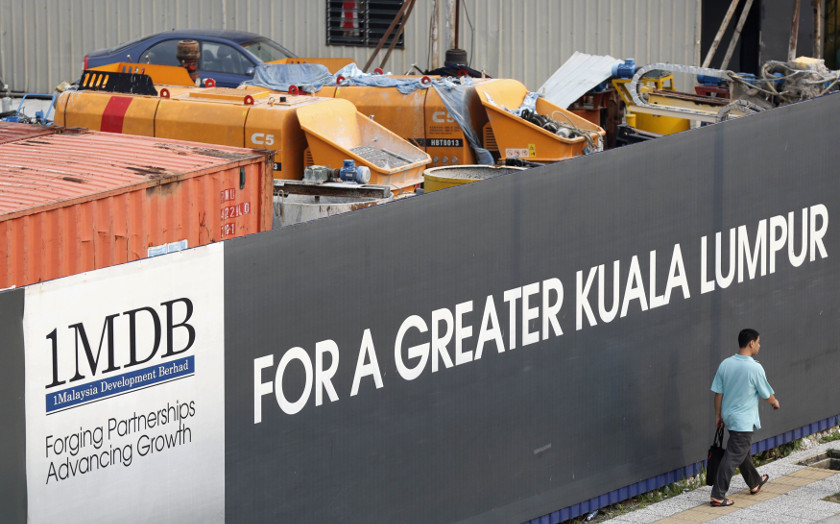


KUALA LUMPUR, June 10 — The numerous controversial deals that are weighing down 1 Malaysia Development Berhad (1MDB) raises questions as to why its current president and group executive director, Arul Kanda Kandasamy, was willing to take on the job, a retired veteran newsman said today.
Datuk A. Kadir Jasin said it is puzzling that Arul Kanda is willing to stake his reputation by taking on the 1MDB job when it would mean he has to deal with legacy issues that run into the billions of ringgit.
"Take for instance buying ageing Independent Power Producers (IPPs) for RM12 billion and inheriting RM6 billion debts, making the total RM18 billion," the former group editor-in-chief of New Straits Times said in his latest blog post.
"It is widely known that all or some of these purchases were overpriced, despite the fact that the plants are old and their concessions running out. Only Jimah Power is a recent concession with its franchise ending 2033.
"Arul Kanda, who became 1MDB’s President and Group Executive Director in January this year, told us that 1MDB inherited RM6 billion debts from the IPP purchase," Kadir added.
Kadir stressed that it is unlikely that two of Malaysia’s richest tycoons - Tan Sri T. Ananda Krishnan and Tan Sri Lim Kok Thay - had managed their power assets so poorly that they amassed such a large debt pile, raising the question of whether the debt was "deliberately created" to provide excess funds for political use or other purposes.
The veteran editor noted that Prime Minister Datuk Seri Najib Razak — who is also chairman of 1MDB’s advisory board — is similarly in a bind as it is hard to justify the various land deals such as multi-million ringgit purchase of land at the Tun Razak Exchange and the Sungai Besi air force base, and the purchase of 234 acres of land in Penang for RM1.1 billion in 2013.
"The hottest potatoes of all are 1MDB’s cash investments abroad. It is here that Jho Low features prominently and where the biggest ‘silap mata’ (sleight of hand) could have taken place to enrich certain parties," Kadir said, referring to flamboyant billionaire Low Taek Jho.
Aside from the uncertainty in the status of some US$1.1 billion (RM4.1 billion) said to have been parked in BSI Bank in Singapore, Kadir said Najib would not have any answer for the state-owned fund’s decision to invest billions in other ventures such as the RM6.1 billion deal with Hong Kong-based Brazen Sky Limited, Aabar Investment’s RM4.2 billion and RM5.1 billion set aside for GIL funds.
The effect of the ongoing 1MDB fiasco is also not limited to those directly involved, as evident from the continued slide in the value of the ringgit despite repeated assurances of strong fundamentals in Malaysia’s economy, Kadir added.
He noted that this would directly impact on the reputation of Bank Negara Malaysia Governor Tan Sri Zeti Akhtar Aziz, as the central bank had waited a week to announce the launch of a formal inquiry after receiving a report from the Monetary Authority of Singapore of a complaint lodged by BSI about 1MDB’s account.
"On June 8, the ringgit fell to a nine-year low against the US dollar at RM3.772, which analysts blamed on sustained outflow of foreign funds from the equity and debt markets.
"Zeti responded by saying that it is temporary and blame the “external environment”. She said emerging market currencies, including the ringgit, continue to be affected by external uncertainties, adding that ringgit is trading at levels that are not reflective of the fundamentals of the Malaysian economy.
"It may all sound so clever. But in reality, the effects of the falling ringgit and the lost of confidence in Mohd Najib’s administration are already being felt by the rakyat.
"Strong economic fundamentals means nothing to them if they are not reflected by the stronger ringgit, net capital inflow, cheaper goods and services, rising income and ample jobs," Kadir said.