











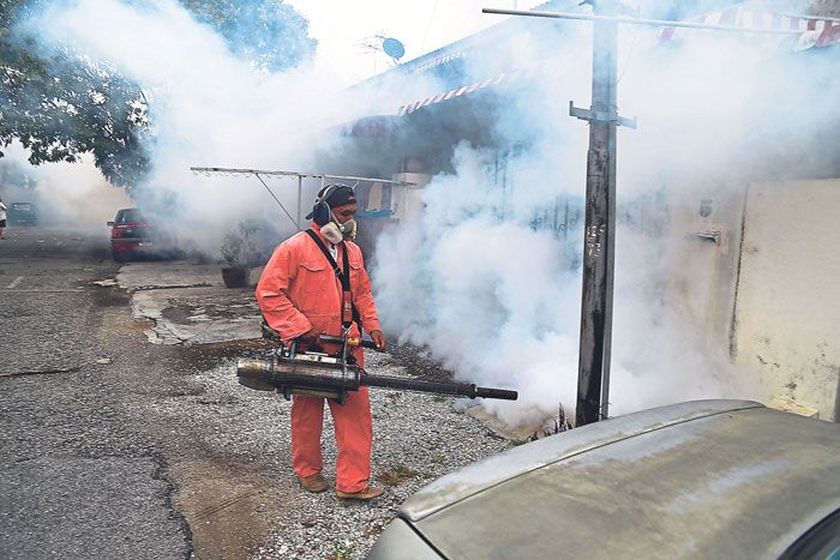


PETALING JAYA, Jan 29 — Local councils are allowing Aedes breeders to get away scot-free.
Checks by Malay Mail found two local councils in the Petaling district, which has been listed as having the top 10 dengue hotspots in the country, had let residents caught breeding dengue mosquitoes to get away without paying fines.
Subang Jaya Municipal Council corporate communications deputy director Muhammad Azli Miswan said the council was unwilling to drag those with unpaid compounds to court as it would be costly to pursue the case.
Muhammad Azli said most of the RM500 compounds last year had not been paid and there was little the council could do.
“If we pursue the case, we will have to foot the legal bill,” he said.
Azli said residents did not allow council officers to enter private homes during fogging and inspections.
“They are afraid we will compound them if they let us enter.”
He said the council was not entering the properties merely to fine residents.
“Our purpose is to identify possible breeding grounds and educate the owner,” he said.
“We try to do all we can — awareness programmes, gotong-royong sessions, and cleaning the drains but sometimes the breeding is within the home of the resident. “What can we do if we can’t inspect and identify these breeding grounds?”
Petaling Jaya City Council vector control unit head Lee Heng Kuang said 800 compounds were issued last year, of which only half were paid.
“When they don’t pay the compound, we send them reminder notices every three months.
“Usually the first round of reminders will result in 10 per cent of them paying up,” he said.
Lee said only 10 to 20 per cent of residents would allow council officers into their premises for inspection.
“Some people’s attitude and non-cooperation have contributed to the increasing dengue cases,” he said.
Lee said officers inspected at least 60 to 100 premises in the city daily, except on weekends.
Deputy mayor Puasa Mohd Taib said the RM500 fine could not justify taking residents who had not paid their compounds to court.
“We will need to foot the cost for the lawyer, and the investigation papers are also costly.
“Sometimes offenders approach us and ask for reductions in the compounds, and we give them a warning letter and reduce the fine to as low as RM100,” said Puasa.
Puasa said the federal government should discuss with local councils the possibility of amending the law and increasing the fines as a more effective deterrent.
“Increasing the fines should be the top priority so to deter potential offenders.
“I am sure a RM1,000 fine will alert residents to the consequences of irresponsible behaviour,” he said.
In Penang, Seberang Prai Municipal Council president Datuk Maimunah Mohd Sharif said health officers did not face problems entering and inspecting premises.
She said officers from the council’s health department frequently checked residential, commercial and industrial areas.
“Some 73 compounds were issued last year and 40 paid the compounds amounting to RM10,362.
“We have sent notices to the rest to settle their compounds and we will make sure that they pay up,” she said.