
















KUALA LUMPUR, June 16 — Wahidah Md Salleh, 73, had the worst day of her life a week ago.
Officers from Kuala Lumpur City Hall (DBKL) forcibly packed her things in a truck and told her to leave. Then they demolished the house she had lived in for nearly 50 years in Kg Chubadak Tambahan, Sentul.
When DBKL returned on Thursday, Wahidah was ready.
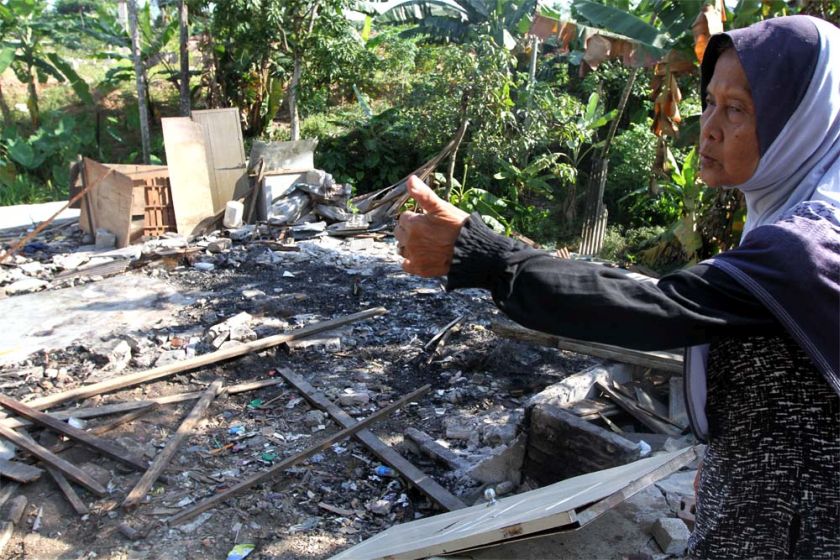
She faced her tormentors in angry defiance, a picture of her taken that day immortalising her uphill struggle.
With her right fist upraised, her other hand on the wheel of a yellow backhoe loader with the letters “DBKL” on it, the photo has been making rounds online, including in a poster emblazoned with the words “Capitalist Bastards.”
_1606.jpg)
“Oh dear, I looked like a crazy woman,” said the chatty religious teacher, laughing when The Malay Mail Online met her in the village over the weekend and showed her the photo for the first time.
When asked what drove her to confront the DBKL, she replied: “I was angry. I was angry of constantly being manipulated all these years.”
In 1998, the Kuala Lumpur High Court decided that the land belonged to the people who like Wahidah had started the village. The court added that if the area was to be developed the people must be compensated with an amount equal to the value of their settlement.
However by 2008, DBKL had listed down Kg Chubadak Tambahan as squatters’ settlement under the 2020 Kuala Lumpur City Plan, together with five other villages.
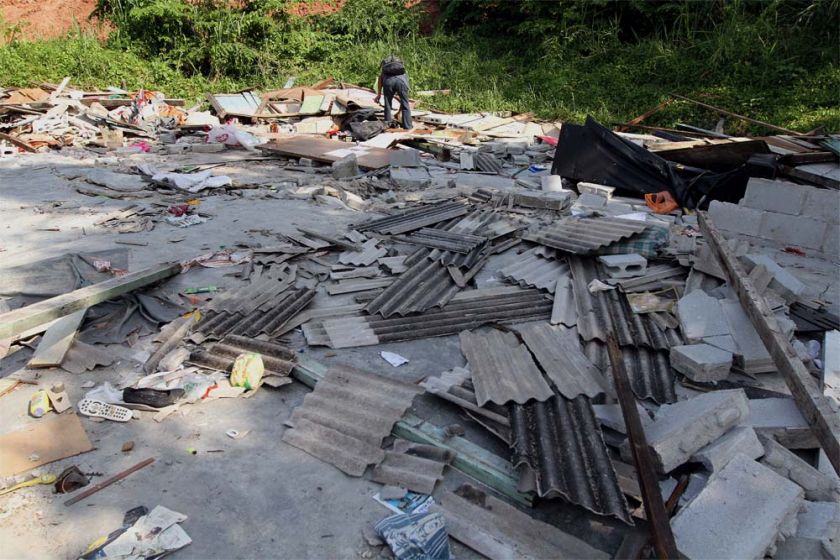
On Monday last week, three houses were demolished by DBKL as part of a clearing process that had started in 2013 in order to make way for future development.
Originally from Lenggong in Perak, Wahidah moved into Kg Chubadak in 1968 when she married her bus driver husband, Halim Hamid, who had already been staying there for four years.
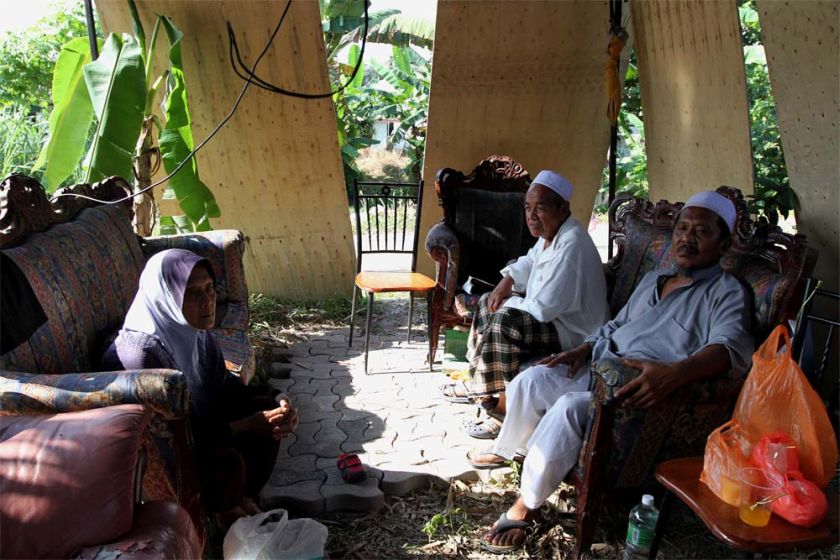
Halim, now a frail man of 75 with bad hearing and eyesight, denied that the villagers were squatters as labelled by DBKL, and explained that they were pioneers who had settled there for decades.
“It was Datuk Harun who brought us here,” Halim said, referring to Datuk Harun Idris, the Selangor mentri besar who served between 1964 and 1968.
“He asked us to open up the land, so that more Malays could stay. Starting from there, one by one all of us arrived.”
He pointed out that originally there were only three families — two Malay and one Pakistani — in the former mining plot, while the surrounding area was mostly occupied by Indian labourers.
The village was allegedly named Chubadak after a place with the same name in Sumatera, Indonesia, where some of the original settlers came from.
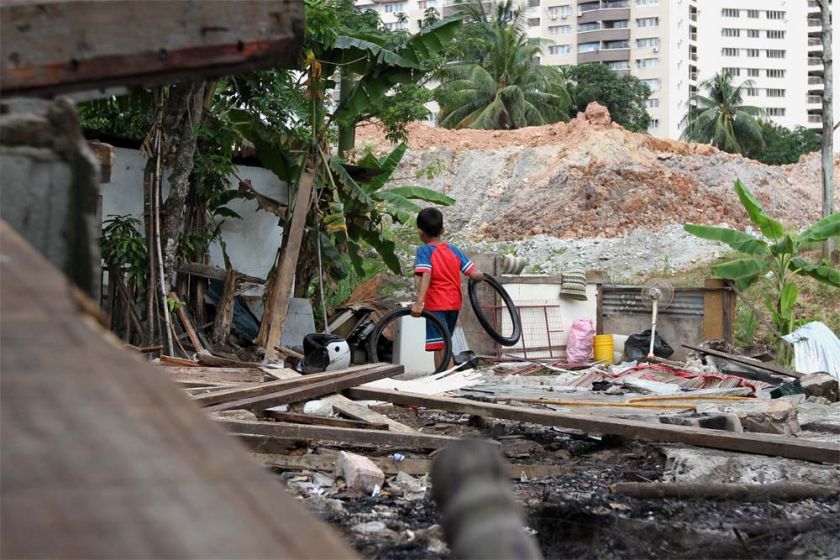
At its peak, Halim said there were over 200 families who migrated to the kampung from all over the country, but they have mostly left after developers took over most of the lands, paying out RM7,000 for each family and a house in the Batu Muda People’s Housing Programme (PPR).
According to Halim, the developer had bought over the land from the Land and Mines Office, which had neglected to take note of the villagers’ status as urban explorers.
The demolition was, however, temporarily halted on Thursday after NGOs and PAS representatives managed to obtain a High Court injunction, staying the demolition until the case is heard on June 26.
With less than two weeks left, Wahidah and Halim have vowed to live out the remaining days in their garage which was left untouched. They are keeping guard against any move by DBKL to stealthily knock down the few remaining houses in the village.
“I will defend this village to the death. We have been here even when this was a horrible place. Now they easily want to take our lands away from us,” said Halim.
“We are the only ones who are still strong-willed,” Wahidah said, pointing out that she had made a pact with her neighbour and best friend, Mahwiah Daud, 58, to see out their remaining days in the village.
“People advise us to just move out, but they do not know the pain of fighting for our rights,” said Mahwiah, also a religious teacher.
Mahwiah’s house was also torn down on Monday, but her family of ten cannot move into the tiny flat provided for them because it still lacks electricity.
The flat is just 650 square feet in size.
Mahwiah’s husband, quantity surveyor Abdul Hamid Mohd Saad, 60, has since pitched a tent in front of their demolished house and filled it with several sofas, where the four spend most of their time enjoying the cool breeze during the afternoon.
“After this, we might not see each other again like this. We were neighbours here, but we would not be anymore in the flats. This is what I am most sad about,” said Wahidah.
The two women also said that they would miss tree-filled patch of land behind their houses where Wahidah reared chickens.
“Even if the government could give us a little bit of land, that would be great. We could at least plant chillies,” said Mahwiah, who said that they were previously promised landed houses in Tanjung Karang, Selangor.
With the Muslim fasting month set to start at the end of June, the families also lamented that they would be celebrating Aidilfitri elsewhere, not in the houses they have lived in for so long.
“Every time I am saddened with my fate, I try to console myself: I am a Muslim, I can fast anywhere,” Wahidah added.