


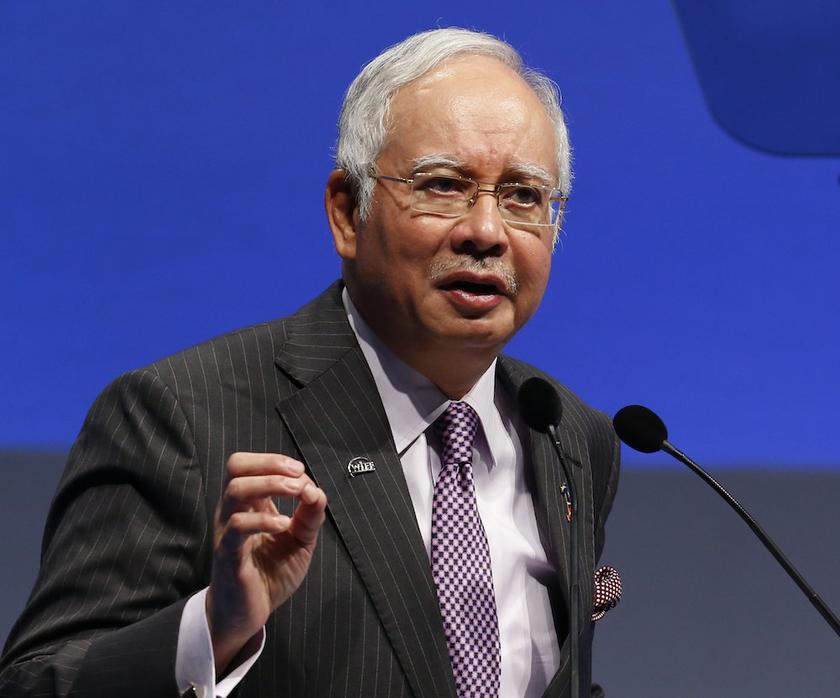


PUTRAJAYA, Nov 11 — Prime Minister Datuk Seri Najib Razak once again defended the country’s affirmative action, saying it is important for the country’s long-term stability.
The Umno president used poverty and inequality as a peg to defend policies that favour the country’s majority, saying that they have a “destabilising and corrosive effect on societies”.
“Why should law and order mean anything to people who hardly benefit from them?
“Why should the marginalised support a political system if it only widens the gap between the rich and the poor and the very argument, when people ask me about our affirmative action, about our Bumiputera agenda in Malaysia, the simple fact is that if the Bumiputera constitutes 67 per cent of the population and they are marginalised, will that lead to long term stability in this country.
“So when you talk about being inclusive, it’s not only for the minority, it is also for the majority as well,” he said during his keynote address at the Asian Peace and Reconciliation Council/ ISIS Malaysia: Dialogue on Diversity, Diplomacy and Peace here at the Marriott Hotel.
The prime minister had announced additional programmes to aid the Bumiputera community amounting to more than RM31 billion in cash aid and contracts in September, ahead of his Umno party’s internal polls last month.
Critics of the affirmative action had said the race-based policies had not only enriched a small elite class of Malay capitalists, but had also been abused as a tool of political patronage.
Meanwhile, Minister in the Prime Minister’s Department Nancy Shukri last week said poor Bumiputera will resort to theft, in defence of the government’s reintroduction of a race-preferential economic policy that has drawn the ire of Malaysia’s minority Chinese and Indian communities.
The de facto law minister told a public forum on international covenants organised by the Malaysian Bar that the Bumiputera Economic Empowerment Policy was needed to help fix the unequal wealth distribution among the races that remains prevalent half a century after the country was formed, and which she claimed could lead to a potential spurt in social ills and crimes.


