


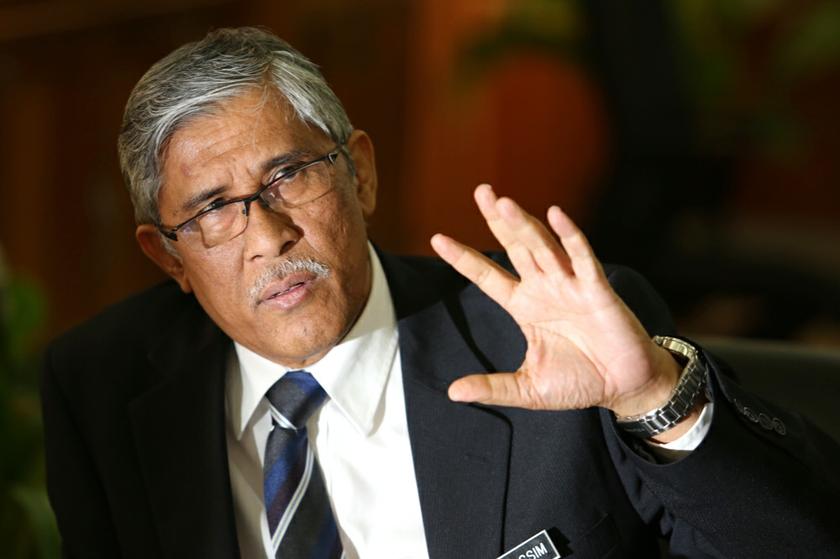


PUTRAJAYA, July 22 ― Brutality allegations — once at “worrying” levels — have been all but eradicated at the Malaysian Anti-Corruption Commission (MACC) which is also enjoying greater success at putting its graft targets behind bars
While acknowledging the effects of its two high-profile custodial death cases — political aide Teoh Beng Hock in 2009 and senior Customs officer Ahmad Sarbaini Mohamed while under MACC custody in 2011 — chief commissioner Tan Sri Abu Kassim Mohamed said his agency has made strides since.
“Complaints against MACC officers on brutality fell down to only four from 2010 until today,” he said, adding that none has been filed this year, while two of the four were lodged the previous year.
The 2009 death of Teoh at the then-headquarters of the Selangor MACC in Plaza Masalam, Shah Alam had stunned the nation. Picked up for investigations into a minor graft case involving a Pakatan Rakyat (PR) state assemblyman, Teoh was found dead the next day after falling 14 floors to the ground outside the building.
Two years later, the MACC suffered a repeat when Ahmad Sarbaini similarly plunged to his death at the commission’s Kuala Lumpur office while there for questioning.
The two incidents later altered the way federal agencies handled witnesses for questioning, as it did with the MACC.
According to Abu Kassim, his commission became the first enforcement agency in the country to introduce the recording of interviews conducted by officers using close-circuit cameras.
Despite the improvements made with regards to his officers’ conduct, the head of the country’s graft-busters was more proud of the agency’s ability to present cases with which prosecutors could secure convictions.
According to statistics provided by the MACC, 339 out of the 400 graft cases that were tried in the Sessions Court in 2012 resulted in guilty verdicts, or a conviction rate of 85 per cent.
Abu Kassim credits the success to the agency’s “transformation” in 2009, when it was converted into the MACC from its predecessor, the Anti-Corruption Agency (ACA).
“Transformation has really made a difference in our organisation, (it) has changed in terms of allegations against MACC officers, has increased the number of arrests, has increased the number of charging in court.
“Most importantly we are able to increase the number of convictions,” he told The Malay Mail Online and Guang Ming Daily in a recent interview at the MACC headquarters here.
“Before our transformation, our conviction rate is about below 60 (per cent), today our conviction rate is more than 85 (per cent),” he said.
For January to June this year, the conviction rate in the Sessions Court stood at 89 per cent or 144 out of 162 cases.
MACC plays an investigative role in graft cases, while the Attorney-General’s Chambers decides on whether to press charges on those being investigated.
Despite the stepping up of efforts in tackling corruption and enhancing MACC’s professionalism and effectiveness, a recent international survey showed that public confidence in Putrajaya’s anti-graft fight was on the decline.
Transparency International’s Global Corruption Barometer (GCB) results for 2013 said less than one in three Malaysian respondents felt the government was successfully combating graft, down from 48 per cent in the same survey in 2011.


