




KUALA LUMPUR, July 22 — Discrimination in the student intake into public universities has become a “perennial” problem and a bipartisan parliamentary select committee must be set up to address the problem, a DAP leader said today.
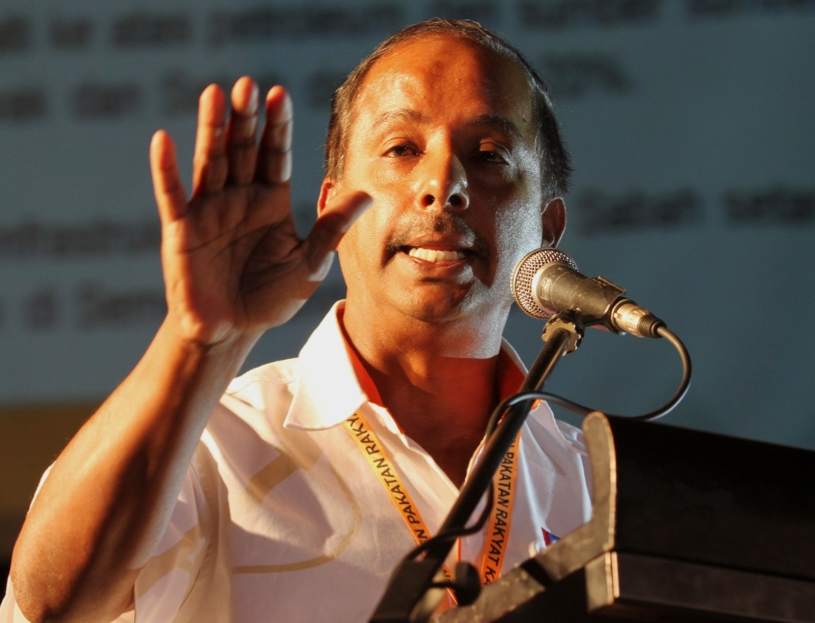
Ipoh Barat lawmaker M. Kulasegaran (picture) claimed this year’s intake of students into matriculation programmes and public universities “is by far the worse” with many top scorers failing to make the cut despite attaining a perfect cumulative grade point average (CGPA) of 4.0.
The lawyer by training, however, did not furnish any evidence to support his claim, but went on to criticise the government’s explanation — space scarcity and poor marks for extracurricular activities — on the problem as unconvincing.
“Such explanations are hardly convincing and acceptable as there have been public allegations that students with lower scores in CGPA and extracurricular activities being offered courses at public universities.
“For the matriculation places, there have also been complaints of qualified students not being offered places,” he said in a statement.
The veteran lawmaker also criticised Health Minister Datuk S. Subramaniam who deemed the situation as normal, citing “other countries” as proof no specific reference was made.
“His statement is most misleading. Has he forgotten that in Malaysia, we are talking about top scorers who have scored CGPA of 4.0 and not students who have merely met the minimum academic entrance requirements?”
Recently, a senior MIC leader questioned the government over the alleged reduced intake of Indian and Chinese students in local universities this year while slamming the party’s representative in the education ministry.
Party treasurer-general Senator Datuk Jaspal Singh claimed this year’s intake is the “most unfair and biased public university intake in the history of Malaysia.”
The lack of opportunity for Chinese and Indian students to enrol in public universities was a significant issue for the two communities leading up to the 13th national polls that saw a major swing in non-Malay votes towards the opposition.
Meanwhile, former Deputy Education Minister Datuk Dr Wee Ka Siong revealed that 116 of the students who have complained of discrimination to the MCA received the maximum CGPA score of 4.0 with 16 having received no offers.
The allegation triggered calls for a review of this year’s intake.
Wee, however, was adamant that many of the unsuccessful university applicants this year were fully deserving of a place at their university of choice.
Citing Jaspal’s allegation, Kulasegaran said a bipartisan parliamentary select committee on matriculation and public university intake must be set up to study and propose a permanent, fair and practical solution to resolve the problem of qualified students failing to gain places at matriculation colleges and public universities.
The committee must also look into criticisms of unfairness about the existence of two pre university examinations — the matriculation and STPM of which the latter is said to be unfairly graded and much easier to pass.
“It cannot be denied that STPM is a tougher programme compared to the internally examined matriculation and without the holding of a common university examination; the question of unfairness always exists,” said Kulasegaran.
It has been reported in the media that for the extracurricular activities, matriculation students are assessed based on their activities in matriculation year only while STPM students are assessed based on their entire secondary school life.
This has resulted in matriculation students having an added advantage and also the purported decline in student enrolment in STPM.
Kulasegaran proposed that the STPM exam be abolished in favour of matriculation courses or that a common university entrance examination be held for all matriculation and STPM students.


