












KUALA LUMPUR, June 20 — Families of 24 civilians killed in the Batang Kali massacre 65 years ago are now making greater demands of the British government following reports of compensation offered to Kenyans who suffered during the suppression of the Mau Mau Revolt during the 1950s.
According to UK’s The Guardian, the British government is now negotiating reparations for Kenyans who were captured and abused by British troops out to crush the insurgency. If it takes place, this would be the first time compensation will be made for atrocities committed by the British Empire.
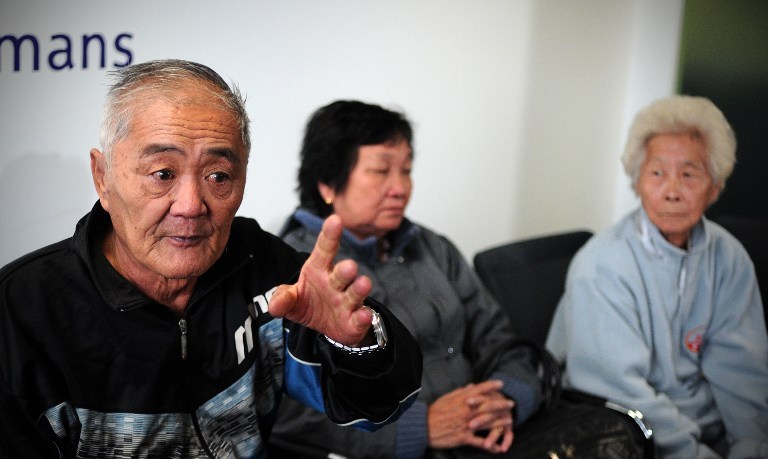
“I applaud the moral courage of the British government in admitting the torture of Kenyans and taking responsibility for putting that wrong right,” Lim Kok, whose father was allegedly beheaded during the Batang Kali massacre, was quoted as saying by UK’s The Guardian on Tuesday.
“But it is absurd that the very same government has remained mute on the slaughter in Batang Kali, which took away my father’s precious life.”
Pushing the British government to “honourably accept” its role in the killing of 24 Batang Kali civilians, the victims’ families are now demanding, among others, an apology and a monument to mark the massacre.
On Tuesday, Lim and representatives from concerned groups of the Batang Kali massacre submitted the demands accompanied by a 10,000-signatory petition to the British High Commissioner to Malaysia, Simon Featherstone.
Aside from the two demands, the families are also seeking “modest reparations”, according to their lawyer.
“My siblings had to start working when they were seven or eight to support our family. They used to work in the market and wash dishes,” Lim was quoted as saying by The Star in its Tuesday report. “We try to forget but somehow the memory still remains.”
In September last year, a London High Court ruled that the British government had acted lawfully in rejecting calls for an inquiry into the 1948 massacre of 24 villagers in Batang Kali. The families have since initiated an appeal, which is due to be heard this November.
Following the ruling, London reiterated its decision to not hold such an inquiry, saying no credible outcome could be reach due to “enormous difficulties” caused by the length of time that has passed since the event.
The Batang Kali massacre took place on December 12, 1948 during British military operations against communist terrorists after the end of World War II.
It was alleged that the Seventh Platoon of the G Company, 2nd Scots Guards, had surrounded a rubber estate at Sungai Rimoh and shot 24 villagers before setting fire to the village.
In January 2009, the British Foreign Office rejected a call for an inquiry but three months later, it was reported that the government was re-considering the decision.
On April 2010, the last witness of the Batang Kali massacre, Tham Yong, 78, died.