


KOTA KINABALU, March 20 — The lively atmosphere at the Lintasan Deasoka Ramadan Bazaar here, bustling with traders and visitors every evening, returns to calm and quiet once operations end at around 7.30 pm.
A team of cleaning workers from the Solid Waste Management Department of Kota Kinabalu City Hall (DBKK) then takes over the area, diligently sweeping and collecting various types of rubbish and plastic scattered around the site.
Though largely unnoticed by the public, their role is crucial in maintaining the city’s image, with every corner of the bazaar thoroughly cleaned through careful planning and dedication throughout the month of Ramadan.
Cleaning supervisor Wilson Kondo said that maintaining cleanliness at the bazaar is not merely routine work, but requires planning, commitment and adherence to schedules set throughout Ramadan to ensure operations run smoothly and systematically.
“We work in shifts, in the morning and afternoon. Cleaning at the Ramadan bazaar here (Lintasan Deasoka) is carried out before operations begin and after they end. There is also follow-up cleaning,” he told Bernama.
Wilson said post-bazaar cleaning is among the most challenging phases, especially when it involves large volumes of waste.
“Only after traders dismantle their tents can we carry out full cleaning. The duration depends on the conditions on the ground. If there is a lot of rubbish, it naturally takes longer.
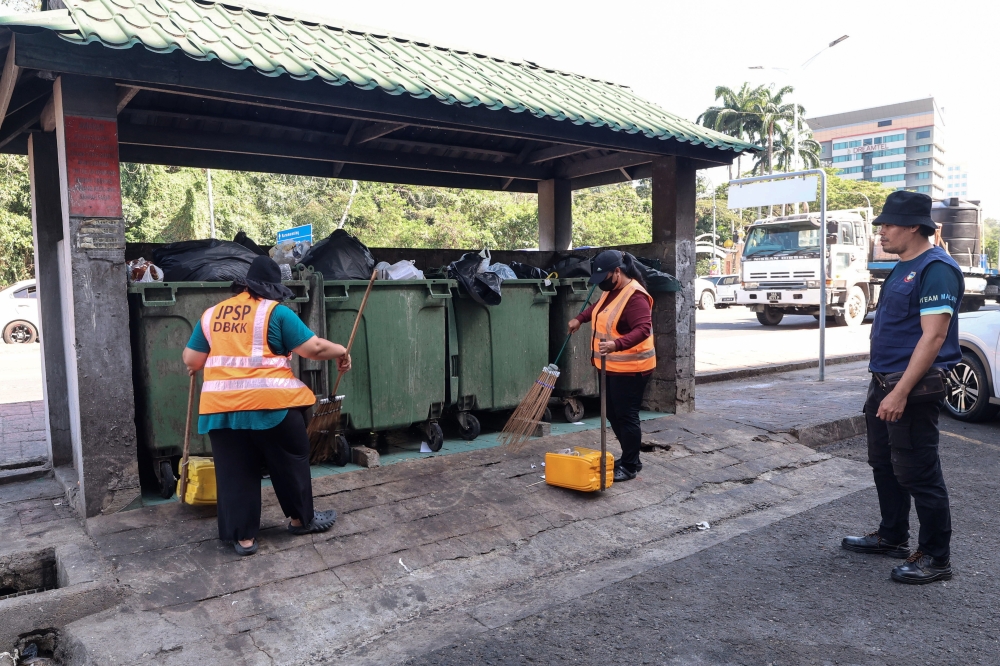
“Sometimes stalls close late, so we cannot enter to begin cleaning.
“In addition, vehicles moving in and out to transport goods also make the work more difficult,” he said.
Another cleaning worker, Marcella Felix, said cleaning tasks can usually be completed within about 30 minutes, depending on the situation, as the work is carried out in teams.
“The second round of cleaning is around 7.30 pm. At that time, the work can usually be completed quickly thanks to teamwork rather than individual effort, making the process faster.
“We are already familiar with the area, so we know which spots need attention,” she said.
Bernama previously reported that DBKK recorded a 15 to 20 per cent increase in solid waste during Ramadan compared to normal days, due to increased business activities and bazaar operations.
On average, the city records between 400 and 500 tonnes of solid waste daily on normal days, while during Ramadan, the figure rises to around 500 to 600 tonnes per day.
DBKK has managed the situation effectively despite the 15 to 20 per cent rise.
This year, an estimated 20 to 25 Ramadan bazaar sites are operating across the city under DBKK’s supervision, in collaboration with the City Environmental Health Department and the Sabah Health Department. — Bernama


