










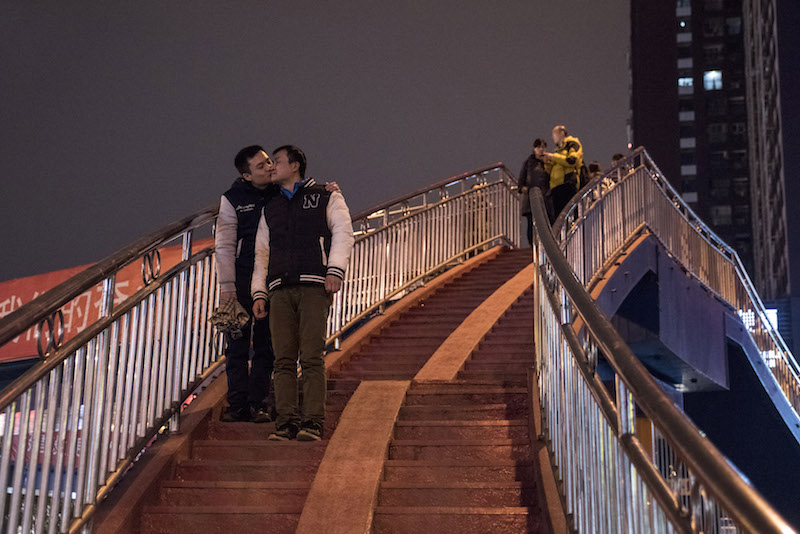


CHANGSHA, Jan 28 — The two young men met through an online chat group. They began seeing each other every day. Long walks in the park. Movies and barhopping. Dinner with grandparents.
On their first anniversary, in June, the men, Sun Wenlin and Hu Mingliang, tried to register to marry at a local civil affairs bureau in this southern provincial capital. An employee refused, saying Chinese law did not permit same-sex marriage. The couple did the unthinkable — they sued the civil affairs bureau.
This month a district court accepted their case, the first time a Chinese court had agreed to hear a lawsuit on same-sex marriage. The proceedings are expected to start today. Some Chinese news organisations have reported on the case, including the English-language edition of Global Times, a prominent state-run publication.
“Whether I want to marry or not, it should be my right to decide,” said Sun, 27, as he ate dinner at a fish restaurant yesterday. “I increasingly wanted to bring this lawsuit because they wouldn’t give me the right.”
Hu, 37, a security guard, said, “I had relationships before, and I had thought about getting married before. The state wouldn’t allow me, and my family wouldn’t allow me. There were many obstacles.”
Although some local officials have tried to signal their disapproval of the lawsuit — two police officers showed up in December to question them — the case has galvanised some gay rights advocates in China. This society is still relatively conservative when it comes to sexual relationships, and many gay men and lesbians choose to keep their sexual orientation hidden and marry people of the opposite sex because of parental pressure.
But increasingly, gay men, lesbians, bisexuals and transgender people are asserting their rights, especially as they see more Western nations approving same-sex marriage.
“Before, their voices were unheard, and people did not know such a group of people existed and had needs for marriage,” said Li Yinhe, a sexologist who has pushed for a same-sex marriage bill and recently revealed that her longtime partner was a transgender man.
“It’s very brave of the couple to publicly apply for marriage like this,” she added. “Having more people know about the issue will help with both fighting social discrimination and winning approval for same-sex marriage.”
After dinner yesterday, the couple strolled hand-in-hand through the neon-lit streets of eastern Changsha, not far from Mao Zedong’s hometown. Sun, who works in Internet marketing, is the more outspoken of the two, though he has never had a reputation as a gay activist.
Getting the lawsuit accepted by Changsha Furong District People’s Court was not easy. The couple found a lawyer who agreed to take the case but then dropped it after his firm objected. That lawyer recommended Shi Fulong, whom the couple hired and who filed the case in the court December 16.
A court employee refused to accept the paperwork at first, but Shi pointed to new regulations passed in May that made it tougher for courts to reject cases without giving a strong reason.
Then, on the night of December 24, two police officers visited the couple at the home of Sun’s grandparents. The men spoke for 40 minutes. The officers said the court had not sent them. They said a married couple had an important duty to have children. “I said, “If you want to reproduce, you go ahead and reproduce,” Sun said. “If I’m not interested in reproducing, I won’t. Don’t interfere with my rights.”
The couple were notified January 5 that their case had been accepted.
Sun said the case had cost them about US$1,200 (RM5,045) so far, nearly three times what each of them earns in a month. But he said they were determined to see it through to the end.
“Around the world, in other places, gay people have joined forces to fight for their rights,” he said. “They can get married and no longer face discrimination. Inside China, we still live a life like this. We can’t get married and we suffer discrimination.”
He added: “If I hadn’t seen the outside world, then I wouldn’t care. But I have seen the outside world, and I feel terrible. China needs to take bigger steps.” — The New York Times