


NEW YORK, Aug 9 — Did the United States have to drop the bomb?
Seventy years after the United States started the atomic age with attacks on Hiroshima and Nagasaki, hastening the end of the war in the Pacific, we asked readers how they viewed the decision by President Harry S. Truman.
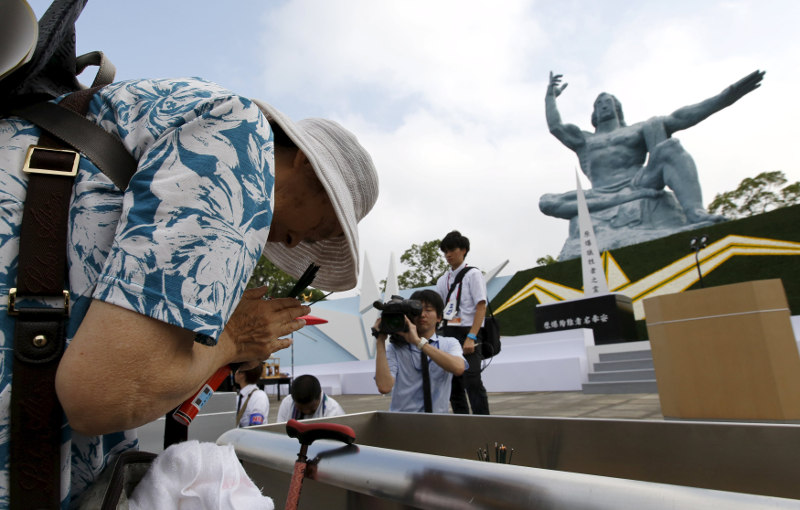
At the time, Truman defended his decision to drop the bombs on Japan as the only way to avoid a full-scale invasion. That, arguably, would have cost more lives, American and Japanese, than the approximately 200,000 who died in the attacks on Hiroshima and Nagasaki. The anniversary of the Nagasaki attack will be commemorated at the city’s Peace Park on Sunday with a ceremony that Prime Minister Shinzo Abe will attend.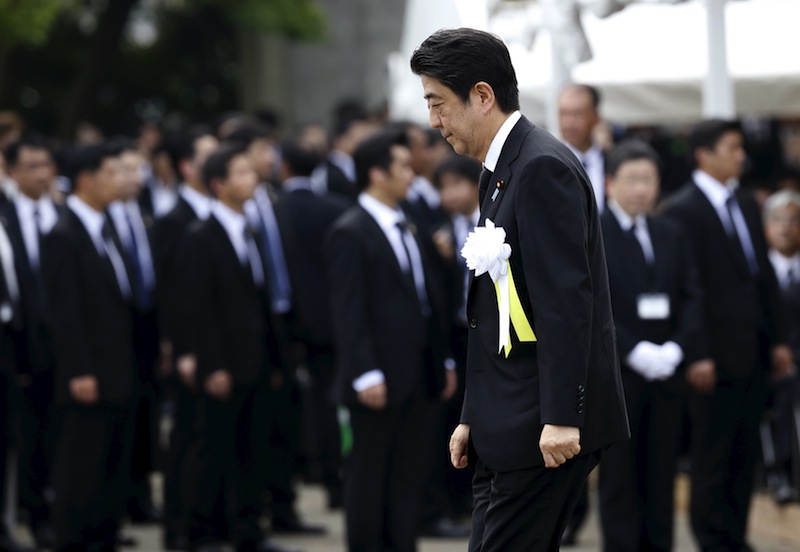
Critics have contended that the Japanese were sending signals that they were prepared to surrender, but that these were either missed or ignored, and that the United States wanted to demonstrate to the world – particularly to the Soviet Union – the awesome power it had at its disposal.
We received thousands of responses, including justifications, condemnations, indictments and explanations. And though the 70 years since the bombings have helped provide perspective – and more knowledge about what was happening at that time in the war – they have not yielded much consensus.
Here are excerpts from selected responses, lightly edited for clarity.
Judging Truman’s legacy
This was an act of terrorism against the civilian population to achieve a political objective, a quintessential war crime. Harry Truman was a war criminal. – Lawrence Moss; New York
Truman did the right thing. Whether it saved Japanese lives is immaterial, it was politically correct and saved American lives and ended the war. – Frank Doolittle; Paradise Valley, Arizona
Dropping the bombs was a 1945 decision, not a 2015 one. To Truman, 200,000 Japanese lives lost was better than 400,000 killed and wounded American lives. To add to that were the billions of dollars spent on developing the bomb and the means to deliver it, the B-29. If the bomb was not dropped and lives were lost, why was the bomb even developed? – Edward Wysocki; Bowie, Maryland
Putting myself back in 1945, the Axis powers had no hesitation in bombing, torturing and murdering anyone with the Allied cause. If I was in the Enola Gay that morning, I believe I would have looked at it as just a real big bomb that might put a quick end to the war. Given the means, I believe I would have dropped a bomb each day until the emperor himself said, “Please, no more.” Good for Truman: He did what was necessary to stomp out evil. – George Herrington; Carmel, Indiana
The display of power was necessary to ensure the security of Europe and Asia from the threat of a Soviet-instigated war in the aftermath of World War II. Further, the American electorate had a desire for revenge, and so it was politically advantageous to drop the bomb. Finally, to imply moral and rational behaviour are the same in war as in peace is a gross simplification of events past. – Jordan Hall; Kent, England
Alternatives to the Bomb
One need only look at the casualty estimates of the planned invasion to see how horrific the alternative might have been. The decision to drop the bomb is tragic, and American officials should always mourn with the people of Japan. Without the unfortunate decision to drop the bomb, the war would have dragged on and the losses for both sides would have been catastrophic. – Zachary Hoffman; Columbus, Ohio
I do not argue against dropping an atomic bomb to hasten the end of a terrible war, but I disagree with targeting Hiroshima, Nagasaki or any urban area. Instead, the United States should have selected a remote location. This would have shown the imposing power of the atomic bomb and the uselessness of the Japanese government continuing the war, while saving the lives of tens of thousands of civilians, many of whom suffered incredibly gruesome injuries. – John Vankat; Flagstaff, Arizona
Even if we accept that dropping the bomb was necessary to force Japan to surrender unconditionally, no one has ever adequately explained why we couldn’t have had the same effect by dropping the first bomb on an uninhabited part of Japan. Even if Japan refused to surrender after the first bomb and we had had to drop the second, as happened in 1945, still only half as many people would have been killed. Did no one think of this? – Elizabeth Michoud; Stow, Massachusetts
The Moral consequences
The decision to drop the bomb on Hiroshima at 8:15 in the morning, when the maximum number of people were out commuting for schools and offices so that the maximum number of civilians could be killed, cannot be justified by any reasons whatsoever. – Takeo Kondo; Tokyo
Dropping the bomb on Hiroshima was an act of great moral callousness and evil. A military, rather than civilian, target could have been selected. If we wished, we could have contained Japanese aggression for another handful of months, shared the atomic bomb research with our allies, demonstrated the bomb’s power on an uninhabited island or evacuated city, and brought the war to a close without sacrificing another 200,000 civilians. – Matthew Penniman; Lansing, Michigan
Two positive things came out of Hiroshima and Nagasaki: fewer casualties than Operation Downfall, and an exposure to this horror that ensured the Cold War never became hot. These bombings displayed the moral repugnancy of using nuclear weapons to civilians; without such approbation to keep its use in check, would the military ranks of one of the nuclear powers have broken to use these weapons of horror? The use of atomic weapons on Japan was militarily and morally justified, both in 1945 and 2015. Yet it was, and remains, a deeply regrettable action of historical proportions. – Christopher Hall; West Barnstable, Massachusetts
Dropping the bomb was a strategically effective decision for the United States to achieve victory in the Pacific. Yet the multitude of civilian casualties cannot be considered collateral damage because they were in fact the actual target of the attack. It was a large-scale shock-and-awe strategy that was condemnable because these were not only attacks against an enemy, but attacks against the very fabric of humanity. – Renan Cabrera; Doha, Qatar
An invasion avoided
It’s personal for me. My father was a weather forecaster. He would have been in the first wave of the invasion had it occurred. Someone has to provide precise information to the next waves to direct artillery. The projected casualties were over 30 per cent. In all likelihood, I would not have been born. – Linda Blonsley; Arroyo Grande, California
I am here, no doubt, because the bomb was dropped. My father was on a ship filled with young Americans steaming to Japan for a final invasion. It was predicted to be a brutal campaign. When the bombs were dropped and Japan surrendered, the news came to the ship, and my father told me a cheer spread from one end of the ship to the other, as thousands of young American boys knew that battle would not need to be fought. – Harold Grodman; Charleston, West Virginia
My father’s Army Engineer Corps unit was shipping its equipment to a forward staging area for the invasion of Japan. My brothers and sister and I would not be here if our dad was in that invasion. Thousands – if not millions – of other baby boomers would not have been born. The United States had to drop the bomb. Why suffer even more casualties? The bombs ended it. – Jay Bodenstein; The Villages, Florida
— The New York Times


