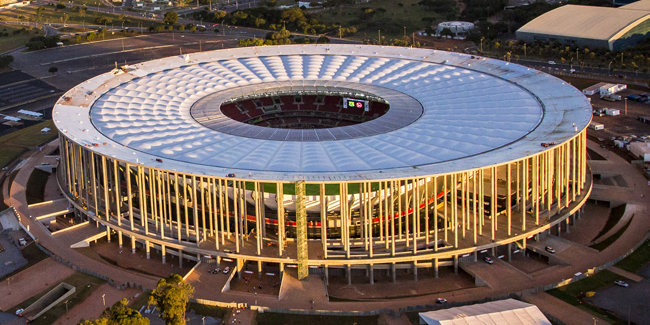
BRASILIA, April 28 — The Estadio Nacional Mané Garrincha in Brasilia, built in two years using materials from the previous demolished stadium, will host seven games at the 2014 FIFA World Cup Brazil.
According to reports, it is the first stadium in the world to be awarded the US Green Building Council for Leadership in Energy and Environmental Design (LEED) Platinum seal, the top sustainability certificate. It is also the second largest stadium in Brazil, with a capacity of more than 72,000 seats.
The seats are distributed between the lower, middle and upper stands, in addition to 74 hospitality boxes.
The football field measures 68 x 105 metres and is seeded with Bermuda Celebration grass, known for its tolerance to cold, extreme drought and shade as well as for exceptional wear tolerance and divot recovery.
The pitch is only 7.5 metres from the front row of seats. A 1.5-metres wall separates the players from the spectators.
The suspended roof is an innovative and environmentally friendly structure made of metal cables and trusses covered by a fibreglass membrane able to protect the public from ultraviolet rays and while the photocatalytic captures and break down the exhaust fumes the equivalent of 1,000 vehicle exhaust fumes.
This is particularly important because more than 50 per cent of the CO2 emissions related to stadium operations come from transportation to and from the stadium.
The 9,600 solar panels on the roof outer ring are able to power the entire stadium while the open structure allows natural ventilation.
The stadium also features a rainwater collection system capable of storing 10.51 million litres of water that is to be reused in toilets, cleaning and watering the playing surface.
Vehicles can enter the parking lots through a tunnel which leads to three sections, one for electric cars, one for combustion engine cars and one for buses, for a total of 572 lots.
Fans will also be encouraged to travel to the match as sustainably as possible through the provision of 3,500 bike parking places. According to Ian McKee, the green building and sustainability manager for Castro Mello, there are no other stadiums with this much bike parking inside that he is aware of.
As for the facilities inside the complex, there are 276 toilets, four changing rooms, 40 bars and 14 snack bars, two restaurants, and 6 TV booths.
After the World Cup 2014, the stadium, with retractable seats, will continue to be used as a multi-venue for football matches, but also for mega events like concerts and conferences. — Reuters