KUALA LUMPUR, July 26 — One thing I have always liked about BMW is that they have what one of the design engineers called a ‘parts shelf’. Whenever the designers need to build a new car, they are allowed to use any part they desire, so long as that part is on this ‘shelf’. Parts on the shelf include engines, transmissions, drive train components, active and passive safety parts, plus accessories — each of which may have been developed for a particular car at one time or another.
With this company philosophy, the designers can come out with many different models and variants using various variations of the same components, which is why, even from way back in the early 1980’s, BMW could offer the E30 3 Series model with many different engine configurations, from 1.6 litre to 2.5 litre. The successor to that was the E36 3 Series, a model which spanned over ten years to 1990 – the E36 through its lifetime had a total offering of nine gasoline engines, from 1.6 litre all the way to 3.2 litre, and two diesel engine variants. For the consumer, a wide range of engines allows one to select a model that best suits ones preferences. I was working in another automotive company at that time, and I just couldn’t understand why it was that the people from that brand I was working for just could not fathom this – they made good cars, and they made great engines too, but more often than not, they put the wrong engine in the right car, or the right engine into the wrong car.
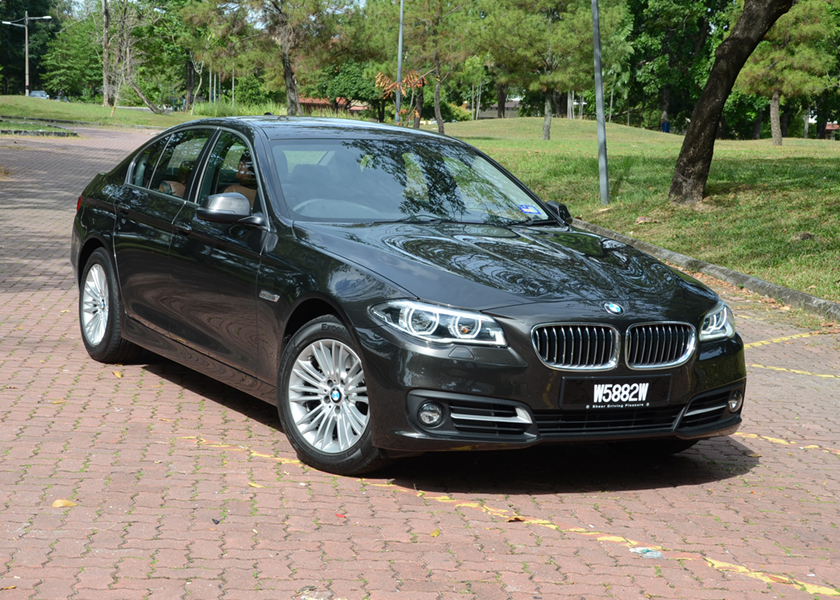
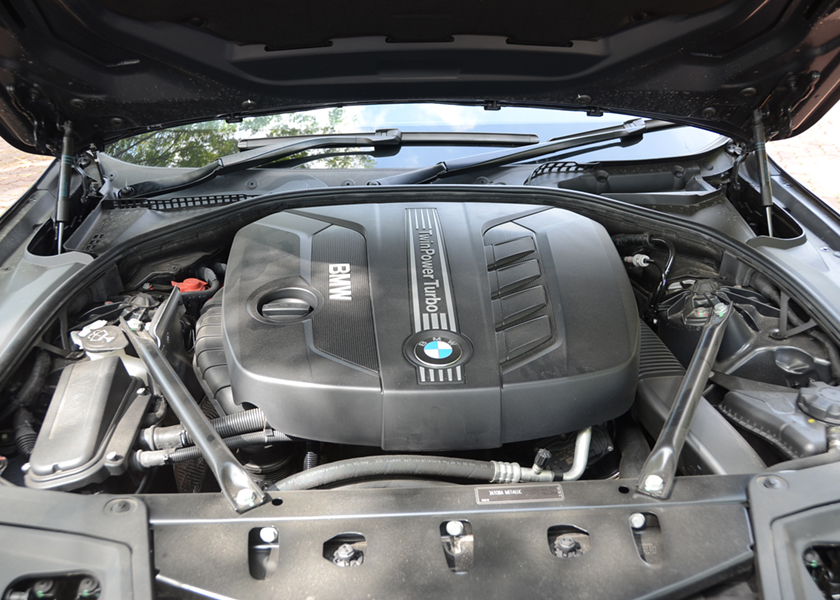
Back to the present, I am reviewing the BMW 520d – this is the diesel version of the 5 Series offered here in Malaysia. We all know that the mainstream sedan models are the 3 Series, 5 Series, and the 7 Series, and lately, the 4 Series has been introduced as the Coupe line. If you examine the specifications of the line-up, you will note that the same engines are used throughout the range, as are the drive train components, and other stuff. Similarly, the 520d has the exact same engine that is also found in the 320d.
One might expect the 520d to be underpowered, considering that the 320d weighs in at 1505 kg while the 520d is 200 kg heavier at 1705 kg. Yes, the effect is felt, and the 200 kg is the equivalent of carrying three average-sized passengers. However, if you are the type who needs the extra size more than the power, the 520d will suit you fine because there is still plenty of power left. The beautiful thing about the turbo-diesel is the 380Nm of torque, which in reality is the driving force behind acceleration. Performance figures are still very respectable, with acceleration from zero to 100km/h mooted at 7.9 seconds (320d: 7.4 seconds), while top speed is 231km/h. The 320d strangely, has a claimed top speed of 230 km/h.
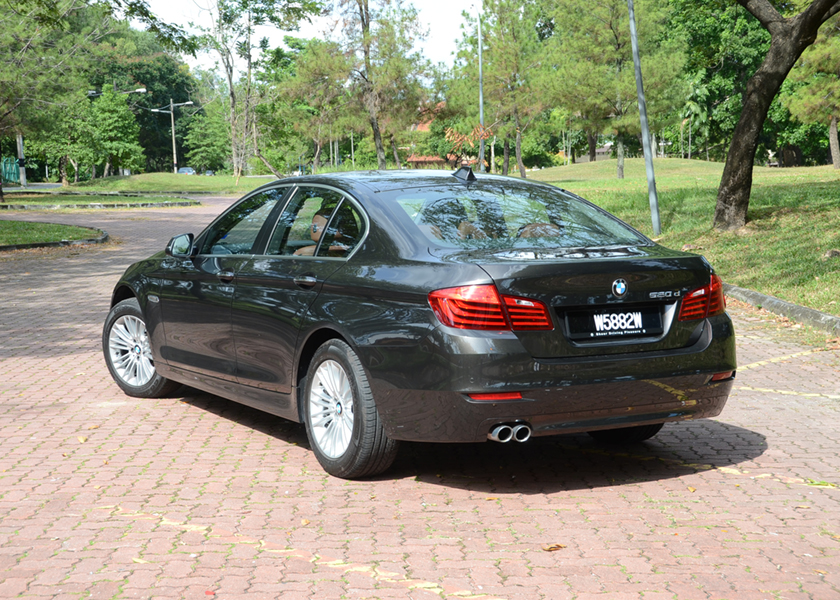
Driving the 520d, I did not feel there was any lack of power, and despite the size, it handled really well, as all BMW cars do – credit must be given to the BMW chassis design team for consistently getting the best out of their designs – and I wouldn’t expect any less from a BMW.
In terms of ride, the 520d is nothing less than impressive. Being heavier, and with a long wheelbase of 2968mm, the 520d’s suspension ‘irons’ out’ all the little undulations to provide an excellent ride. Driving Experience Control has five modes starting with Eco-Pro mode for fuel efficiency, with two Comfort modes and two Sports modes. In each mode, the digital instruments change, and so do engine, transmission and suspension settings. Depending on your driving mood, you can select whichever mode that best suits your driving style. I stuck mostly to COMFORT, finding it a good all-rounder setting.
Fuel economy is claimed to be 4.5 litres per 100km (combined cycle). I managed between 5.9 litres on a best effort basis, but driving around Petaling Jaya and the city, I could average only around 8.5 litres per 100 kilometres. These are still very good numbers. You can get the stated 4.5 litres per 100 km if you drive consistently at between 80 km/h and 100 km/h, but I am not going to buy a BMW 5 Series to do that. Seriously, if you want to putter around at these speeds on the highway, either go buy a K-car for a fraction of the price of a BMW, or give up on driving altogether.
The automatic transmission is from the same parts shelf I mentioned earlier, and is the same 8-speed transmission found in the current crop of BMWs. It performs flawlessly, and gear shifts are seamlessly smooth. Due to the fact that there are eight gear ratios, each step up or down is very short, and in top gear, 1,500 rpm will get you 100 km/h, which also helps to contribute to the fuel efficiency. Thinking back, I still remember the time when autos were three-speeders, and for a manual, five-speed was something to shout about. How things have changed.
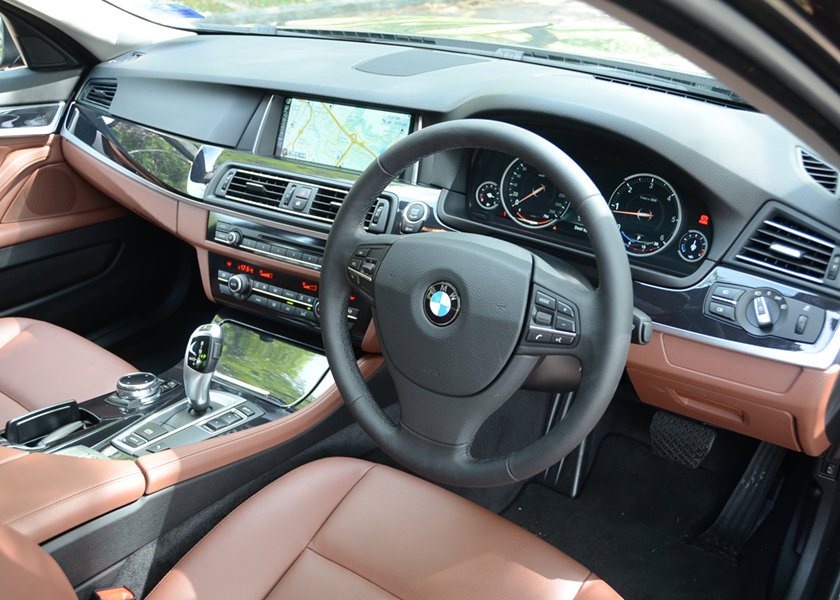
I don’t think I need to go into details about the interior, other than saying that everything is as expected — it is top quality all the way, with plenty of space- the 520d is a large car, and for the price you are paying, BMW has put in all the right stuff. What I miss is a set of paddle shifters — but having said that, the people who are likely to buy one of these cars wouldn’t miss them either. Besides, you can always use the manual shift on the gear lever if you are desperate enough.
Overall, I fail to see anything lacking in the 520d. Those who want more power have other engine options to go for in the 5 Series. I think it is a great car, and will serve anyone who deigns to buy it well; for me, it is a little too big, which is not a problem, because I can always go for the 3.