


OCTOBER 12 — Distinguishing individual motivation from societal expectations is essential when examining how people navigate ageing and aesthetic self-care. Public discourse frequently misinterprets personal grooming and wellness practices as anxieties about getting older. However, examining the underlying intent reveals a fundamental divide: while some actions may be driven by a fear of physical decline, others arise from self-respect, personal autonomy, and a commitment to overall well-being.
I recently came across an article asking a simple but important question: Why do we expect age to look a certain way? It stayed with me.
I agree that ageing should not come with a prescribed appearance. No one should be made to feel ashamed of grey hair, wrinkles, changing bodies or simply looking older.
But I also found myself thinking about the other side of the conversation. What if choosing to look polished, youthful, stylish or well-groomed is not about denying age at all?
What if, sometimes, it is simply about self-respect? There is a difference between being pressured to look young and choosing to take care of yourself.
A woman may colour her hair because she is uncomfortable with greying. Another may colour hers simply because she prefers the way she looks with dark hair. Someone may exercise because she fears ageing; another may exercise because she enjoys feeling strong, healthy and capable.
The action may look the same from the outside, but the intention can be completely different. That distinction matters. I have never believed that caring about appearance is automatically shallow.
There is something deeply personal about the way we present ourselves. For many of us, getting dressed properly, fixing our hair, keeping fit, caring for our skin or simply looking presentable is part of how we maintain a sense of ourselves.
Sometimes, making an effort does not mean saying, “I want people to think I am younger.” It can simply mean, “I still care about myself.” And I think that matters.
Recognising these inner motivations highlights how personal agency operates against a backdrop of complex societal expectations and cultural paradoxes surrounding age.
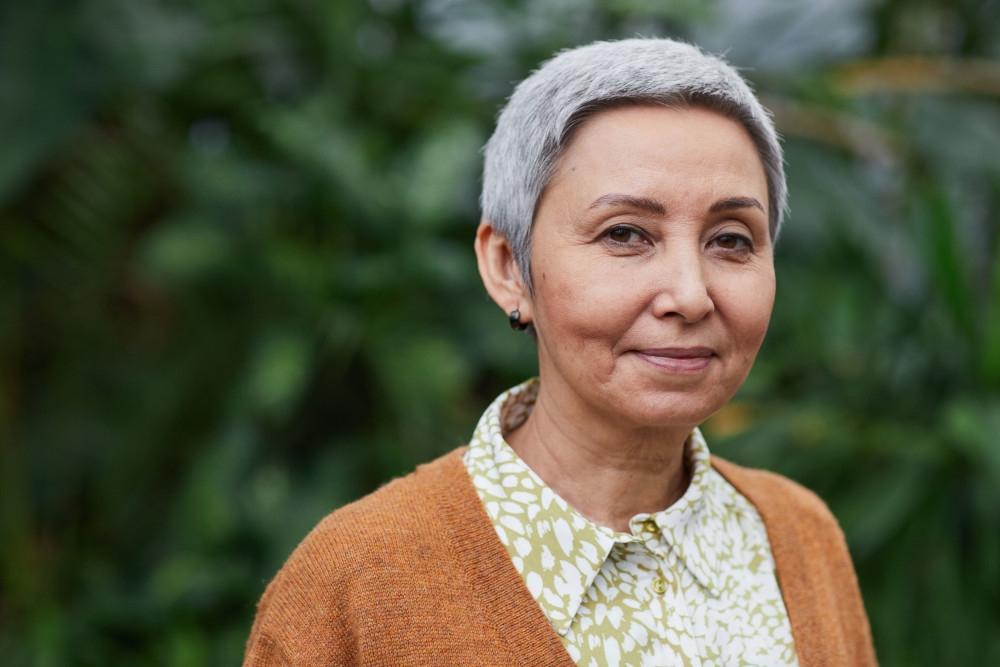
Deconstructing societal expectations and reclaiming personal autonomy
Analysing the cultural expectations surrounding ageing reveals an array of persistent double standards, particularly for women. Society frequently subjects choices about personal presentation to contradictory judgements, creating lose-lose scenarios regardless of whether an individual chooses to embrace natural changes or maintain an aesthetic routine. Deconstructing these public biases highlights why individual agency must take precedence over external opinions.
Ageing often comes with an exhausting set of contradictions, especially for women. If we let our hair turn grey, someone says we look old. If we colour it, we are accused of trying too hard to look young.
If we wear fashionable clothes, we are told to dress our age. If we dress too conservatively, someone says we have made ourselves look older.
If we wear makeup, we may be called vain. If we stop wearing it, we may be told we have “let ourselves go”. At some point, we have to stop allowing other people to decide what ageing should look like.
To me, that is the real issue. If a woman wants to embrace every grey hair, let her. If another wants to colour hers for the rest of her life, let her too.
If someone enjoys skincare, makeup, fashion, fitness or aesthetic treatments, that does not automatically mean she is insecure about ageing.
And if another person prefers none of those things, that does not mean she has stopped caring.
The important thing is choice. As I grow older, I do not want to become someone else simply because society has decided how a person my age should present herself.
I still want to look like myself. Not a younger version of myself. Not a version that satisfies someone else’s expectations. Just myself. And for me, that includes making an effort.
I like feeling presentable. I like clothes that suit me. I value grooming, health and the confidence that comes from taking care of oneself.
I do not see that as rejecting age. I see it as continuing to participate fully in my own life.
Reclaiming this personal agency paves the way for a redefined perspective that separates aesthetic vitality from chronological youth.
Differentiating ‘looking good’ from ‘looking young’
Decoupling visual vitality and self-care from chronological youth is a necessary step toward a healthier understanding of ageing. Society frequently mislabels fundamental qualities such as energy, posture, and confidence as exclusive to youth. Recognising that these attributes transcend age allows individuals to reject the false choice between total neglect of appearance and an unhealthy denial of time, affirming that both letting nature take its course and continuing aesthetic routines are equally valid, authentic expressions of self-care.
Perhaps we should also separate two ideas that are often treated as the same: looking good and looking young.
They are not identical. A person can look wonderful at 50, 60, 70 or 80 without looking decades younger. Sometimes what we describe as “youthful” is actually vitality, confidence, energy, posture or presence.
Those qualities do not belong only to the young. So yes, I agree that we should stop expecting age to look a certain way. But we should also avoid replacing one expectation with another.
Accepting age does not have to mean becoming indifferent to appearance. For some people, embracing age means letting nature take its course. For others, it means continuing to groom, dress, exercise, colour and care for themselves in the way that makes them feel most like themselves.
Both can be authentic.
For me, making an effort to look good is not about pretending to be younger. It is simply one of the ways I remind myself that, whatever my age, I am still worth the effort.
Ultimately, maintaining pride in one’s presentation stands as an enduring affirmation of dignity and self-worth across every stage of life.
* The author is a Language Lecturer at the Faculty of Languages and Linguistics, Universiti Malaya, and can be reached at [email protected]
** This is the personal opinion of the writer or publication and does not necessarily represent the views of Malay Mail.


