


KUALA LUMPUR, Oct 12 — What happens to a Malaysian constituency when their Member of Parliament (MP) resigns?
The question has become a point of discussion after four parliamentary constituencies — Pandan, Setiawangsa, Subang and Petaling Jaya — were left without elected representatives (MPs) following the resignations of Datuk Seri Rafizi Ramli, Nik Nazmi Nik Ahmad, Wong Chen and Lee Chean Chung respectively.
To date, the Election Commission (EC) has determined that no by-elections will be held for the four seats, but there may still be questions surrounding what happens next, or why these resignations occurred.

Why did the four MPs resign?
Rafizi and Nik Nazmi resigned as MPs for Pandan and Setiawangsa respectively on May 18, after leaving PKR to pursue a new political platform, Parti Bersama Malaysia (Bersama).
The two said they were vacating the seats to avoid being seen as party-hopping and to return the mandate they received from voters — voting for reforms — when they were elected under the Pakatan Harapan and PKR tickets in the 2022 general election.
Wong resigned as Subang MP on August 10 after three terms in Parliament.
He subsequently said his decision was driven by concerns that he could no longer pursue reforms and defend democracy from within the government and PKR.
As for Lee, his resignation came shortly after PKR suspended his membership for three years.

So why didn’t they simply leave PKR and keep their seats?
Under Article 49A of the Federal Constitution, an MP elected as a member of a political party can lose their parliamentary seat if they resign from or cease to be a member of that party.
Malaysia’s anti-party hopping provisions were introduced through the Constitution (Amendment) (No. 3) Act 2022, which came into force on October 5, 2022.
Under Article 49A, an MP can lose their parliamentary seat if they resign from or otherwise cease to be a member of that party.
By resigning as MPs first, they instead vacated their seats voluntarily, allowing the Speaker and the EC to deal with the resulting vacancies under the separate provisions governing casual vacancies.
This was made possible by the repeal of Article 48(6), which had previously barred MPs who resigned from seeking re-election for five years, as part of the 2022 constitutional amendments that introduced the anti-party hopping law.
There are exceptions. For example, an MP does not lose the seat under Article 49A simply because they are expelled from their party.
The provision also covers certain changes involving independent MPs joining political parties.
This became relevant when Rafizi and Nik Nazmi left PKR and announced plans to join Bersama.
The two resigned as MPs before joining Bersama, saying they did not want to be seen as having switched parties with the parliamentary mandates they won through the PKR ticket under the Pakatan Harapan banner in the 2022 general election.
Rafizi said at the time that vacating their seats would “remove anti-hopping implications” because they were returning the mandate to voters.
Wong had also resigned in a similar route on August 10 before announcing his membership of Bersama two days later.
In Lee’s case, he left on different grounds.
So what happens next when an MP resigns?
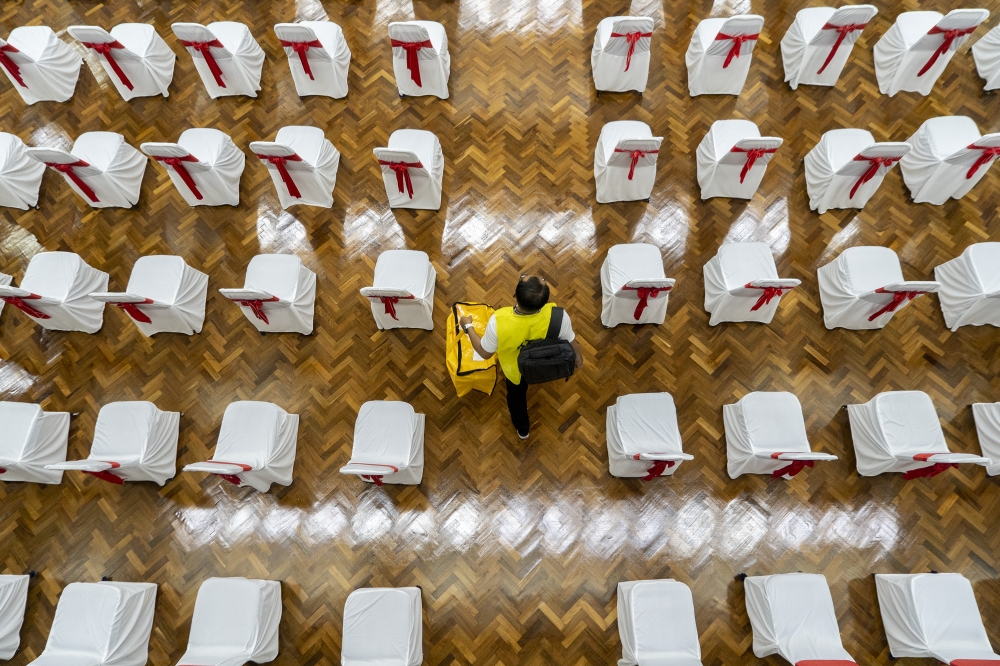
The parliamentary seat becomes vacant
In the latest case involving Petaling Jaya, Lee submitted his resignation to Dewan Rakyat Speaker Tan Sri Johari Abdul on October 2.
Deputy Dewan Rakyat Speaker Datuk Seri Ramli Mohd Nor told the House on October 5 that Johari had informed the EC of the vacancy in accordance with Article 54(1) of the Federal Constitution.
Under Article 54(1) of the Federal Constitution, a casual vacancy in the Dewan Rakyat is generally required to be filled through an election within 60 days.
However, the provision makes an exception for a vacancy arising within two years of the date Parliament is due to dissolve. In such a case, the seat is not filled unless the Speaker notifies the Election Commission in writing that the vacancy affects the numerical strength of the party that constitutes a majority of the House.
The current Parliament began after the 2022 general election and its five-year term runs until December 2027, unless dissolved earlier.
A constituency stays intact
In case there are questions pointing to whether a constituency “disappears”, the answer is no.
Its electorate and boundaries are unchanged, while only the parliamentary seat becomes vacant.
Voters remain registered in the constituency and will elect an MP at the next general election, unless a by-election is held earlier.
Who represents the constituency after the MP resigns?
There is no automatic replacement.
Another MP does not take over the constituency simply because they belong to the same political party or have been asked to assist its constituents.
A political party may continue operating a service centre or appoint someone to handle constituency matters, but that person does not become the elected MP.

What happens to constituency services?
The resignation of an MP does not stop work or services carried out in a constituency.
Constituents or residents can continue dealing with government departments and agencies, while political parties may continue providing assistance through their service centres.
As an example, Wong explained his role as an MP and what happens after his resignation.
“The work of an MP is to pass laws, fight for policies — the right policies, pass debate for Budget, all the other things is not the job of an MP like throw makan-makan or gotong-royong.
“All those, people do it for political purposes, I still do mine, last Sunday I took the deaf and mute children to a mooncake festival,” Wong said.
After resigning in August, Wong had indicated continuing his work in Subang and will remain engaged with his former constituents.
“I have explained this situation to the people in Subang, they’re understanding and they’re fine with it.
“For example if they have an issue to deal with certain government agencies, I still help them, these are things that I can do without an office,” he added.
Wong’s case highlights the distinction: a former MP can continue helping constituents, but cannot perform the functions of an elected MP.
Prime Minister Datuk Seri Anwar Ibrahim had earlier assured that Lee’s resignation would not affect allocations or development projects in Petaling Jaya, saying projects involving schools, surau, mosques, temples and roads would continue as planned.
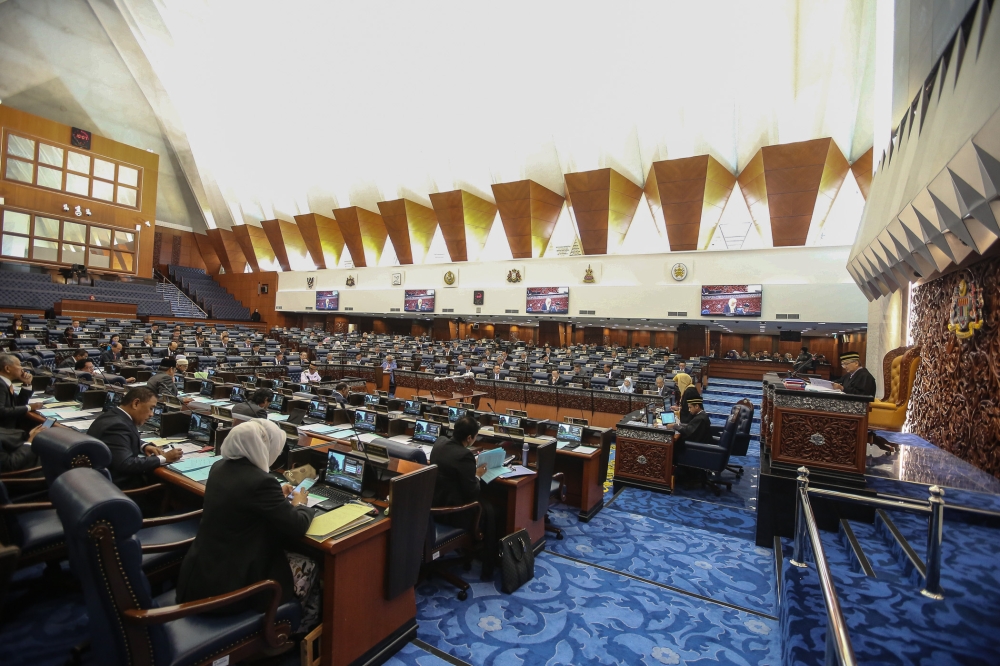
What happens in Parliament?
If the seat remains vacant while the Dewan Rakyat is sitting, there is no elected MP from that constituency to participate in proceedings.
Other MPs can raise issues affecting the area, however.
The vacant constituency also has no MP casting a vote in the House.
“The questions in Parliament come from us (MPs), although I do invite people to send in their questions,” Wong said.
As for two-thirds majority, Wong said the resignations did not affect the government’s ability to secure a two-thirds majority, although attendance remains important when such a vote is held.
The Dewan Rakyat has 222 seats and certain constitutional amendments require the support of not less than two-thirds of the total number of members of the House.
“A two-third majority is needed to pass constitution amendments and for that the government still has two-thirds,” he said.
Although only 218 of the Dewan Rakyat’s 222 seats are currently occupied, the two-thirds threshold for constitutional amendments remains 148 votes.
Article 159(3) of the Federal Constitution provides that the relevant threshold is two-thirds of the total number of members of the House, rather than two-thirds of the currently occupied seats.
The government currently has 149 MPs, meaning it remains one vote above the 148-vote threshold based on the current composition of the House.
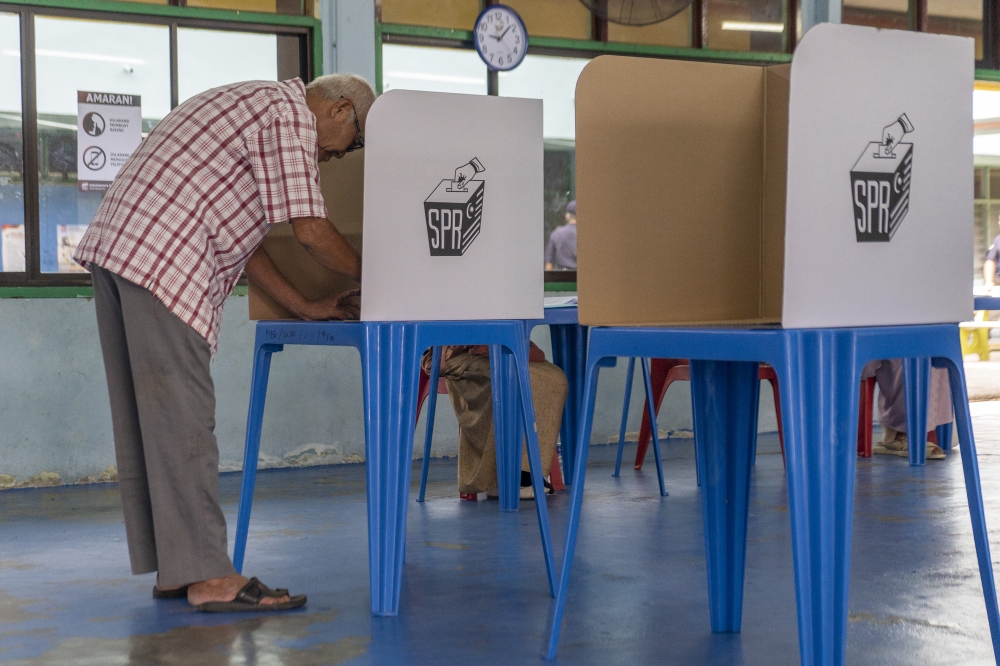
So when will voters get a new MP?
If no by-election is required, the next opportunity for voters to choose a representative will be the next general election.


