


AUGUST 23 – Malaysia has every physical asset a logistics powerhouse needs; deep-water ports, international airports, industrial parks, and strategic geography.
What it increasingly confronts is a coordination problem: too many parts of the logistics ecosystem operate within separate administrative compartments, when the modern global economy demands them to function as one seamless network.
This is why Malaysia should establish a Logistics Super Agency.
Logistics is not a secondary industry that merely transports goods after they have been produced.
It is one of the major pillars of every serious economic power.
The Silk Road, after all, was fundamentally a logistics network that connected East and West, long before the term existed.
Manufacturing, international trade, food security, energy, e-commerce, semiconductors, and even the digital economy, ultimately depend on the efficient movement of materials, components, machines, information and people.
A factory without reliable logistics is merely a building.
A port without connections to factories, railways, highways, and airports is merely a piece of physical infrastructure. An economy becomes competitive only when all these components are connected – resulting in a seamless supply chain.
When the Strait of Hormuz or the Red Sea are disrupted, the whole world is affected. That is how central logistics is to the global economy.
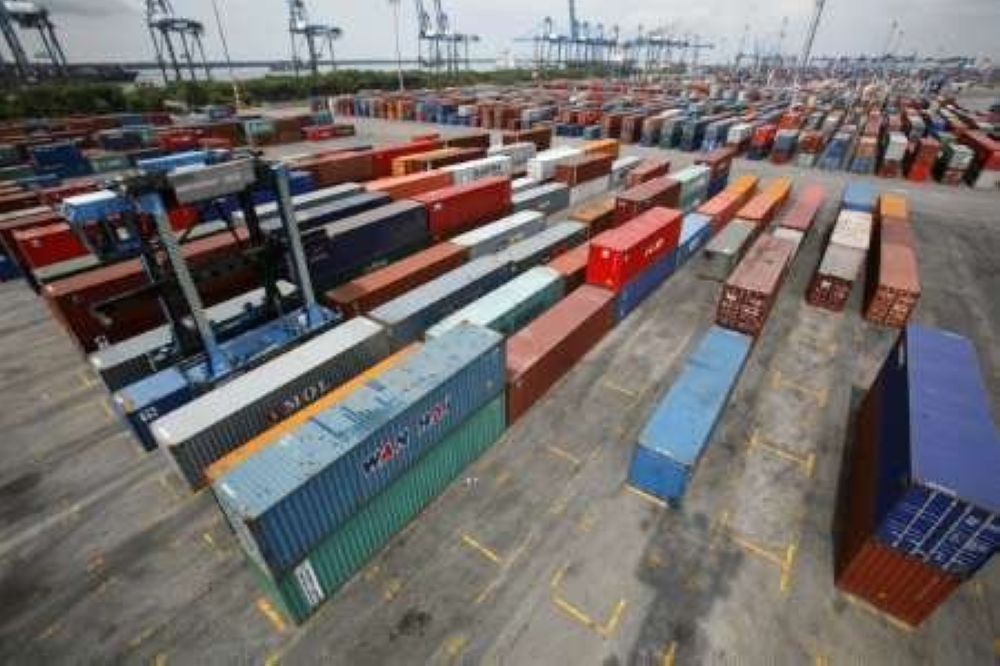
According to Nurhisham Hussein, Economic Adviser to the Prime Minister and former Chief Strategy Officer at the Employees’ Provident Fund (EPF), global economic growth could slow to near zero over the coming decades if the world remains stuck with persistent supply chain disruptions, rising trade barriers, and intensifying geopolitical competition.
Indeed, the strategic importance of logistics can be seen in the behaviour of the world’s largest economic powers.
China’s Belt and Road Initiative (BRI) has been built around connectivity on an enormous geographical scale. Ports, railways, roads, industrial corridors, pipelines, and economic zones have sought to improve China’s connections with markets across Asia, Europe, Africa, and beyond. Geopolitical interpretations have since been attached to the BRI, but its economic logic is inseparable from logistics.
Japan’s approach to the Indo-Pacific similarly demonstrates the strategic importance of connectivity.
Tokyo’s Free and Open Indo-Pacific vision has involved quality infrastructure, connectivity, maritime transportation, and stronger economic corridors.
Long before the Indo-Pacific acquired today’s sharper strategic and military connotations, Japan’s engagement with Southeast Asia was profoundly shaped by trade, investment, infrastructure, and production networks.
The Indo-Pacific therefore should not be understood solely through aircraft carriers, submarines, and military alliances.
Before the concept acquired an increasingly martial undertone amid strategic competition involving the United States, China, Japan, India, and other powers, much of its underlying logic was economic.
Goods had to move. Ports had to connect. Sea lanes had to remain open. Supply chains had to function.
Logistics sits at the intersection of economics and strategy, but there is an equally important Asean dimension.
Asean Centrality – the doctrine that positions Asean as the primary convener and driving force of regional architecture in the Indo-Pacific – cannot be reduced to diplomatic summitry or the question of whether major powers attend meetings chaired by Southeast Asian governments.
The deeper meaning of Asean Centrality is connectivity: the ability of Southeast Asia to become increasingly integrated internally, so that it can engage external powers collectively, rather than merely becoming a geographical arena in which those powers compete.
The Asean Charter, which entered into force in 2008 and provided the institutional foundation for the rules-based Asean community, points towards precisely this broader understanding.
Asean integration encompasses economic cooperation, the movement of business persons and skilled labour, institutional cooperation among governments, infrastructure, and increasingly the technological and digital connections required to bind the region together.
Asean Centrality, therefore, has four dimensions: physical, labour, governmental, and digital.
These dimensions reinforce one another.
Physical connectivity means roads, railways, ports, airports, and maritime routes linking Asean economies.
Labour connectivity means developing the skills, mobility, and human-capital networks necessary for regional production systems to function efficiently. Governmental connectivity means customs authorities, immigration departments, transport ministries, investment agencies, and regulators cooperating across borders, rather than allowing national bureaucracies to become obstacles to regional integration. Lastly, digital connectivity increasingly ties everything together.
Customs documentation, payments, e-commerce, cargo tracking, supply-chain management, digital identities, and cross-border commercial transactions are becoming inseparable from modern logistics.
No single dimension works in isolation. A road without harmonised customs clearance at the border is merely a road that ends. A digital trade platform without physical last-mile infrastructure is merely a database. Integration requires all four dimensions to move together.
This is why Malaysia’s logistics strategy should ultimately be understood as an Asean strategy, too.
Malaysia sits beside the Strait of Malacca, one of the world’s most important maritime arteries.
It possesses Port Klang and the Port of Tanjung Pelepas, extensive manufacturing capabilities, Kuala Lumpur International Airport (KLIA), major industrial clusters, and land connections towards Thailand and Singapore.
Sabah and Sarawak provide another strategic frontage towards the South China Sea and the wider Pacific economy.
Yet, geographical advantage does not automatically produce logistical superiority.
Malaysia therefore needs a Logistics Super Agency capable of looking at the entire national supply chain rather than individual pieces of it.
This does not mean creating another bloated bureaucracy. The objective should be the opposite: reducing bureaucratic fragmentation.
Transport authorities, Royal Malaysian Customs Department, Malaysian Border Control Agency, investment agencies, ports, airports, rail operators, state governments, and local authorities all perform legitimate functions. But a container does not care which Malaysian agency possesses jurisdiction over the next stage of its journey.
Neither does an investor. What matters is that goods move – quickly, predictably, and at competitive cost.
First, Malaysia’s Logistics Super Agency should create complete national supply-chain visibility.
Malaysia needs an integrated digital logistics platform linking ports, airports, customs, border checkpoints, railways, highways and major industrial zones. Artificial Intelligence should eventually allow Malaysia to anticipate congestion, calculate cargo flows, and identify bottlenecks before they become serious disruptions.
Second, Malaysia needs a genuine National Logistics Single Window.
Companies should not repeatedly submit substantially similar information to different government bodies. The principle should be simple: information is submitted once and securely shared among authorised agencies.
The objective is velocity.
Every unnecessary hour that a container remains stationary represents money lost.
Every unnecessary document becomes part of Malaysia’s cost structure. Every administrative delay ultimately affects manufacturers, exporters and consumers.
Third, the Logistics Super Agency should integrate Malaysia’s first-mile, middle-mile, and last-mile infrastructure.
World-class ports cannot compensate indefinitely for congested roads, inadequate rail freight, or inefficient inland distribution.
Port Klang, Tanjung Pelepas, Johor Port, Penang Port, KLIA, and the country’s industrial parks should therefore be viewed as nodes within one national logistics architecture.
Johor is especially important. The Johor-Singapore Special Economic Zone, Forest City, and the industrial development surrounding southern Johor could transform the area into one of Asean’s most important logistics and manufacturing corridors. Perak should not be dismissed either.
It straddles Selangor, Penang, and Kedah, all of which are the key nerves of Malaysia’s west coast semiconductor corridor, making it a natural connective node in any national logistics architecture.
Singapore, meanwhile, should not merely be viewed as Malaysia’s competitor. The extraordinary concentration of capital, technology, shipping, aviation, and multinational corporations in Singapore creates opportunities for Malaysia to become part of an enlarged cross-border production and logistics ecosystem.
Fourth, Malaysia must develop stronger multimodal transportation.
Road freight will remain indispensable, but rail freight, coastal shipping, inland ports, automated warehouses, and air cargo must become increasingly interconnected.
Malaysia cannot become a genuine regional logistics hub if every component operates independently.
Fifth, the Logistics Super Agency should become Malaysia’s permanent supply-chain crisis centre.
Covid-19, disruptions in the Red Sea, geopolitical tensions, and extreme weather have demonstrated that supply chains can break with extraordinary speed. Malaysia must continuously map vulnerabilities involving food, pharmaceuticals, energy, semiconductors, critical minerals, and essential industrial inputs.
Logistics has consequently become an issue of economic security.
China understands this through the Belt and Road. Japan understands it through decades of infrastructure investment and its Indo-Pacific economic strategy.
The United States increasingly understands it through supply-chain resilience and economic-security policies.
Asean understands it through the progressive construction of a connected regional community.
For Malaysia, therefore, a Logistics Super Agency would serve two purposes simultaneously.
Domestically, it would integrate Malaysia’s fragmented logistics ecosystem.
Regionally, it could help Malaysia become one of the principal physical, governmental, labour, and digital connectors of Asean.
That is Asean Centrality translated from diplomatic language into economic reality.
Centrality cannot exist if Southeast Asia cannot connect with itself.
Asean cannot claim to sit at the centre of regional architecture while its goods are delayed at borders, digital systems cannot communicate, skilled workers cannot move efficiently, and government agencies remain trapped inside national administrative silos.
Malaysia is unusually well positioned to help close these gaps.
The country already possesses most of the physical ingredients required to become one of Asean’s great logistics hubs. What it lacks is an institutional command structure capable of bringing those ingredients together.
A Logistics Super Agency should therefore report to the highest levels of government while incorporating federal agencies, state governments, port and airport authorities, Royal Malaysian Customs Department, Malaysian Border Control Agency, and private-sector expertise.
Its success should be measured not by the size of its bureaucracy but by the speed of Malaysia’s economy: shorter cargo dwell times, faster customs clearance, smoother border crossings, greater rail utilisation, lower logistics costs, stronger digital interoperability, as well as deeper integration with Asean supply chains. To be clear, the Logistics Super Agency’s role is to coordinate, not to displace. Malaysia’s logistics sector is overwhelmingly private – port operators, freight forwarders, shipping lines, warehouse providers, and last-mile carriers are the ones who actually move goods. The Logistics Super Agency’s value lies in removing the friction between them and government, not in inserting another layer of state control into an industry that functions best when it moves at commercial speed.
Malaysia does not need to nationalise logistics.
It needs to orchestrate logistics.
In the twenty-first century, economic power does not belong merely to countries that can produce things.
Increasingly, it belongs to countries capable of moving goods, people, capital, information, and ideas – quickly, securely, cheaply, and predictably.
Malaysia is strategically positioned between the Indian and Pacific Oceans. The infrastructure already exists in substantial measure. The geography cannot be replicated by competitors.
What Malaysia needs now is the institutional intelligence to connect everything together.
A Logistics Super Agency would strengthen not merely Malaysia’s economy, but Asean Centrality itself.
* Phar Kim Beng is professor of Asean Studies, and director at the Institute of International and Asean Studies, International Islamic University Malaysia.
** This is the personal opinion of the writer or publication and does not necessarily represent the views of Malay Mail.


