


JULY 1 — I was privy to a speech given recently on the challenges and opportunities for the palm oil milling business. The palm oil mill has a new boss. And it’s not the plantation manager. For decades, milling excellence meant one thing: squeeze harder, faster, cheaper. Oil Extraction Rate (OER) was king. Cost per tonne was queen. Everything else was noise. No longer. Things are changing and millers must take notice.
At the ISP International Palm Oil Millers Conference 2026 (IPOMC26), M.R. Chandran, a pioneer spokesman on the palm oil industry, delivered a keynote that should jolt every mill owner awake. His message is brutal but honest: “The mill that survives the next decade will not be the one with the lowest cost per tonne today. It will be the one that has reinvented itself as an integrated, intelligent, and indispensable bio-refinery.” He is not very far from the truth.
Here are the key findings propose that millers cannot afford to ignore. First: Total Mill Optimisation is not a buzzword. Energy, water, and by-products can no longer be siloed. Consider water: Malaysia’s industry benchmark for freshwater use is 1.5–2.0 m³ per tonne of fresh fruit bunches. Yet Musim Mas in Indonesia has achieved 1.12 m³. That gap across 446 mills represents millions in savings — and missed opportunity.
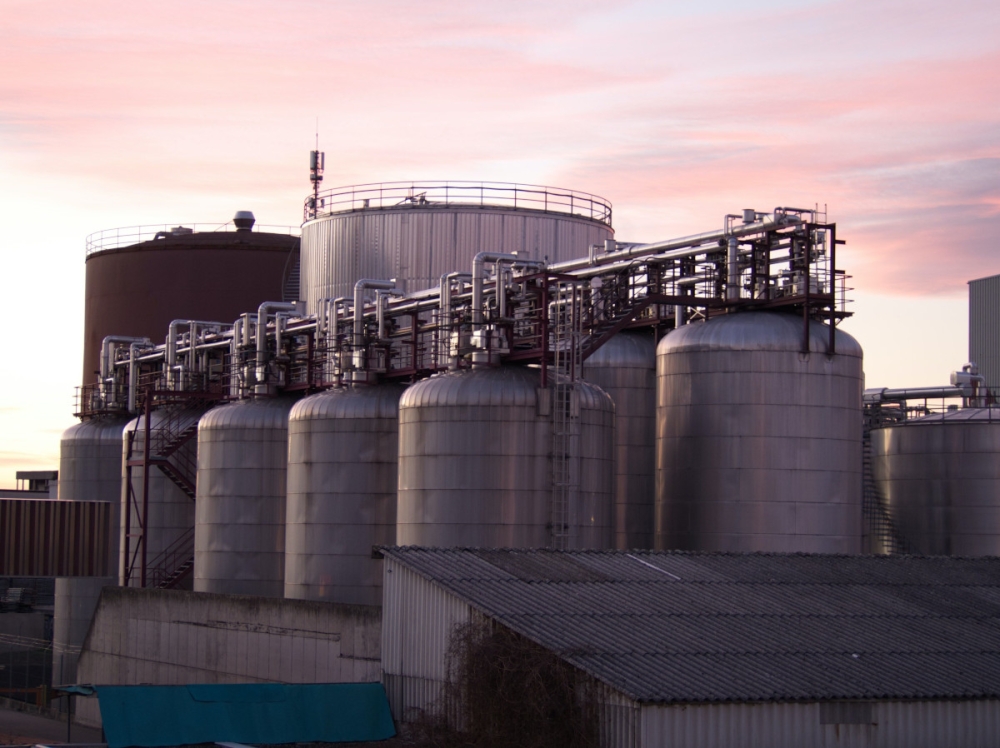
Second: Methane is a liability we are voluntarily carrying. Malaysia has joined the Global Methane Pledge, but only 30 per cent of our mills capture biogas. Unharnessed, that methane is 80 times more potent than CO₂ over 20 years. Captured, it becomes power, revenue, and — with COP29’s new Article 6.4 rules — internationally bankable carbon credits. Existing mills that retrofit now can monetise this. New mills? They’re already mandated, so no credits. The window is open — but not forever.
Third: Food safety is no longer optional. Remember when some in the industry insisted crude palm oil wasn’t “food” to dodge HACCP? That era is over — and good riddance. The EU now sets 2.5 mg/kg limits for 3-MCPDE in palm oil (stricter 1.25 mg/kg for other oils), and 1 mg/kg for glycidyl esters. Worse, Mineral Oil Aromatic Hydrocarbons (MOAH) are already triggering border rejections via the EU’s RASFF system, even before formal 2027 limits. Malaysian shipments have been flagged. This is not a future risk. It is a current crisis.
Fourth: Our own standards are embarrassingly silent. SIRIM has no limits for 3-MCPDE, glycidyl esters, or MOAH. The EU set its limits years ago. We are effectively outsourcing our food safety credibility to foreign regulators. Chandran’s proposal — that ISP, PORAM, and MPOA jointly petition Sirim — is the bare minimum. That we haven’t done it already is a quiet scandal.
Fifth: The talent gap is structural. Mills are becoming AI-driven, with digital twins and predictive maintenance. Malaysia launched its first AI smart mill in November 2024 (Minsawi Industries). SD Guthrie is exploring digital twins. FGV’s POMIS system monitors 66 mills centrally. But who will run these systems? Universities produce graduates who can’t find work. Mills cry out for data analysts and mechatronics engineers. The two sides are not talking.
Finally: Uneven progress is a shared liability. Our best mills are world-class. Our weakest mills are dragging everyone down. Reputational risk is collective. Market access is collective. One laggard can poison an entire supply chain.
The bottom line is uncomfortable but clear: Regulation is coming. The EUDR already demands plot-level geolocation data. Methane capture will soon be mandatory. MOAH limits are weeks away from formal adoption. We can lead this transition — or be dragged through it.
Reinvention is not renovation. It is not painting old machinery. It is asking: What is a mill for? If the answer is still “processing fruit,” you have already lost.
The mills that answer “an integrated bio-refinery that proves sustainability, guarantees food safety, and empowers talent” will define the next generation. The rest will become case studies in obsolescence. The time to act was yesterday. The second-best time is now.
M.R. Chandran’s presentation is a wake-up call for the palm oil industry, more specifically the mill sector. Unless actions are taken now, the opportunities missed will be slanderous. But the risks to business will be even more catastrophic!
* Professor Datuk Ahmad Ibrahim is affiliated with the Tan Sri Omar Centre for STI Policy Studies at UCSI University and is an Adjunct Professor at the Ungku Aziz Centre for Development Studies, Universiti Malaya. He can be reached at [email protected]
** This is the personal opinion of the writer or publication and does not necessarily represent the views of Malay Mail.


