


JUNE 30 — The United States Supreme Court’s decision to block President Donald Trump’s attempt to remove Federal Reserve Governor Lisa Cook may ultimately prove to be one of the most consequential economic rulings of this decade.
By a narrow majority, the Court drew a bright constitutional and institutional line between the Federal Reserve and the rest of the American administrative state.
Chief Justice John Roberts wrote that there was no reason “to leave the public in limbo” or undermine confidence in one of the world’s most important financial institutions. The message was unmistakable: the Federal Reserve is not merely another federal agency. It is a pillar of global financial stability.
This distinction matters enormously because the United States dollar remains the closest thing the international system possesses to a universal currency.
Nearly every major commodity trade, from oil and liquefied natural gas to semiconductors and aircraft purchases, continues to be denominated primarily in dollars.
Central banks hold dollars as reserves. Governments borrow in dollars. International shipping insurance is priced in dollars.
Financial crises are managed through dollar liquidity facilities provided by the Federal Reserve.
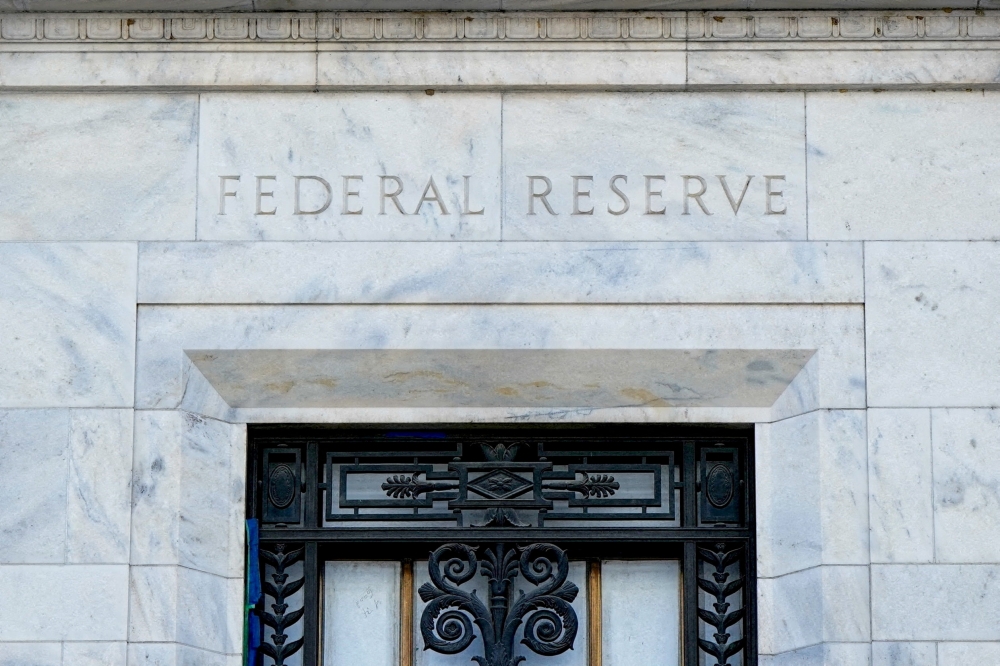
The dollar is not merely a national currency. It is a global public good and, simultaneously, a strategic privilege enjoyed by the United States.
That privilege depends less on aircraft carriers and military alliances than on one deceptively simple principle: trust.
Investors around the world purchase American Treasury securities not because the United States is perfect, but because they believe the rules governing the American financial system will survive changes in administrations, personalities and political passions.
Central bank independence lies at the heart of that trust.
Markets may disagree with interest rate decisions made by the Federal Reserve.
Businesses may dislike higher borrowing costs. Presidents often prefer lower rates to stimulate growth before elections.
Yet the credibility of monetary policy rests precisely on the assumption that central bankers can make unpopular decisions without fearing dismissal from political leaders.
In the case of Malaysia, much as we understand the strategic liability of depending on the US dollar, with Prime Minister Datuk Seri Anwar Ibrahim calling for more bilateral trade in ringgit, Malaysia isn’t exactly at the fore front of calling for total de-dollarisation either.
Malaysia strikes a delicate balance since it is a trading state first and foremost.
Invariably, had the president acquired the authority to remove governors of the Federal Reserve simply because they disagreed with the White House on interest rates, markets would have immediately interpreted the institution as politically subordinate.
The implications would have been severe.
Bond markets would demand higher premiums for political risk.
Inflation expectations would rise. Foreign central banks would gradually accelerate diversification away from dollar assets.
The movement toward alternative reserve currencies, including the euro and increasingly the Renminbi, would gather momentum.
Malaysia and Asean do not need more policy headaches of such nature.
The Supreme Court has therefore protected not merely one governor but the credibility of the entire American monetary order.
Yet this victory for institutional independence arrives alongside another trend moving in precisely the opposite direction.
In separate rulings, the Court has expanded presidential authority over numerous other independent agencies, including regulatory bodies previously protected from direct political dismissal. The White House now possesses significantly greater discretion to hire and fire officials across much of the federal bureaucracy.
This creates an unusual duality within the American system.
The Federal Reserve enjoys protection.
Many other institutions do not.
Consequently, while monetary policy may remain insulated from presidential intervention, other aspects of governance may become increasingly vulnerable to the preferences, instincts and political calculations of whichever administration occupies the White House.
This introduces what earlier generations of constitutional scholars would have recognised as the problem of personal government.
Institutions function best when they constrain personalities rather than amplify them.
Strong presidencies can deliver decisive leadership during crises. Excessively personalised presidencies, however, risk exposing public administration to the peccadilloes, idiosyncrasies and partisan fervour of individuals rather than enduring constitutional norms.
The United States has historically succeeded because institutions have usually outlived personalities.
Markets trusted the Treasury under Republicans and Democrats alike.
The Federal Reserve remained credible under presidents as different as Ronald Reagan, Bill Clinton, George W. Bush, Barack Obama and Trump himself.
Continuity mattered more than ideology.
The danger emerges when continuity is sacrificed for loyalty tests.
A state increasingly organised around personal allegiance rather than institutional competence may become more agile in the short term but less predictable in the long run.
Financial markets dislike unpredictability more than almost anything else.
For now, the Supreme Court has reassured investors that the Federal Reserve remains beyond immediate political reach.
The dollar will continue to dominate global trade.
Energy contracts crossing the Strait of Hormuz will still be settled overwhelmingly in dollars.
Asian central banks, including those in Asean, will continue holding substantial portions of their reserves in American assets.
The age of the dollar is therefore far from over.
But reserve currency status is not an entitlement granted permanently by history.
It is a privilege renewed daily through institutional credibility.
The Court has protected that credibility for now.
Whether the broader American political system can preserve it in an age of polarisation, presidential centralisation and ideological combat remains an altogether different question.
The world may continue trusting the dollar.
Whether it continues trusting Washington itself may become the more difficult issue in the years ahead.
* Phar Kim Beng is a professor of Asean Studies and director, Institute of Internationalisation and Asean Studies, International Islamic University of Malaysia.
** This is the personal opinion of the writer or publication and does not necessarily represent the views of Malay Mail.


