


MARCH 28 — The most dangerous moment in any war is the deployment of ground troops. Nowhere is this more true—and more perilous—than in the case of Iran.
While air strikes and naval operations can degrade Iran’s capabilities, the introduction of ground forces would transform the conflict into something far more complex, prolonged, and unpredictable. Indeed, a ground invasion of Iran is widely regarded by military analysts as one of the most difficult operations in modern warfare.
The reasons are structural, geographical, and doctrinal.
First, Iran is not Iraq, Libya, or even Afghanistan. It is a vast country of more than 80 million people, nearly four times the size of Iraq, with mountainous terrain, deserts, and dense urban centres that favour defenders over invaders.
Its borders are shielded by natural barriers such as the Zagros and Alborz mountain ranges, which slow down advancing armies and stretch supply lines to breaking point.
Any invading force would not be fighting on open terrain but through chokepoints, valleys, and cities where ambushes become the norm rather than the exception.
Second, Iran has spent decades preparing specifically for invasion. Its military doctrine is not built on matching the United States or Israel symmetrically. Instead, it is designed to survive, fragment, and retaliate.
At the core of this doctrine is what analysts call a “mosaic defence”—a decentralised system in which Iran is divided into multiple military zones, each capable of operating independently if central command is disrupted.
The Soufan Center:
This means that even if top القيادة figures are eliminated—as recent decapitation strikes suggest—resistance does not collapse. It multiplies.
Each province can effectively wage its own war.
This is reinforced by the dual structure of Iran’s armed forces: the conventional army (Artesh) and the Islamic Revolutionary Guard Corps (IRGC), the latter deeply embedded in both military and political life.
Together with the Basij paramilitary forces, Iran can mobilise not just soldiers but society itself
In the event of invasion, the battlefield would not be limited to frontlines.
It would extend into cities, villages, mountains, and even rear supply routes. Iranian strategy explicitly anticipates this by preparing “stay-behind” cells to attack logistics and disrupt enemy movement deep inside the country.
In other words, there is no rear area in Iran. Everywhere becomes a contested space.
Third, any ground invasion would trigger horizontal escalation across the region. Iran has already demonstrated its capacity to strike US bases and allied infrastructure across the Gulf.
The introduction of foreign troops on Iranian soil would likely unleash a wider network of retaliation—from Hezbollah in Lebanon to armed groups in Iraq and Yemen. What begins as a land campaign in Iran could quickly become a regional war stretching from the Levant to the Strait of Hormuz.
This is not conjecture. It is embedded in Iran’s strategic logic: if it cannot win conventionally, it will expand the battlefield until the cost becomes unbearable for its adversaries.
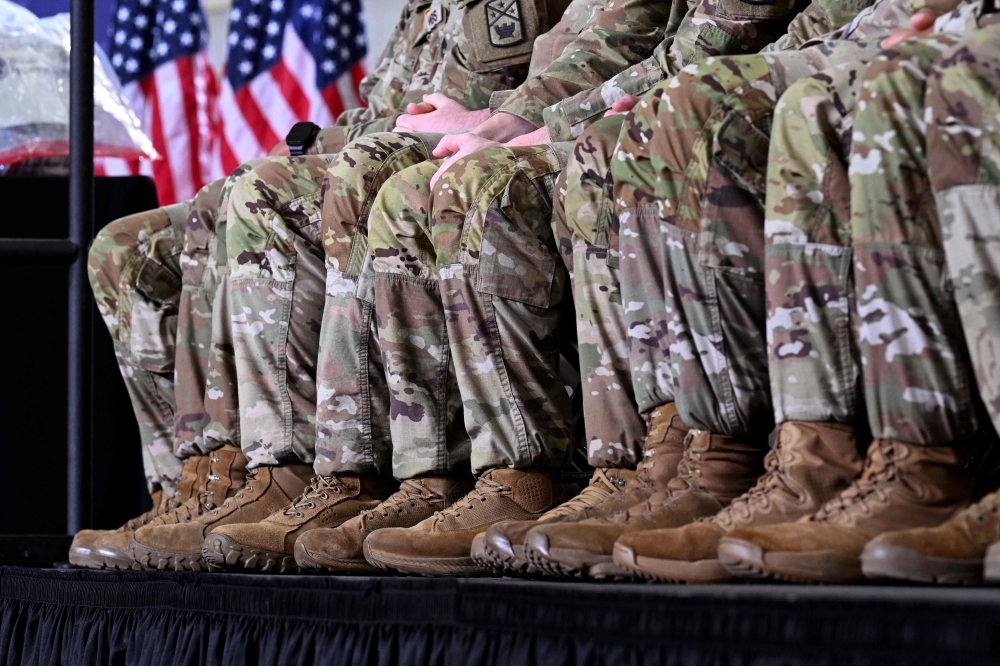
Fourth, occupation is the ultimate nightmare.
Even if an invading force succeeds in defeating Iran’s conventional military, holding the country is another matter entirely.
A population of over 80 million, combined with nationalism and religious identity, would make prolonged resistance highly likely.
The lessons from Iraq and Afghanistan loom large. Regime change may be swift. Stabilisation is not.
Analysts consistently note that while air and naval power can achieve limited objectives, regime transformation ultimately requires control on the ground—yet this is precisely where failure becomes most likely.
A ground war in Iran would therefore risk becoming a multi-year, even multi-decade entanglement.
Fifth, escalation becomes irreversible once ground troops are committed.
Missile strikes can be calibrated. Air campaigns can be paused. Naval deployments can be repositioned. But ground troops create facts on the ground—literally.
Territory is taken, defended, lost, and retaken. Casualties mount. Public pressure intensifies.
Political leaders lose room for manoeuvre.
In Iran’s case, even a limited ground incursion could provoke what analysts describe as a “severe response,” escalating the conflict beyond its original scope.
This is the true point of no return.
For Asean and Malaysia as a trading state, the implications are profound. A ground war in Iran would not remain confined to the Middle East.
It would disrupt energy flows, intensify inflation in fuel, food, fertilisers, and animal feed, and destabilise global shipping routes for years.
Air strikes can shake markets. Ground wars break them.
The strategic lesson is therefore stark. The decision to deploy ground troops against Iran would not merely escalate a war—it would fundamentally transform it into a protracted, decentralised, and region-wide conflict with no clear end state.
That is why, in the hierarchy of military risk, nothing compares to the moment when soldiers cross into Iranian territory.
It is not just the riskiest moment of the war.
It is the moment the war becomes almost impossible to control.
As and when the US does get involved in a ground war in Iran, the world must worry that the risk premium will go up further.
Since physical presence in Iran does not necessarily mean victory.
* Phar Kim Beng, PhD is the Professor of Asean Studies at International Islamic University of Malaysia and Director of Institute of International and Asean Studies (IINTAS).
** This is the personal opinion of the writer or publication and does not necessarily represent the views of Malay Mail.


