LONDON, Feb 17 — Commuter areas west of London remain at risk of flooding after the latest in a succession of storms that have brought heavy rain and hurricane-force winds to southern Britain, the country’s Environment Agency said.
River levels remain high and ground water is adding to the likelihood of floods, the agency said in a statement today. The Thames Barrier was closed for a record 18th-consecutive tide to reduce the risk to London from surges moving up the river. Patchy rain is forecast for tomorrow across much of the UK with heavier amounts in the west, the Met Office said.
Two people died and thousands of customers were left without power as a result of the system that struck southern England late Feb. 14 and continued through yesterday morning.
“Thankfully, it does appear that we will see less rain and wind over the next few days,” UK Prime Minister David Cameron said in a statement on the government’s website late yesterday. “However, after so much rain over recent weeks, groundwater levels remain very high and in many places will continue to rise.”
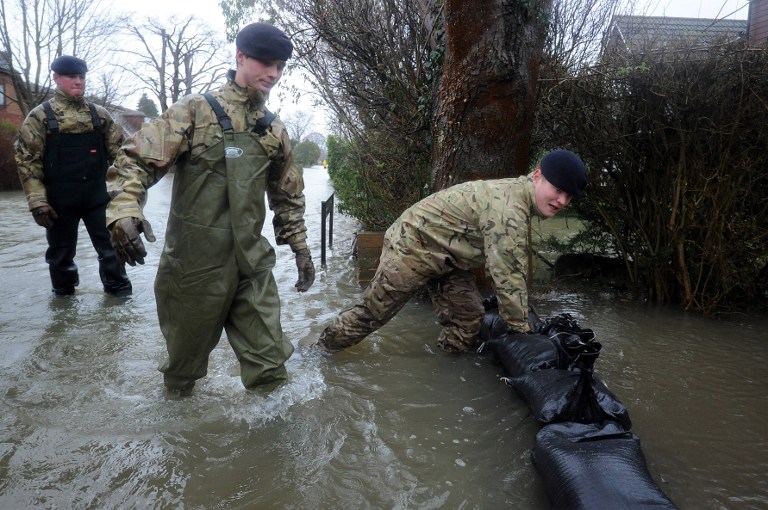
More than 3,000 military personnel have been deployed to assist flood-hit areas and a further 5,000 are standing by if needed, Defense Secretary Philip Hammond said in a television interview on the BBC’s “The Andrew Marr Show” today.
“We are dealing with an extraordinary set of weather events and you know it’s taken some time to mobilise the resources that are necessary to respond.”
Two Deaths
A woman was killed in London late Feb. 14 when part of a building collapsed onto a car, police said.
A passenger on the ship Marco Polo died in the English Channel and 15 others were hurt after the vessel carrying more than 1,000 people was hit by a freak wave, operator Cruise & Maritime Voyages said on its website.
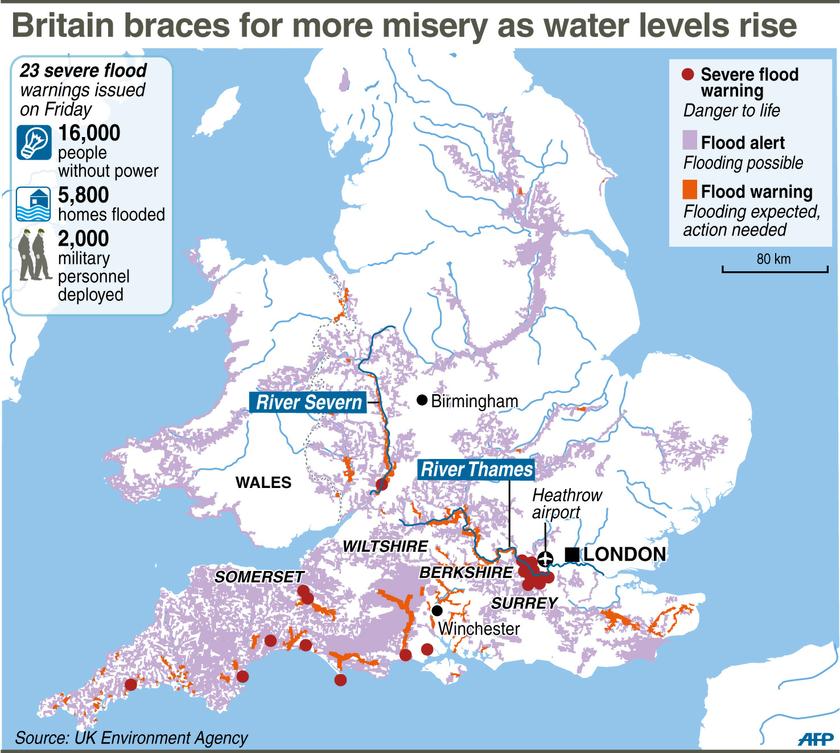
Hundreds of homes along the Thames west of London were already flooded before the storm and areas of Somerset in southwestern England have been submerged since before Christmas. Water levels have been the highest in more than 60 years, according to the Environment Agency. The Thames poses a high risk of flooding for at least three more days in Windsor, Maidenhead and parts of Surrey, the agency said yesterday.
Storms since the beginning of December have brought record rainfall to parts of England, inundating at least 5,800 homes, bringing chaos to rail travel and battering the shoreline with the biggest coastal surges in decades.
Global Warming
British citizens need to accept that climate change is causing more extreme weather conditions, opposition Labour Party leader Ed Miliband said in an interview in the Observer newspaper today. Global warming should be considered an issue of national security, he said.
Some 48 percent of people said the floods have made them more convinced that human beings are affecting the climate, according to a ComRes poll carried out for the Independent newspaper. Six out of 10 voters think the government is failing to deal with the flooding crisis, the poll showed. A YouGov poll for the Times found that 40 percent of voters think some towns aren’t worth saving.
Aviva Plc Chief Executive Officer Mark Wilson said in the Sunday Telegraph that UK homes should have flood ratings and shouldn’t be built on flood plains where defenses are limited.
Engineers were working to restore power to about 73,600 customers in central-southern England, Scottish and Southern Energy Power Distribution said late yesterday on its website.
 Thames Risk
Fourteen severe flood warnings, indicating a danger to life, were still in effect at 1:30 p.m. local time today for the Thames from Old Windsor to Shepperton. Two more were posted for the Somerset Levels & Moors, the Environment Agency said. There were a further 320 warnings and alerts of less severity.
December to February is shaping up to be the worst winter for rain in parts of England since records began in 1776. The cost to UK insurers may exceed 3 billion pounds, the Financial Times said yesterday, citing insurance executives.
The effects of the storm were also felt in France, where about 115,000 households in the Brittany region lost power by yesterday morning, Agence France-Presse reported, citing electricity distribution network ERDF. The main train line to the city of Brest, in western Brittany, remained closed yesterday after being blocked by fallen trees and downed power lines, SNCF spokesman Michel Pronost said by telephone.
In Hampshire, on England’s south coast, more than 30 people had to be rescued by emergency services and the army from a seafront restaurant after wind-blown gravel shattered windows and the sea flooded in, Press Association reported. A fireman died yesterday after collapsing at the station in the flood-hit town of Staines, PA said separately.
The Environment Agency estimated on Feb. 14 that 1,135 homes had been flooded in the Thames Valley to the west of London since Jan. 29. — Bloomberg