












SAN FRANCISCO, July 17 — The latest version of Apple’s pro music production and editing software demonstrates the right way of integrating touch screens and computers.
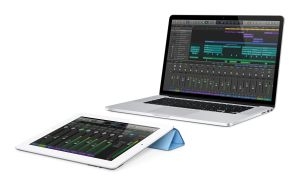
Logic Pro X, the go-to application for the world’s biggest musicians and hundreds of bedroom enthusiasts with chart-topping dreams alike, now lets users hook up an iPad to their desktop or notebook so that it works as a hands-on mixing desk or even as a virtual guitar, piano keyboard, or drum kit.
The update is notable for two reasons: firstly it shows that the company hasn’t forgotten its pro customers and still knows how to innovate to meet their needs, but secondly, it highlights the company’s understanding of computer use and ergonomics.
The ubiquity of smartphones and tablets proves that touchscreens and touch interfaces are already part of most consumers’ everyday lives and that the tactile interface will play a key role in the future of all consumer electronics. However, just because it’s the perfect interface for a device that drops into a pocket doesn’t mean that it will translate over to other, more established devices, namely the traditional desktop or notebook PC.
When Apple was considering whether or not to optimize its computers for touchscreen interface, according to Time’s Tim Bajarin, “Apple’s scientists studied the kinesiology of arm movements in relationship to keyboards and mice, and concluded that implementing any gestures into the user interface worked best through a trackpad. The company also determined that picking the hand up from the keyboard area and moving it to touch the screen was unnatural.”
The result was that instead of launching a range of Macs with touchscreens, it launched something called the Magic Trackpad, a standalone device that responds to the same touches, pinches and swipes as the iPhone and iPad. The trackpad was also integrated directly into its notebook range.
Compare that with Microsoft: by pushing touch as the new interface for computing, it ignored the fact that it is anything but natural to interrupt typing on a keyboard in order to lean forward, raise a hand and touch the screen to highlight something, rather than just use a mouse, track pad or even cursor keys.
This disconnect between typing and touching also explains why technologies that support gestures or ‘non-contact’ touches are receiving such positive press. For example, the Leap Motion Controller enables a user to wave a hand in the general direction of a computer in order to interact with it, be it to save a document, scroll down a page, highlight a paragraph or play a game, but the user doesn’t have to make physical contact with the screen in order to force the computer to do its bidding.
This is also why Apple’s iPad addition is such an intelligent move. Previously, Logic Pro users either had to use a mouse to access faders and knobs on the computer screen or buy and hook up a real mixing desk.
Likewise, for composing they would need to hook up some form of MIDI keyboard or plug in a guitar.
Logic Pro X is available now priced at US$199.99 (RM600), which The Verge calls a must for anyone who has finally outgrown Apple’s rather good but limited free music creation application, Garageband. — AFP/Relaxnews