


KUALA LUMPUR, Oct 18 — Hadoukens, flying kicks and even the iconic car-smashing bonus stage — Street Fighter is back on the big screen, bringing decades of arcade nostalgia along for the ride.
Released in Malaysian cinemas on October 15, the live-action reboot of Capcom’s long-running fighting game franchise recreates the characters, signature moves and memorable moments that have kept fans hooked for generations.
Directed by Kitao Sakurai, the film stars Andrew Koji as Ryu, Noah Centineo as Ken Masters and Callina Liang as Chun-Li, alongside Jason Momoa, Cody Rhodes and David Dastmalchian.
Set in 1993, the story sees Ryu and Ken reunited when Chun-Li recruits them for the World Warrior Tournament, only for the competition to reveal a dangerous conspiracy.
While reactions to the film’s storytelling have been mixed, its colourful characters, elaborate action sequences and numerous callbacks to the games offer longtime fans plenty to look out for.
From faithfully recreated costumes to iconic special attacks and Easter eggs, the reboot leans heavily into the franchise’s gaming heritage.
Round 1, FIGHT! Easter eggs and arcade callbacks
Beyond the fighting, the reboot packs in references designed to resonate with players who spent countless hours battling friends at the arcade.
Ryu’s familiar cry of “Hadouken!” makes its return during combat, while the classic “Round 1, FIGHT!” announcement recalls the start of a match in the games.
Among the more playful callbacks is a recreation of the car-smashing bonus stage from Street Fighter II, with Ken taking part in the destructive challenge.
The sequence references one of the series’ most memorable diversions, in which players could earn points by destroying a parked vehicle within a time limit.
The film also looks beyond the games for inspiration, drawing on the franchise’s cinematic past.
M. Bison delivers a line that recalls a memorable exchange from the 1994 Street Fighter film, in which the villain dismisses the significance of a day that profoundly affected someone else.
The reboot reworks the moment during his confrontation with Chun-Li, acknowledging the earlier adaptation without simply repeating its dialogue.
These references give longtime fans another layer of entertainment, rewarding those familiar with the games and the franchise’s previous appearances on screen.
From Ryu’s red headband to Blanka’s green skin
One of the film’s biggest nods to the games is its attention to the fighters’ distinctive appearances.
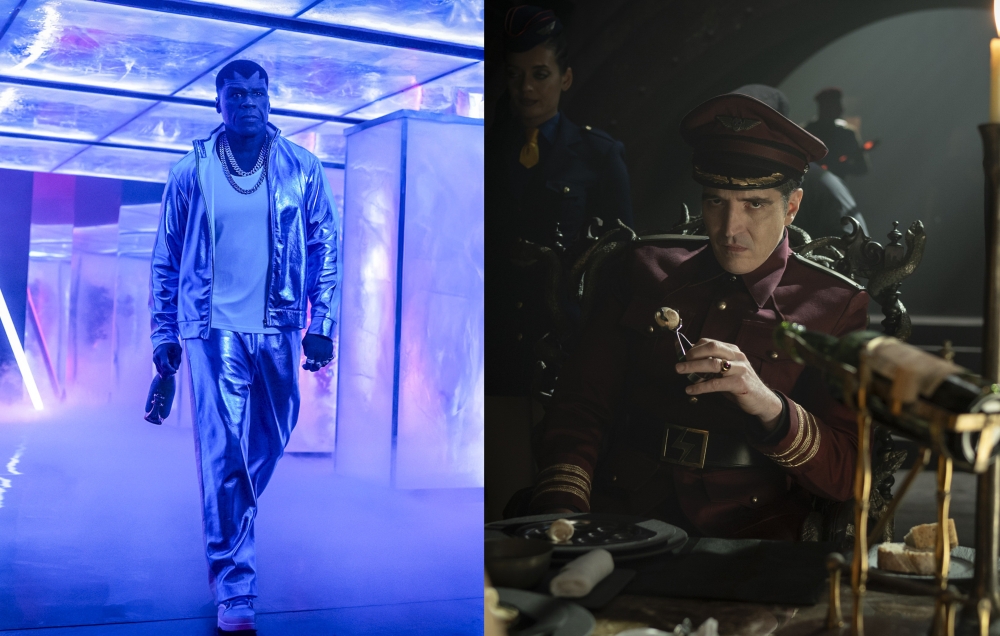
Koji’s Ryu sports his familiar white gi and red headband, while Centineo’s Ken Masters retains his signature blond hair and maroon fighting outfit.
Liang’s Chun-Li also stays close to her video game counterpart with a qipao-inspired costume, although her familiar hair ribbons are absent.
Other fighters receive similarly recognisable makeovers, from Momoa’s green-skinned Blanka to Rhodes’ Guile, whose distinctive flat-top hairstyle remains intact.
Dastmalchian’s M. Bison dons a military-inspired uniform complete with a maroon jacket and sweeping cape, while Roman Reigns’ Akuma appears in a dark martial arts gi that reflects the character’s imposing presence.
For fans who grew up choosing these fighters in arcades or on home consoles, the costumes offer an immediate connection to the games, bringing characters once confined to pixels and animation into the real world.
Hadoukens, Shoryukens and the return of signature moves
Of course, a Street Fighter adaptation would hardly be complete without the special attacks that have become synonymous with the series.
Ryu unleashes his signature Hadouken, the energy projectile that has remained one of the franchise’s most iconic moves.
Ken also gets to show off his fighting skills, including the Shoryuken, the powerful rising uppercut that has long been a staple of his move set.
Chun-Li brings her rapid-fire kicks into battle, while Guile unleashes his trademark Flash Kick.
Japanese professional wrestler Hirooki Goto portrays E. Honda, whose sumo-inspired fighting style includes the classic Sumo Headbutt.
The towering Olivier Richters takes on the role of Zangief, whose wrestling-based attacks include devastating throws and the iconic Spinning Piledriver.
Balrog, meanwhile, relies on a more straightforward boxing approach, using heavy punches and brute strength to overpower his opponents.
Bringing these exaggerated attacks into live action is no small feat, requiring a combination of physical performances, fight choreography and visual effects to preserve the moves’ distinctive styles.
The result is a series of confrontations that draw directly from the games, with fighters using the techniques that helped make them fan favourites.
From Metro City to a familiar Japanese bathhouse
The nostalgia does not stop with the characters and their fighting moves.
The film’s settings also draw inspiration from the worlds associated with Street Fighter, recreating some of the visual details that helped define the series.
Set in 1993, the story features Metro City, an urban backdrop connected to Capcom’s wider fighting game universe, alongside gritty alleyways and street brawls that evoke the franchise’s classic arenas.
M. Bison’s lavish hotel provides another setting for the fighters to cross paths, offering a contrast to the rougher environments where many of the confrontations unfold.
Elsewhere, a bathhouse and spa setting recalls the traditional Japanese public bathhouse aesthetic associated with stages in Street Fighter II.
Rather than confining its action to a single tournament arena, the film moves between different environments, giving its battles a variety of backdrops while retaining elements of the games’ visual identity.
A nostalgia trip for a new generation
Adapting a fighting game for cinema has always presented a challenge. Unlike story-driven video games, much of Street Fighter’s appeal comes from its competitive gameplay, larger-than-life characters, signature moves and rivalries rather than a conventional narrative.
The 2026 reboot embraces those qualities, and while nostalgia alone may not be enough to win over every moviegoer, it offers longtime fans plenty of familiar details to look out for.
For newcomers, meanwhile, the film serves as an introduction to the colourful world of Street Fighter — a franchise that has travelled from arcade cabinets to home consoles and now back to the big screen.


