


KUALA LUMPUR, Oct 17 — The latest Street Fighter movie is bringing the arcade classic back to the big screen with flashy fights, larger-than-life characters and plenty of 1990s nostalgia — but Malaysian fans are finding that its storytelling doesn’t always land as well as its punches.
Directed by Kitao Sakurai and produced by Legendary Pictures and Capcom, the live-action adaptation opened in Malaysian cinemas on October 15, more than three decades after the franchise’s first big-screen outing.
Set in 1993, the film follows estranged fighters Ryu (Andrew Koji) and Ken Masters (Noah Centineo), who are drawn into the World Warrior Tournament by Chun-Li (Callina Liang), only to find themselves caught up in a conspiracy that forces them to confront each other and their past.
The ensemble cast also includes Jason Momoa as Blanka, Curtis “50 Cent” Jackson as Balrog, Joe “Roman Reigns” Anoa’i as Akuma and David Dastmalchian as M. Bison.
Previous adaptations, including the 1994 film starring Jean-Claude Van Damme and Street Fighter: The Legend of Chun-Li (2009), received mixed reactions from fans and critics.
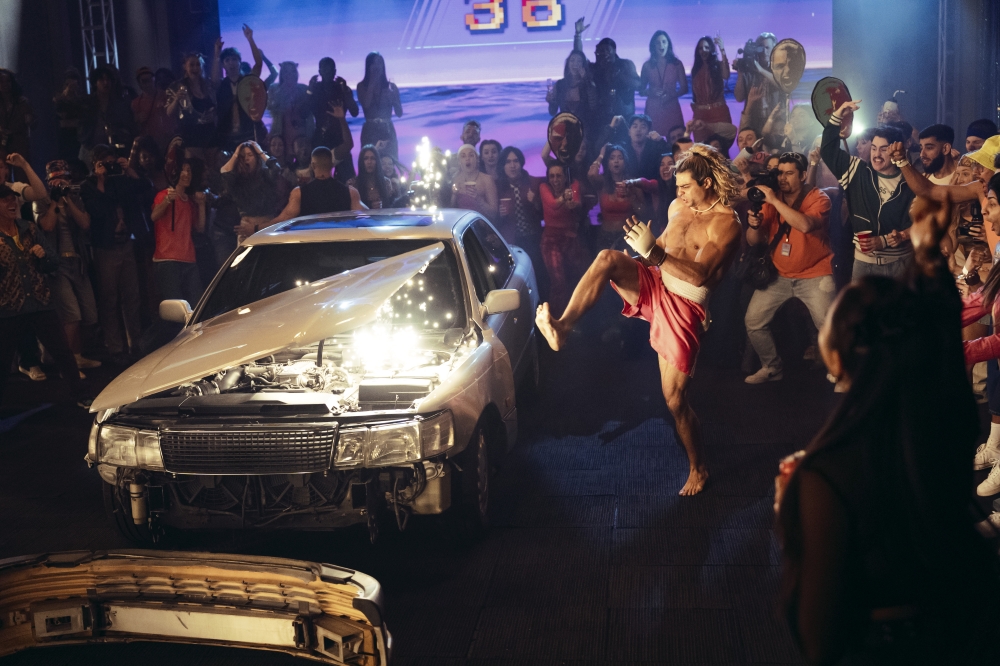
This time, however, the filmmakers have gone all in on the games’ colourful characters, exaggerated fighting moves and unapologetically campy humour.
And while reactions remain mixed, Malaysian fans who spoke to Malay Mail found plenty to enjoy in the film’s visual spectacle, familiar faces and nostalgic references — even if its plot left something to be desired.
Nostalgia hits hard, but the story takes a beating
For 29-year-old cosplayer and office clerk Alynn Lau, the film’s biggest strengths were its character portrayals, visual effects and 2D animated sequences.
However, she felt the plot was scattered and lacked a clear flow.
While Chun-Li remains one of her favourite characters, Alynn said Dhalsim stood out for his distinctive movements, which she felt stayed faithful to the game.
“If you grew up playing the game, this is definitely worth a watch! It brings back so many nostalgic memories, and seeing your favourite characters come to life on screen is always such an amazing experience,” she told Malay Mail.
Alynn would also welcome a sequel or spin-off that explores the characters and their stories further.
The film’s brief animated sequences left her particularly interested in seeing a full 2D animated adaptation.
Maya, 29, who works in human resources, was less enthusiastic.
Although the film fell short of her expectations as a fan, she still considered it the best Street Fighter adaptation to date, praising its visuals and encouraging fellow fans to keep an eye out for Easter eggs and references to the games.
Her favourite characters?
“E. Honda and Dhalsim! They were really great and fun to watch.
“It was just unfortunate that we didn’t get to see Dhalsim’s ‘Yoga Flame’,” she said.
For 37-year-old freelance prop maker Momo, who preferred to be identified only by that name, the film was a throwback to growing up in the 1990s, particularly through its music and humour.
Momo felt the film could appeal even to viewers unfamiliar with the games, while longtime fans would appreciate seeing familiar characters brought to life.
There was also enthusiasm for a possible sequel, with Momo hoping the filmmakers would expand on certain scenes and storylines, particularly following the film’s ending.
Why going full camp might be the right move
Adapting Street Fighter has always presented filmmakers with a particular challenge: how do you build a coherent story around a fighting game whose biggest attractions are its outrageous characters and gravity-defying moves?
Sakurai’s answer appears to be simple: embrace the absurdity.
And for some critics, that approach is precisely what makes the new film entertaining.
Liz Shannon Miller, writing for Consequence, described the film at its best as a “deranged live-action cartoon”, adding that this was exactly what she wanted from the adaptation.
Time Out’s review highlighted its “hypersaturated neon colours and a sense of silliness”, which help turn the tournament setting into an entertaining, if somewhat exhausting, spectacle.
It’s an approach that makes sense for a franchise built around some of gaming’s most recognisable — and unlikely — fighters.
Blanka’s green skin and wild hair, Dhalsim’s stretchy limbs and yoga-inspired attacks, and the fireballs unleashed by Ryu and Ken are hardly suited to gritty realism.
Trying to make them more believable could strip away much of what makes them memorable.

Instead, the film leans into their fantastical abilities through stylised fight choreography, bold visual effects and familiar special moves.
Sakurai has said in previous interviews that he wanted to recapture the feeling of playing Street Fighter II in the 1990s, drawing inspiration from the era’s films, music and popular culture.
The result is a retro aesthetic that recreates the larger-than-life atmosphere of the arcade era that helped make Street Fighter a cultural phenomenon.
That nostalgia, however, has not been enough to convince everyone.
As of October 17, the film holds a 45 per cent critics’ score on Rotten Tomatoes, compared with an 84 per cent verified audience score — suggesting moviegoers are enjoying its chaotic spectacle more than critics.
For longtime fans, the film offers the thrill of seeing familiar fighters, signature moves and gaming references on the big screen. For newcomers, the tournament setting provides an introduction to a franchise that has spent nearly four decades establishing itself in gaming and popular culture.
The latest adaptation may not win over everyone, but the reactions from Malaysian fans suggest that Street Fighter doesn’t necessarily need a flawless plot to deliver an entertaining nostalgia trip.
Sometimes, the familiar faces, outrageous moves and sheer spectacle are enough to keep fans in the fight.
Street Fighter is now showing in Malaysian cinemas, including IMAX screenings.


