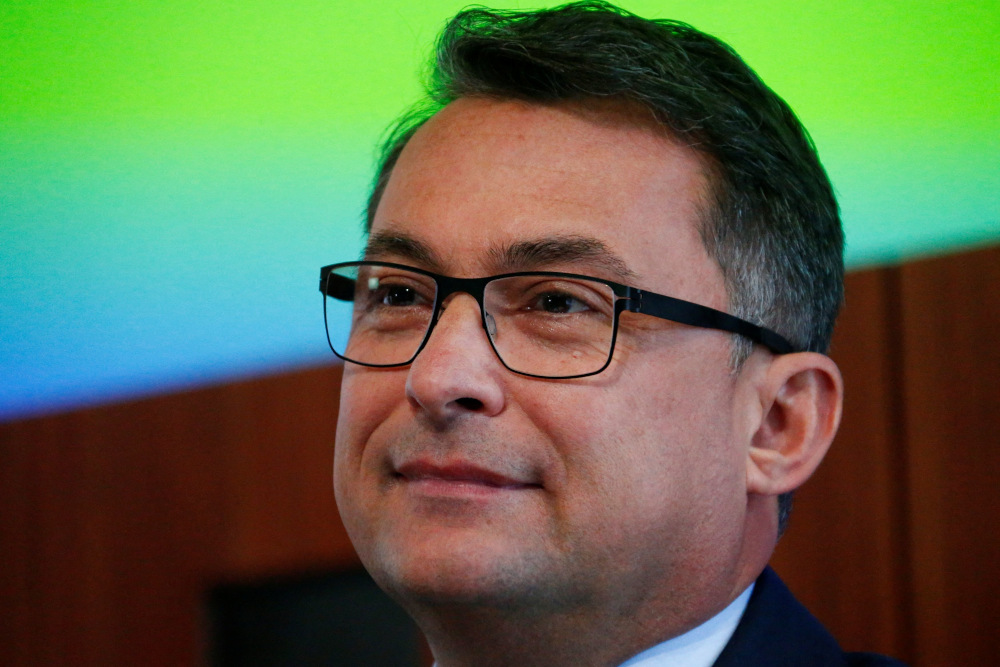


FRANKFURT, Feb 9 — The new head of the Bundesbank said he expected to see inflation in Germany above four per cent in 2022, adding pressure on the European Central Bank to tighten its monetary policy in response to soaring prices.
“Bundesbank experts currently expect inflation to be well over four per cent in 2022,” Joachim Nagel told the German weekly Zeit in an interview.
Inflation increased over the course of 2021 in Germany, finally coming to rest at 3.1 per cent for the year.
Nagel’s inflation call is above the last official prediction made by the German government, which expects the figure to rise slightly to 3.3 per cent in 2022, and above that previously made by his own institution, which had consumer prices rising by 3.6 per cent.
The outcome for Europe’s largest economy will have a significant bearing on the eurozone, where inflation unexpectedly rose to 5.1 per cent in January, the highest level since records for the currency club began in 1997.
The shock figure, published the day before the ECB’s meeting, heaped pressure on the Frankfurt-based institution to follow other central banks in bringing forward rate hikes.
At the meeting, Nagel’s first since taking office at the beginning of the year, ECB policymakers left the “step-by-step” reduction in their bond-buying programme untouched.
But in her press conference afterwards, ECB President Christine Lagarde failed to repeat her previous assertion that a rate rise was “very unlikely” this year.
Instead, Lagarde said the ECB would not be “rushed” and would take a “data-dependent” approach.
The ECB has long kept interest rates at record lows, including a negative deposit rate that charges financial institutions to park their cash with the central bank overnight.
“If the picture does not change until March, I will advocate normalising monetary policy” at the next ECB meeting, Nagel said.
“The first step is to end net purchases during 2022,” Nagel said, referring to the ECB’s bond-buying programme, its main crisis fighting tool, aimed at keeping borrowing costs low to stoke economic growth.
“Then interest rates could rise already this year,” he added.
With his comments, Nagel announced himself as a “hawk” among the 25 members of the governing council, picking up the mantle from his predecessor Jens Weidmann, an arch advocate of tighter monetary policy.
“In my estimation, the economic costs will be significantly higher if we act too late than if we act early,” Nagel said. — AFP