










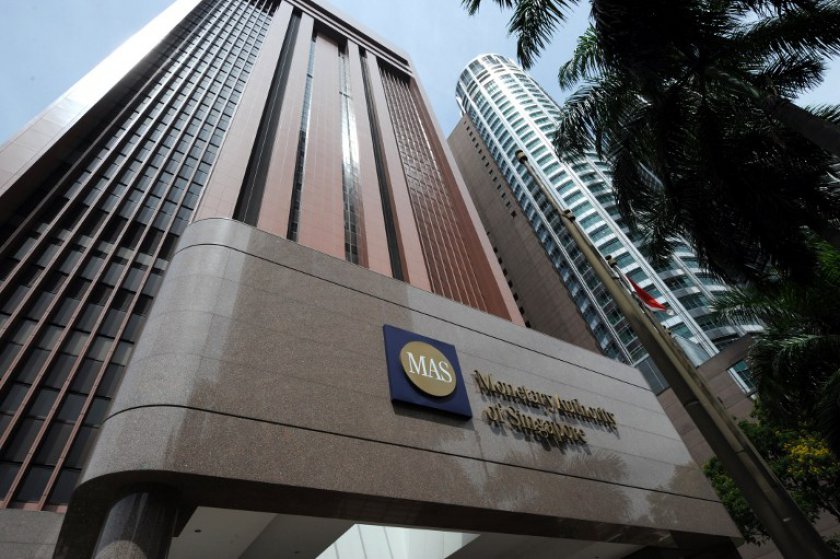


SINGAPORE, April 13 — Singapore’s central bank left monetary policy unchanged after the economy contracted in the first quarter, saying the neutral stance is appropriate for an extended period of time.
All except one of the 21 economists surveyed by Bloomberg predicted the decision. The Monetary Authority of Singapore, which uses the exchange rate as its main policy tool, shifted to a zero appreciation stance for the currency in April last year.
Trade-reliant Singapore is benefiting from a stronger Chinese demand for electronics and other manufactured goods, while consumer prices have started picking up after almost two years of declines. The recovery is being fueled by exports, but domestic-focused industries such as retail and construction remain weak, giving the central bank room to keep its policy neutral.
“There are parts of the economy that are not doing so well, so MAS runs the risk of making things tougher for them’’ if policy is tightened, Brian Tan, an economist with Nomura Holdings Inc. in Singapore, said before the decision.
The Singapore dollar weakened 0.1 per cent to S$1.3966 per greenback as of 8:16am local time.
The economy lost some of its momentum in the first quarter, contracting an annualised 1.9 per cent from the previous three months, according to a preliminary estimate from the trade ministry. The median forecast of 14 economists in a Bloomberg survey was for a decline of 1.8 per cent.
GDP figures are often volatile in Singapore, a small, open economy that’s heavily dependent on exports. The MAS stuck to its forecast for growth of 1 per cent to 3 per cent for this year and projected inflation will reach 0.5 per cent to 1.5 per cent this year.
The central bank said in its statement today that “a neutral policy stance is appropriate for an extended period and should ensure medium-term price stability.”
The MAS guides the local dollar against a basket of its counterparts and adjusts the pace of its appreciation or depreciation by changing the slope, width and centre of a currency band. It doesn’t disclose details on the basket, or the band or the pace of appreciation or depreciation. The MAS has two scheduled policy announcements a year, one in April and the other in October. — Bloomberg


