

SYDNEY, Sept 1 — Asian stocks edged higher today after strong readings on China’s vast manufacturing sector offset the weak lead from a softer Wall Street session.
MSCI’s broadest index of Asia-Pacific shares outside Japan rose 0.2 per cent, to regain some ground it had lost yesterday.
The Hang Seng Index in Hong Kong traded 0.18 per cent higher while the Shanghai Composite also recovered early losses to stand 0.1 per cent higher. Japan’s Nikkei 225 erased early losses to trade flat.
The Caixin/Markit Manufacturing Purchasing Managers’ Index(PMI) showed China’s factory activity expanded at the fastest clip in nearly a decade in August, bolstered by the first increase in new export orders this year.
“What we are seeing here is the slow but choppy export recovery that is taking a bit longer than maybe some market participants thought it would — and that’s because markets remain largely out of sync,” said Daniel Gerard, senior multi asset strategist at State Street Global Markets, based in Singapore.
“September is also going to be a choppy recovery, and until we get closer to more news about a vaccine it’s going to remain that way.”
Taiwan stocks gained 0.5 per cent after the United States said yesterday it was establishing a new bilateral economic dialogue with the country, an initiative it said was designed to support Taipei.
Australia’s S&P/ASX 200 was an outlier, declining 2.4 per cent to four-week lows on rising diplomatic tensions between Canberra and Beijing.
On Wall Street, the Dow Jones Industrial Average and the S&P 500 ended in the red overnight, while the Nasdaq rose solidly.
The S&P gained more than 7 per cent for the month to notch its best August since 1986 in what is traditionally a softer month for stock performance.
Wall Street declines overnight were mostly caused by month-end portfolio rebalancing “rather than a new trend in equities,” said Rodrigo Catril, senior FX strategist at NAB Market Research in Sydney.
The Nasdaq fared even better than the S&P for the month, up nearly 10 per cent as it rallied for a fifth straight month.
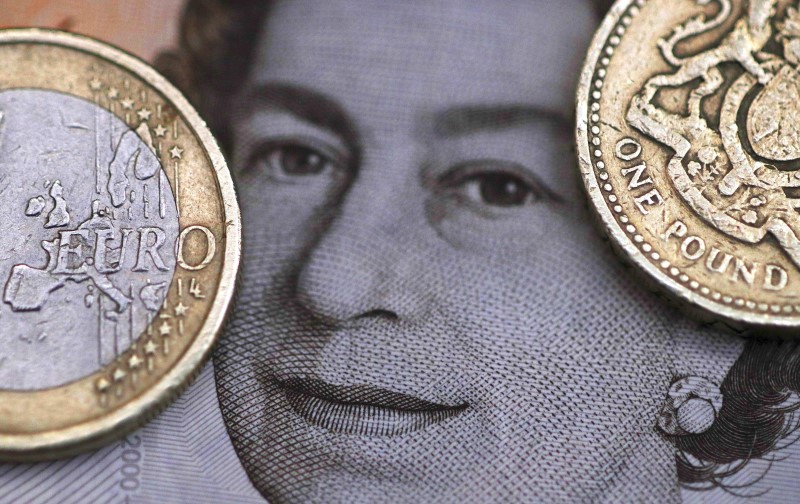
In currencies, the dollar dropped against a basket of major currencies early today. The dollar index fell 0.4 per cent, with the euro up 0.5 per cent to US$1.1993 (RM4.97).
The Japanese yen strengthened 0.3 per cent versus the greenback at 105.63 per dollar, while Sterling was last trading at US$1.3410, up 0.3 per cent on the day.
Expectations that the Fed will keep interest rates low for an extended period kept the dollar soft, marking a fourth straight month of declines in August, its longest losing streak since 2017.
Fed Vice Chair Richard Clarida yesterday expanded on Governor Jerome Powell’s comments from last week, saying that under the US central bank’s new policy view, a low rate of unemployment does not on its own trigger higher interest rates.
Last week, the Fed said its new strategy plan is to use higher inflation when the economy is robust to offset the impact of periods of weaker prices.
Investors in Asia await an interest rate decision from the Australian central bank. While the Reserve Bank of Australia is not expected to change policy, its commentary on the economic outlook will be closely watched.
The Australian dollar stood up 0.4 per cent at US$0.7470.
In commodity markets, oil prices rose, reversing overnight losses, as investors shifted to risk assets.
Brent crude climbed 27 cents, or 0.6 per cent, to US$45.55 a barrel, after rising 0.5 per cent to US$45.28 yesterday. US crude rose 21 cents, or 0.5 per cent, to US$42.82 a barrel, having fallen 0.8 per cent in the previous session.
Elsewhere, gold gained to US$1,980 an ounce, up 0.6 per cent on the day.
(Reporting by Alwyn Scott and Herbert Lash; Editing by Hideyuki Sano and Sam Holmes)