















NEW YORK, July 24 — The dollar slipped to an almost two-year low and gold rose further yesterday as a gauge of global equities retreated on concerns about a potential probe of Apple Inc, which knocked the wind out of the high-flying tech sector.
Multiple US states are investigating Apple for potentially deceiving consumers, according to a March document obtained by a tech watchdog group. Apple shares fell 4.55 per cent and pulled the Dow, Nasdaq and S&P 500 lower.
Equity markets had been trading slightly lower before the Apple news on concerns about labour market weakness due to the coronavirus pandemic and deteriorating US-China relations.
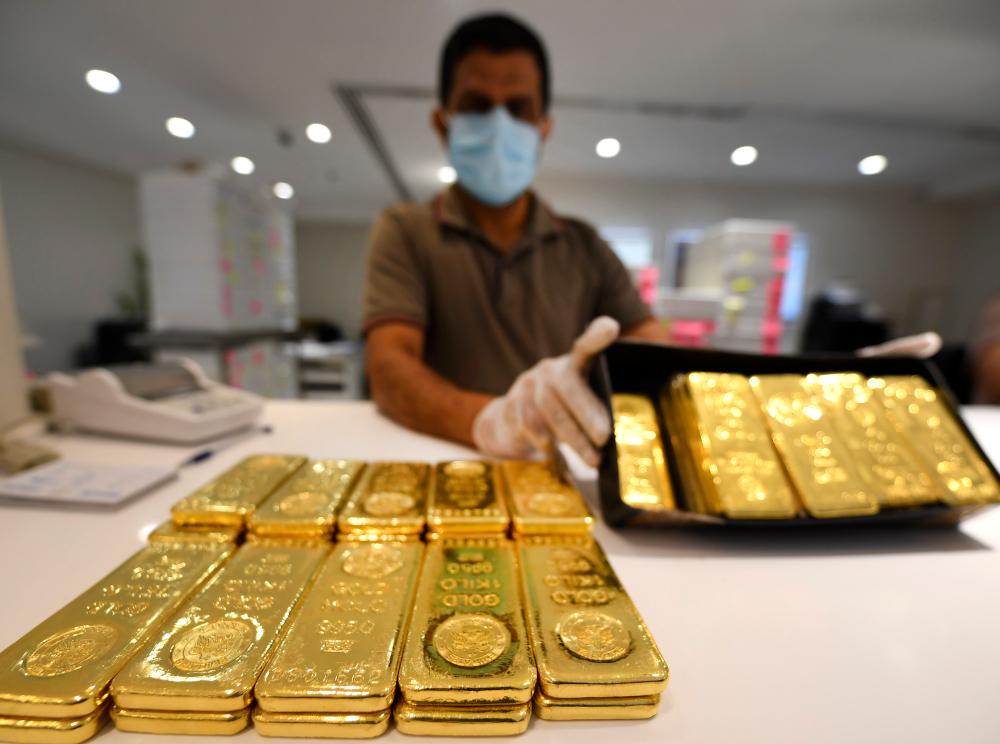
The dollar slid to 22-month lows against a basket of peer currencies and gold rose for a fifth straight session to almost US$1,900 an ounce, off about US$25 from its all-time peak as rising US-China tensions increased bullion’s safe-haven appeal.
Investors are selling the greenback on expectations the US economy will likely underperform its peers in the developed world as the surge in new coronavirus infections pushed the overall number of cases in the United States to over four million.
“There has been a turn in dollar sentiment,” said Marc Chandler, chief market strategist at Bannockburn Forex in New York.
The dollar index fell 0.22 per cent at US$94.7970, sliding to US$94.587 at one point, a low last seen in September 2018.
Better-than-expected earnings initially lifted European shares, with Germany’s Daimler AG forecasting a rise in operating profit at its Mercedes-Benz division and Unilever’s second-quarter sales falling far less than feared.
But Europe’s broad FTSEurofirst 300 index closed up a bare 0.08 per cent as Wall Street struggled after data showed the number of Americans seeking unemployment benefits unexpectedly rose last week for the first time in nearly four months.
Along with Apple, Microsoft, Amazon.com, Facebook and Google parent Alphabet all tumbled. The five stocks have returned about 35 per cent this year, compared to a 5 per cent decline for the remaining stocks in the benchmark index, according to a Goldman Sachs report.
MSCI’s benchmark for global equity markets fell 0.77 per cent, pulled lower by Wall Street.
The Dow Jones Industrial Average fell 1.31 per cent, the S&P 500 lost 1.23 per cent and the tech-rich Nasdaq Composite dropped 2.29 per cent.
A further slide in US Treasury yields, with the benchmark 10-year note staying below 0.6 per cent, damped financial stocks.
“Financials are just going to have a tough time participating if we stay this low, that being the second-largest sector in the S&P 500,” said JJ Kinahan, chief market strategist at TD Ameritrade in Chicago.
The 10-year Treasury note fell 1.4 basis points to 0.5807 per cent.
Equities have rallied to their strongest since February, with many country indices erasing their slump in March when the coronavirus pandemic sent markets into free-fall.
Oil prices fell 2 per cent as the surge in coronavirus cases triggered fears of a hit to demand and the latest US-China spat outweighed the benefit of a weaker dollar.
Brent crude futures settled down 98 cents at US$43.3l a barrel, while US crude futures fell 83 cents to settle at US$41.07 a barrel.
US gold futures settled up 1.3 per cent at US$1,890 an ounce.
Investors have flocked to the safe-haven metal as they seek shelter from a potential reversal in pumped-up stock prices and a possible rise in inflation following the enormous monetary and fiscal stimulus around the world.
In currency markets, the euro was up 0.2 per cent to US$1.1592 as it rode the European Union approval on Monday of a €750 billion recovery fund to revive the region’s coronavirus-hit economies.
Traders pleased with the deal have also pushed Italian borrowing costs lower, and yields on 10-year government debt dropped to a new 4-1/2 month low, moving closer to 1 per cent. — Reuters