


KUALA LUMPUR, July 7 — With the Online Safety Act 2025 now in force in Malaysia, discussions are continuing on how best to curb hate speech, divisive rhetoric and misinformation on social media platforms.
Adding urgency to the debate are the upcoming state elections in Johor and Negeri Sembilan. Election periods are usually the time when there is an uptick in politically-driven negative content and fake news on social media.
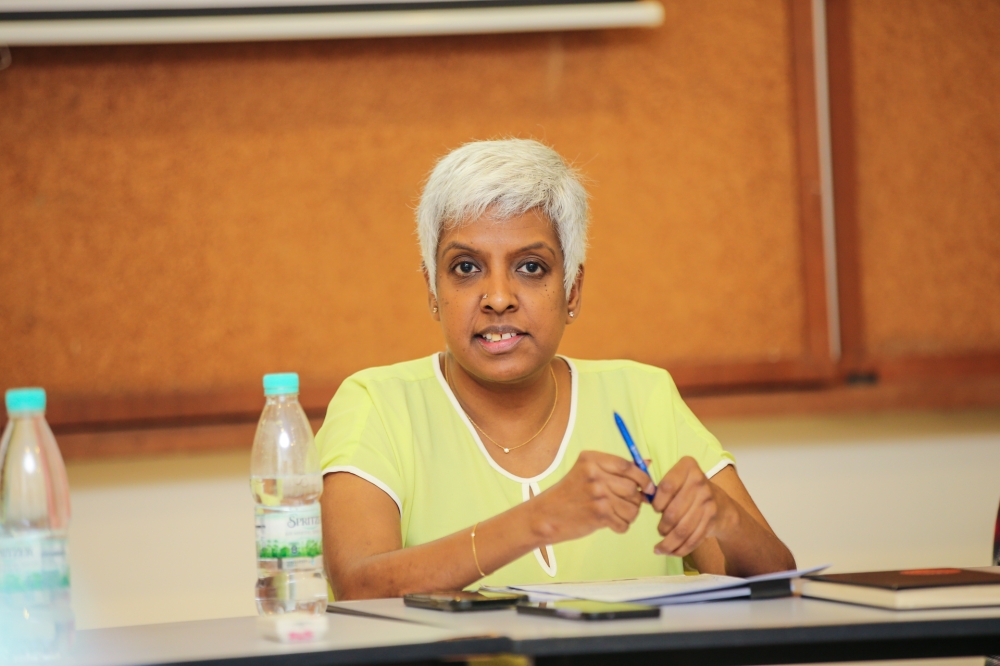
Speaking at the Harmony Symposium at Parliament building on June 26, organised by the secretariat of the Malaysian Parliamentary Cross-Party Group on Racial and Religious Harmony, Dr Nazirul Hazim A Khalim, an econometrics and business statistics lecturer at Monash University-Malaysia, said their research has found that social media users did not care if the source of the post they are sharing is from an official source.
“So one thing that we have researched is that (when) we look at elections in the Philippines, Indonesia, and Malaysia, we found that the most important factors are reach and engagement, not authenticity, not reliability, not the source of the information,” he said.
The problem, it seems, is the amplification effect of social media platforms.
Trying to limit the spread of social media content, which tends to bend towards the negative and outrage-inducing, while also protecting civil liberties and the freedom of speech, is an issue that policymakers, academicians and media experts are still grappling with.
Visiting fellow at Singapore’s ISEAS Yusuf Ishak Institute Dr Nuurrianti Jalli did research on TikTok posts generated during Malaysia’s 15th General Election in 2022. She found that 55 per cent of the 679 videos with over 1,000 views related to the election contained hate speech. Of that number, 79 per cent targeted non-Muslims and non-Malays, while others targeted Islam and Malays.
In a paper she presented at a conference by the Indonesian Centre for Strategic and International Studies in January 2024, Nuurrianti warned that “as communication technologies evolve, especially with the rapid progression of AI (artificial intelligence), notably generative AI, it’s expected that propagandists, cybertroopers and ardent supporters will employ even more advanced strategies” in upcoming elections.
How they get you
Despite what people have witnessed during election cycles in Malaysia and abroad, many have probably not learned how to resist hateful content. And it is not totally their fault.
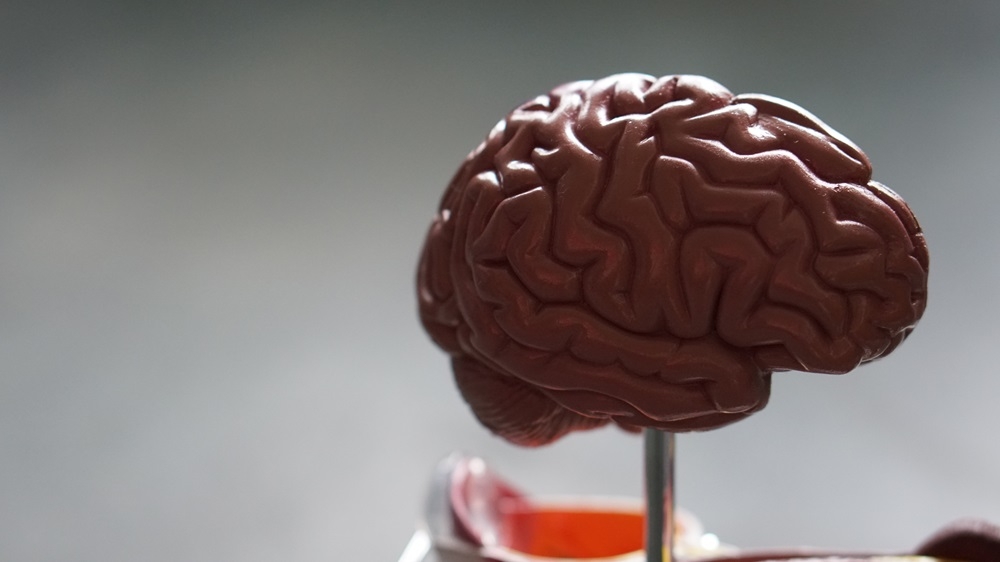
The human brain is equipped with negativity bias, which is what scientists call “our focus on messages that elicit a negative emotional response in us”. Negativity bias refers to humans’ basic survival instinct of noticing and reacting to negative factors or threats more than positive ones.
After all, hundreds of years ago, someone who became distracted by a beautiful sunset over the river and failed to notice a floating “log” was less likely to survive than someone who spotted it in time and realised it was a crocodile. Unless they moved away quickly, they would end up in the crocodile’s belly.
In the past, a brain that paid attention to negative factors helped the survival of the bloodline and species. In this day and age, that same focus on negativity is not needed as much, but because the brain has not learned that, it reacts to all the negative stimuli from social media and a connected world as if they were real threats.
“We are emotional beings and we are social beings (as well). Therefore, we react strongly to stories. We react strongly to emotional content and that includes negative news,” Nuurrianti told Bernama via Google Meet.
“Most of the information that we’ve seen, especially when we’re talking about the issue of polarisation and hate speech, looks like threatening content. But it doesn’t matter whether it’s true or not true.”
And social media platforms know that and have tweaked their algorithms to amplify content that elicits strong emotions from users.
Academics and media experts who spoke at the Harmony Symposium agreed that negativity drives traffic on social media.
“It’s part of their business model. Harmful content tends to be very attractive,” said Harris Zainul, director of Centre for Responsible Technology (CERT).
The longer a user engages with content on a platform, the more advertisements the social media company can show the user. And these companies have also monetised users’ content, paying users with high engagement metrics. Since negative content increases engagement, many users have learned to game the system.
Executive director of the Centre for Independent Journalism (CIJ) Wathshlah Naidu said they have noticed a similar pattern when they monitor hate speech and content during elections.
“I give you one pattern. It all starts with just one person, then you can see the engagement count increasing. When the engagement count increases, you can see them placing affiliate links. After that, we can also see them selling their merchandise.
“So, when the (social media) platform allows it, people can monetise hate, monetise emotive content… that means we have to hold the platforms accountable,” she said at the symposium.
Monash University-Malaysia’s Nazirul Hazim said research has shown that fake news and negative content get more engagement.
A study titled ‘Emotion Shapes the Diffusion of Moralised Content in Social Networks’, by Brady, W. et al and published in Vol 114 of PNAS journal, found that negative moral and emotional content got 20 per cent more shares. However, not all these negative contents are hateful. Many dealt with issues that concern public interest, such as corruption and climate change.
‘The Spread of True and False News Online’, by Vosoughi, et al and published in Science by the Massachusetts Institute of Technology (MIT) Media Lab and MIT Sloan School of Management in 2018, found that fake news was 70 per cent more likely to be retweeted than true news, that is, actual news took six times as long to reach 1,500 people as false news.
One way to address this is by requiring social media platforms to limit the amplification of harmful content, such as slowing the sharing of posts after reaching a certain threshold, said Nazirul Hazim.
“So if the content is harmful or (not) the truth, but the amplification is not working, then it doesn’t work either,” he said.
What can we do?
Legislation and regulation have become key pillars in efforts to address the harmful effects of social media on young people and mental health, following years of public pressure and growing research documenting its impact.
The one grabbing most of the headlines now is the age restriction laws limiting social media accounts to only those aged 16 and above, which was introduced in Australia, and followed by Indonesia, Brazil and Malaysia. Other countries are mulling the same legislation and also considering requiring social media companies to share their algorithms.
One proposal is algorithmic transparency, where social media companies will be required by law to disclose how they identify an interesting post, and whether they would slow down or amplify the post concerned, as well as who is shown the content and why.
CERT’s Harris said social media companies have not been transparent with their data so far, making it difficult for others to research the effects of social media use on users and whether it has contributed to the polarisation of society.
“We ask the government for a Freedom of Information Act, we want transparency from the government, but why don’t we demand the same level of transparency from social media platforms?” he said, adding that the data provided by the companies was not enough to draw any conclusion.
Experts, meanwhile, also said that Malaysia’s existing laws governing speech should be fine-tuned to clearly define hate speech and protection for vulnerable groups, but warned that these restrictions should not be used to curb civil liberties, such as freedom of speech in a democracy.
CIJ’s Wathshlah said the definition should reflect the Rabat Plan of Action on the Prohibition of Advocacy of National, Racial or Religious Hatred that Constitutes Incitement to Discrimination, Hostility or Violence, adopted by the United Nations Human Rights Office in 2012, which detailed six criteria to define inciteful hate speech, including context, speaker and intent.
Offline strategies
In an article titled ‘Your brain was never designed for this much bad news’ in ScienceDaily, researchers suggest approaches that can help manage news fatigue and protect mental health.
“Containing news consumption to defined windows of time reduces the sense of being overwhelmed. Choosing depth over volume also matters: one carefully reported long-form article will inform you better than bursts of random, unreliable and emotionally loaded posts on Instagram,” they wrote.
While admitting that the evidence on social media age limit laws was still thin, Harris hoped the law would be part of a network of legislation holding social media platforms accountable. It would be similar to how the world managed to cut down on teenage smoking and health problems related to tobacco use by enacting anti-tobacco laws country by country.
“The network effects have not kicked in yet. So the hope here is that if more countries are to join the ban on social media by introducing age limits, then you can change the norm on what is expected for a normal childhood to look like,” he said.
Nuurrianti agreed. “I think one voice is not as strong as having multiple voices. So I think collaboration is needed across countries with the same concern, right?” she said.
In the deluge of negative content and divisive rhetoric whipping up anger and hatred against communities based on race, religion or immigration status, one would not be blamed for being tempted to “check out” or avoid news and social media altogether. Some have begun using analogue phones or “dumb phones” in order to be offline and only use the phones as basic communication devices.
But experts warned that checking out is less than ideal, as a thriving democracy depends on a well-informed population.
“This cannot be the main public solution (as it places) the burden on the people. Because not everyone can disconnect,” said Nuurrianti.
Instead, she and other experts suggested media literacy and critical thinking programmes for all, not just children. — Bernama


